›››
Iraq
Iraq
Population
46.0M
Rank #34Source: World Bank
Capital
Baghdad
Source: REST Countries
Region
Africa
Middle East, North Africa, Afghanistan & Pakistan
Source: REST Countries
GDP (Nominal)
$279.64B
Rank #50Source: World Bank
Land Area
438.3K km²
Rank #59Source: REST Countries
Life Expectancy
72.324 yrs
Source: World Bank
Historical Trends
Population Trend (5-Year)
Source: World Bank
GDP Trend (5-Year, Nominal USD)
Source: World Bank
Geography
Area: 438,317 km²
Landlocked: No
Independent: Yes
Climate: mostly desert; mild to cool winters with dry, hot, cloudless summers; northern mountainous regions along Iranian and Turkish borders experience cold winters with occasionally heavy snows that melt in...
Terrain: mostly broad plains; reedy marshes along Iranian border in south with large flooded areas; mountains along borders with Iran and Turkey
Elevation: mean elevation: 312 m lowest point: Persian Gulf 0 m highest point: Cheekha Dar (Kurdish for "Black Tent") 3,611 m
Natural Hazards: dust storms; sandstorms; floods
Environmental Issues: government water control projects drained most of the inhabited marsh areas east of An Nasiriyah by drying up or diverting the feeder streams and rivers; a once sizable population of Marsh Arabs, who...
Land Use: agricultural land: 18.1% (2011 est.) forest: 1.9% (2011 est.) other: 80% (2011 est.)
Geography Note: strategic location on Shatt al Arab waterway and at the head of the Persian Gulf
Natural Resources
petroleumnatural gasphosphatessulfur
People & Society
Fertility Rate
3.25
Population
46.0M
Ethnic Groups
other (5%)
Religions
Christian (1%)the overall Christian population has decreased at least 50% and perhaps as high as (90%)
Economy
GDP per Capita
$6,073.61
GDP per Capita PPP
14,464.319
(2024)
(2024)
GNI per Capita
6,030
(2024)
(2024)
Gini Index
29.8
(2023)
(2023)
Unemployment
15.293%
(2024)
(2024)
Inflation
4.358%
(2023)
(2023)
Public Debt
27.438%
(2018)
(2018)
Energy
Electricity Access
100%
(2023)
(2023)
Renewable Energy
1.1%
(2021)
(2021)
CO₂ Emissions
238.67 Mt
(2024)
(2024)
Energy Intensity
4.96 MJ/$
(2021)
(2021)
Renewable Electricity
3.78%
(2021)
(2021)
Environment
Forest Coverage
1.9% of land
(2023)
(2023)
Communications
Internet Users
81.729%
(2023)
(2023)
Mobile Penetration
101.389%
(2023)
(2023)
Broadband Subscribers
17.231%
(2023)
(2023)
Transportation
Air Transport Freight
Not Available
Container Port Traffic
932,728.6 TEU
(2019)
(2019)
Airports
36,885
Rail Lines
2,370 km
Roads Total
N/A
Military
Military Forces
Ministry of Defense: Iraqi Army, Army Aviation Command, Iraqi Navy, Iraqi Air Force, Iraqi Air Defense Command, Special Forces Command; National-Level Security Forces: Iraqi Counterterrorism Service...
Personnel Strength
assessments of the size of the Iraqi military, security services, and associated militia forces vary widely; the military and the security services are rebuilding after suffering considerable losses...
Military Expenditure (USD)
$6.18B
Military Expenditure (% of GDP)
2.36%
Military Expenditure History
3.5% of GDP (2019) 2.9% of GDP (2018) 3.9% of GDP (2017) 3.5% of GDP (2016) 5.4% of GDP (2015)
Equipment & Inventories
the Iraqi military inventory is comprised of Russian and Soviet-era equipment combined with newer European- and US-sourced platforms; since 2010, Russia and the US are the leading suppliers of...
Service Age & Obligation
18-40 years of age for voluntary military service; no conscription
Education
Pre-Primary Enrollment
3.82%
(2011)
(2011)
Primary Enrollment
Not Available
Secondary Enrollment
Not Available
Tertiary Enrollment
Not Available
Education Spending
Not Available
Adult Literacy Rate
84.059%
(2021)
(2021)
Pupil-Teacher Ratio
Not Available
Health
Physicians per 1,000
1.022
(2022)
(2022)
Safe Water Access
98.408%
(2024)
(2024)
Safe Drinking Water
59.827%
(2024)
(2024)
Under-5 Mortality
22.6 per 1,000
(2023)
(2023)
Maternal Mortality (World Bank)
16.255 per 100,000
(2021)
(2021)
Hospital Beds per 1,000
71.466
(2021)
(2021)
UHC Coverage Index
64
(2023)
(2023)
Measles Immunization
90%
(2024)
(2024)
Social Indicators
Extreme Poverty Rate
0.5%
(2023)
(2023)
Food Insecurity
14.9%
(2023)
(2023)
Youth NEET Rate
35.37%
(2021)
(2021)
Governance
Women in Government
28.875%
(2024)
(2024)
Voice & Accountability
-0.96
(Below Average)
(2023)
(Below Average)
(2023)
Political Stability
-2.41
(Weak)
(2023)
(Weak)
(2023)
Government Effectiveness
-1.39
(Weak)
(2023)
(Weak)
(2023)
Regulatory Quality
-1.44
(Weak)
(2023)
(Weak)
(2023)
Rule of Law
-1.69
(Weak)
(2023)
(Weak)
(2023)
Control of Corruption
-1.32
(Weak)
(2023)
(Weak)
(2023)
Government
Government Type
federal parliamentary republic
Legal System
mixed legal system of civil and Islamic law
Executive Branch
chief of state: President Barham SALIH (since 2 October 2018); vice presidents (vacant) head of government: Prime Minister Mustafa al-KADHIMI (since 7 May 2020) cabinet: Council of Ministers proposed...
Legislative Branch
description: unicameral Council of Representatives or Majlis an-Nuwwab al-Iraqiyy (329 seats; 320 members directly elected in 83 multi-seat constituencies by simple majority vote and 9 seats at the...
Judicial Branch
highest courts: Federal Supreme Court or FSC (consists of 9 judges); note - court jurisdiction limited to constitutional issues and disputes between regions or governorates and the central...
National Symbols
Flag Description
three equal horizontal bands of red (top), white, and black; the Takbir (Arabic expression meaning "God is great") in green Arabic script is centered in the white band; the band colors derive from...
National Symbols
golden eagle; national colors: red, white, black
National Anthem
name: "Mawtini" (My Homeland) lyrics/music: Ibrahim TOUQAN/Mohammad FLAYFEL note: adopted 2004; following the ouster of SADDAM Husayn, Iraq adopted "Mawtini," a popular folk song throughout the Arab...
Safety
Homicide Rate
9.464 per 100,000
(2013)
(2013)
Travel Information
Language(s): Arabic, Aramaic, Sorani
Currency: IQD (ع.د)
Timezone(s): UTC+03:00
Landlocked: No
Independent: Yes
Driving Side: Right
Calling Code: +964
Car Sign: IRQ
Week Starts: Sunday
Photos
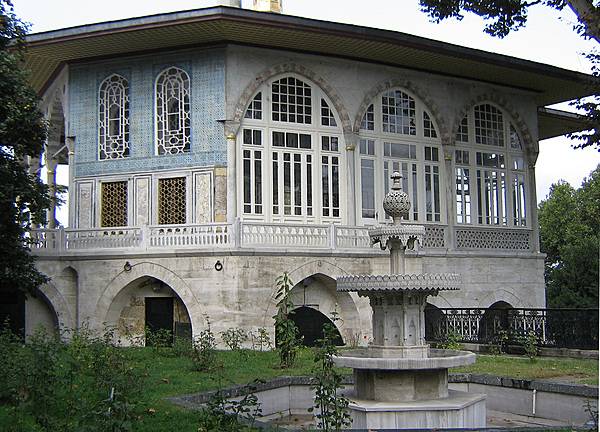
The Baghdad Kiosk in the Fourth Courtyard of the Topkapi Palace.
The Baghdad Kiosk in the Fourth Courtyard of the Topkapi Palace. • CIA World Factbook • 2020
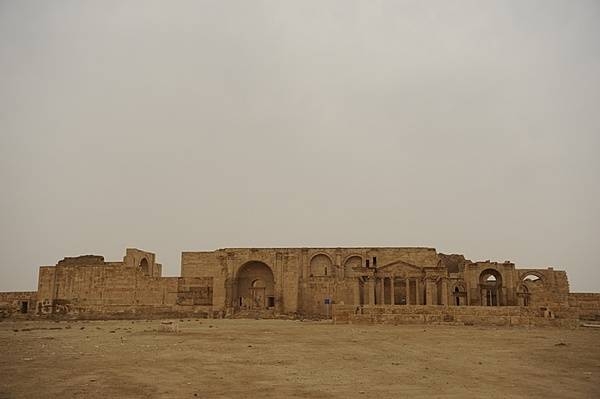
Another view of the Hatra archeological site. Hatra is one of three areas in Iraq that is a World Heritage Site. Photo courtesy of the US Department of Defense/ Staff Sgt. JoAnn Makinano.
Another view of the Hatra archeological site. Hatra is one of three areas in Iraq that is a World Heritage Site. Photo courtesy of the US Department of Defense/ Staff Sgt. JoAnn Makinano. • CIA World Factbook • 2020
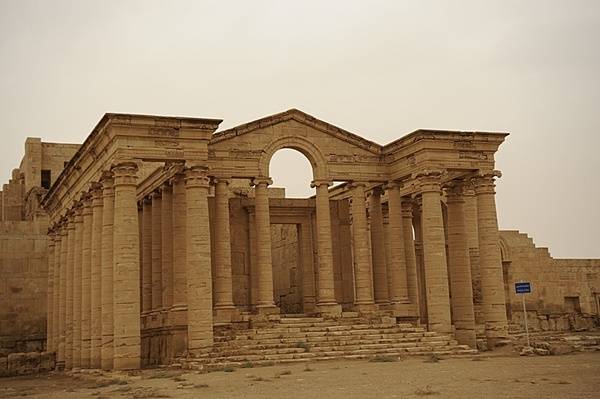
The Parthian Temple of Mrn is one of thirteen temples that are a part of the Hatra complex. Hatra is one of three areas in Iraq that is a World Heritage Site. Photo courtesy of the US Department of Defense/ Staff Sgt. JoAnn Makinano.
The Parthian Temple of Mrn is one of thirteen temples that are a part of the Hatra complex. Hatra is one of three areas in Iraq that is a World Heritage Site. Photo courtesy of the US Department of Defense/ Staff Sgt. JoAnn Makinano. • CIA World Factbook • 2020
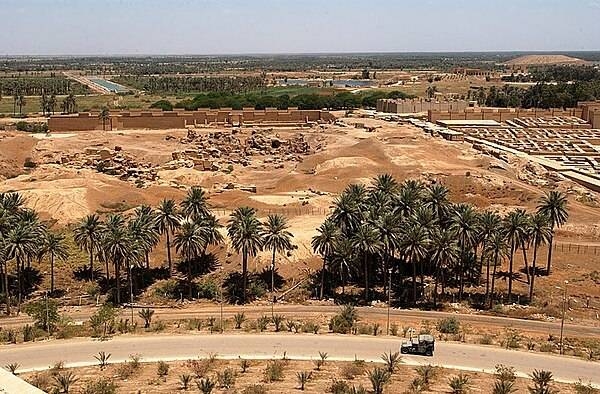
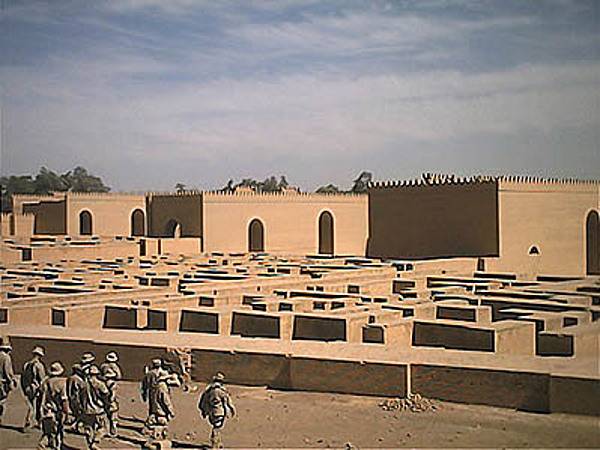
View from Saddam Hussein's former summer palace showing the ruins of ancient Babylon in the background. Photo courtesy of the US Navy/ Arlo K. Abrahamson.
View from Saddam Hussein's former summer palace showing the ruins of ancient Babylon in the background. Photo courtesy of the US Navy/ Arlo K. Abrahamson. • CIA World Factbook • 2020
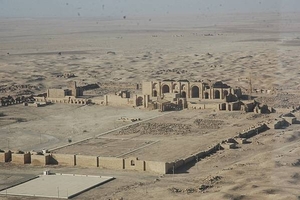
Aerial view of the ruins of the ancient city of Hatra, located approximately 290 km (180 mi) northwest of Baghdad. Hatra was a strongly fortified caravan city and capital of the small Kingdom of Hatra, located between the Parthian and Roman Empires. Hatra flourished during the 2nd century A.D., but was destroyed and deserted in the 3rd century. Its impressive ruins were discovered in the 19th century. Photo courtesy of the US Department of Defense / Sgt. 1st Class Wendy Butts.
Aerial view of the ruins of the ancient city of Hatra, located approximately 290 km (180 mi) northwest of Baghdad. Hatra was a strongly fortified caravan city and capital of the small Kingdom of Hatra, located between the Parthian and Roman Empires. Hatra flourished during the 2nd century A.D., but was destroyed and deserted in the 3rd century. Its impressive ruins were discovered in the 19th century. Photo courtesy of the US Department of Defense / Sgt. 1st Class Wendy Butts. • CIA World Factbook • 2020
CIA World Factbook • 2020
9 photos available
View All Photos→Data sources: World Bank, UN Data • Updated daily •Learn about our data