›››
Cambodia — Media Gallery
77 items available (flags, maps, photos)
Photos
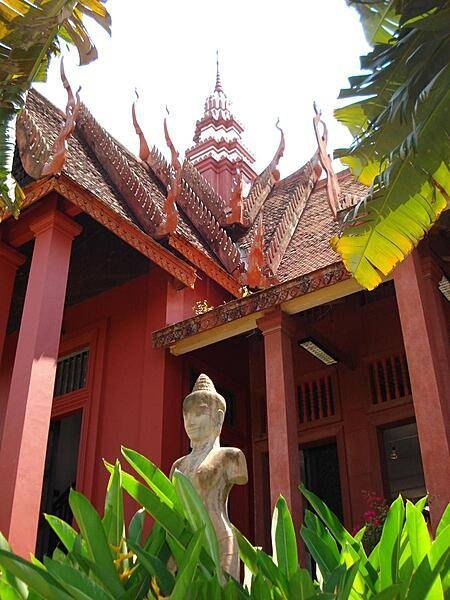
Entrace to the National Museum of Cambodia in Phnom Penh. Built between 1917 and 1924 to preserve Cambodia's cultural traditions, it houses the world's largest collections of Khmer art from prehistoric times through the Khmer Empire. It also displays an important collection of Buddhist and Hindu sculptures.
Entrace to the National Museum of Cambodia in Phnom Penh. Built between 1917 and 1924 to preserve Cambodia's cultural traditions, it houses the world's largest collections of Khmer art from prehistoric times through the Khmer Empire. It also displays an important collection of Buddhist and Hindu sculptures. • CIA World Factbook • 2020
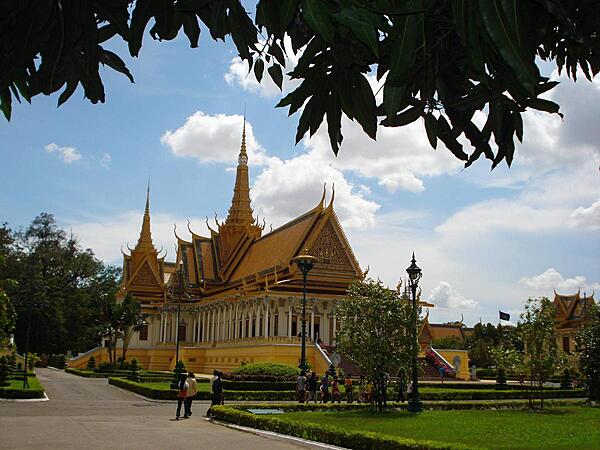
The Throne Hall at the Royal Palace grounds in Phnom Penh. Built in 1917, the building was where the king's confidants, generals, and royal officials once carried out their duties. Today it is used for religious and royal ceremonies, and as a meeting place for guests of the king.
The Throne Hall at the Royal Palace grounds in Phnom Penh. Built in 1917, the building was where the king's confidants, generals, and royal officials once carried out their duties. Today it is used for religious and royal ceremonies, and as a meeting place for guests of the king. • CIA World Factbook • 2020
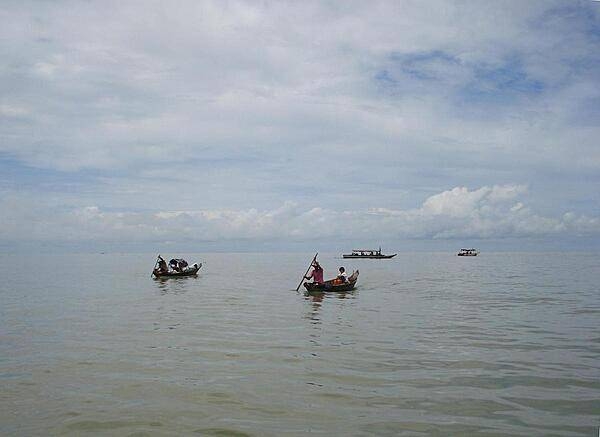
Boats on Tonle Sap, Cambodia's huge freshwater lake. During the dry season from November to May, the lake is fairly shallow - only about one meter deep - allowing boats to be poled. During the monsoon season, waters from the flooding Mekong River back up raising the lake depth to about nine meters. This annual pulsing over a large floodplain brings in high sediment and nutrient fluxes allowing for rich aquatic diversity. Tonle Sap is one of the most productive inland fisheries in the world.
Boats on Tonle Sap, Cambodia's huge freshwater lake. During the dry season from November to May, the lake is fairly shallow - only about one meter deep - allowing boats to be poled. During the monsoon season, waters from the flooding Mekong River back up raising the lake depth to about nine meters. This annual pulsing over a large floodplain brings in high sediment and nutrient fluxes allowing for rich aquatic diversity. Tonle Sap is one of the most productive inland fisheries in the world. • CIA World Factbook • 2020
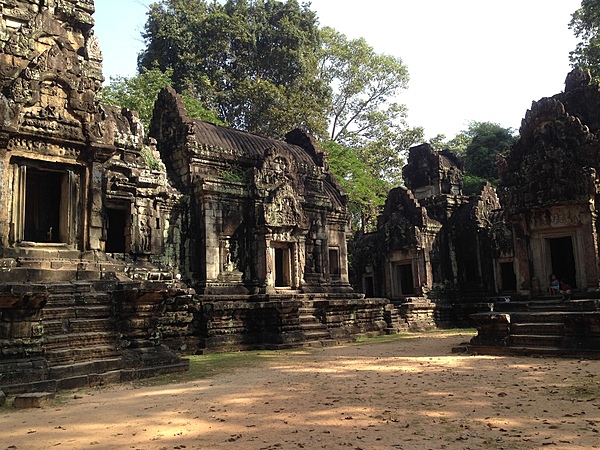
Temple buildings at Angkor Thom.
Temple buildings at Angkor Thom. • CIA World Factbook • 2020
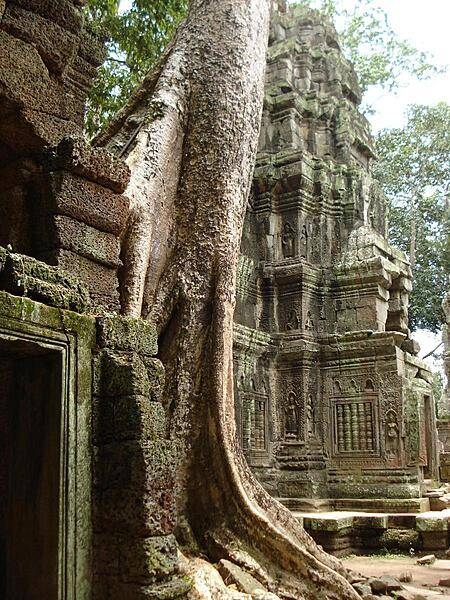
Another example of how intimately some trees have established themselves at Angkor Wat.
Another example of how intimately some trees have established themselves at Angkor Wat. • CIA World Factbook • 2020
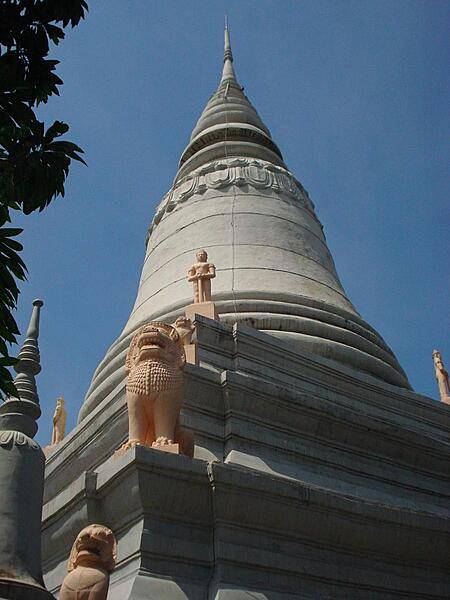
The Pagoda at Wat Phnom, built in 1373 on a man-made hill, is the tallest religious structure (27 m; 89 ft) in Phnom Penh.
The Pagoda at Wat Phnom, built in 1373 on a man-made hill, is the tallest religious structure (27 m; 89 ft) in Phnom Penh. • CIA World Factbook • 2020
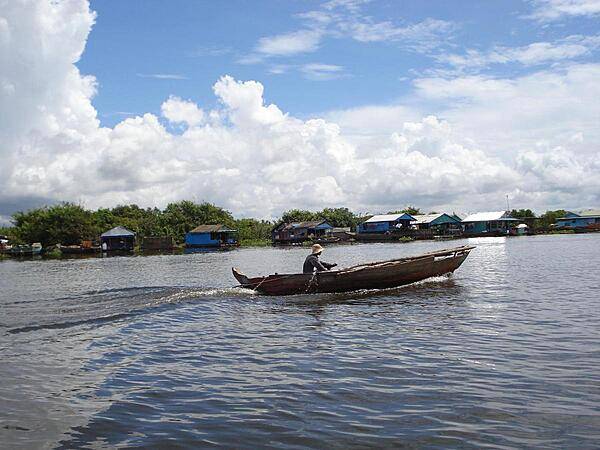
Much of the periphery of Tonle Sap is dotted with floating houses.
Much of the periphery of Tonle Sap is dotted with floating houses. • CIA World Factbook • 2020
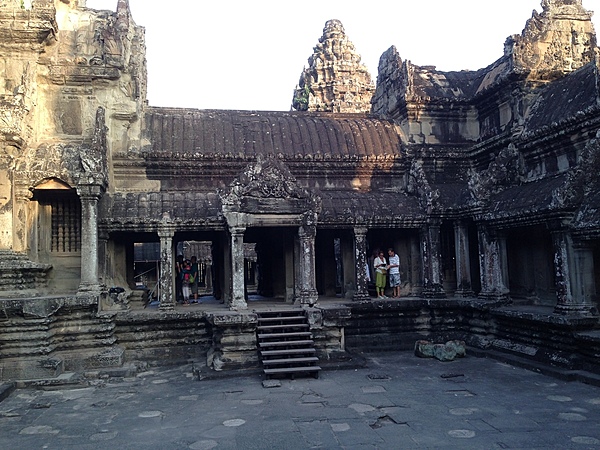
A courtyard at Angkor Wat.
A courtyard at Angkor Wat. • CIA World Factbook • 2020
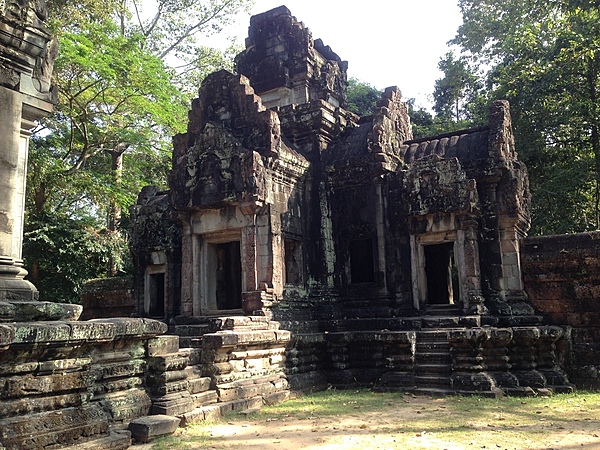
Well-preserved temple building at Angkor Thom.
Well-preserved temple building at Angkor Thom. • CIA World Factbook • 2020
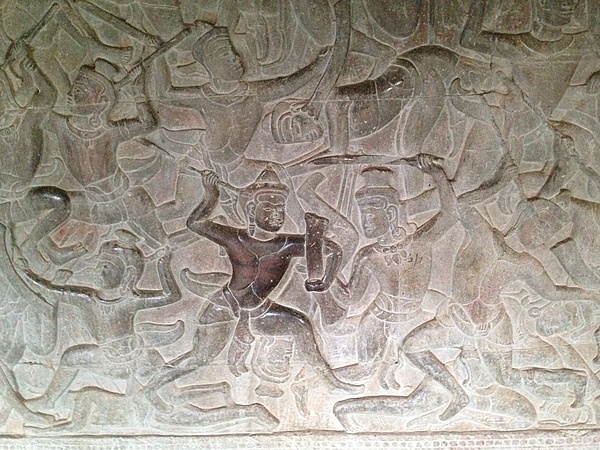
Wall carving showing a battle scene at Angkor Wat.
Wall carving showing a battle scene at Angkor Wat. • CIA World Factbook • 2020
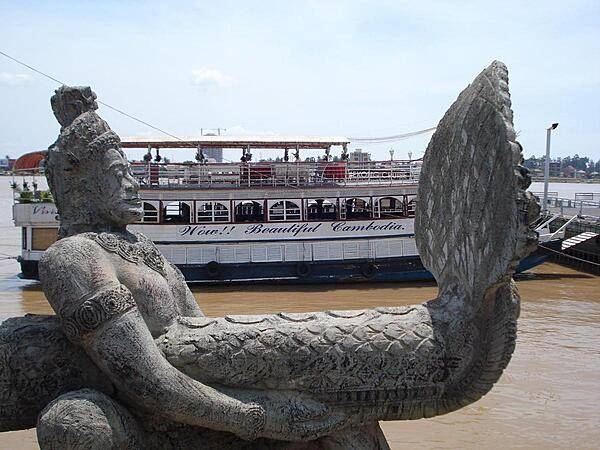
Mekong River tour boat at Phnom Penh.
Mekong River tour boat at Phnom Penh. • CIA World Factbook • 2020
CIA World Factbook • 2020
CIA World Factbook • 2020
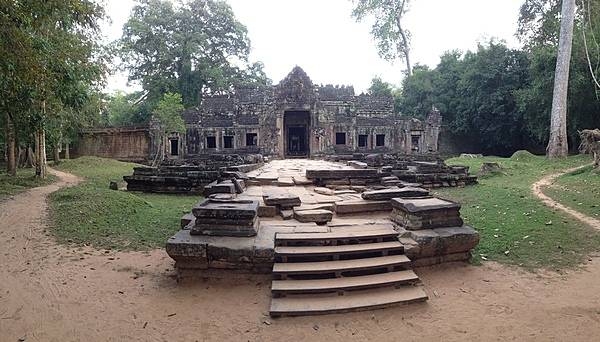
CIA World Factbook • 2020
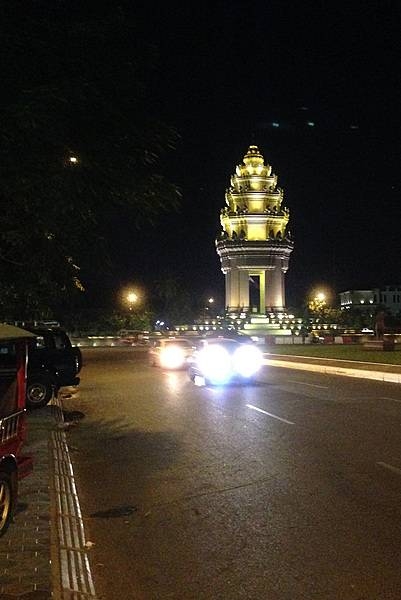
Cambodia’s Independence Monument is brightly lit at night.
Cambodia’s Independence Monument is brightly lit at night. • CIA World Factbook • 2020
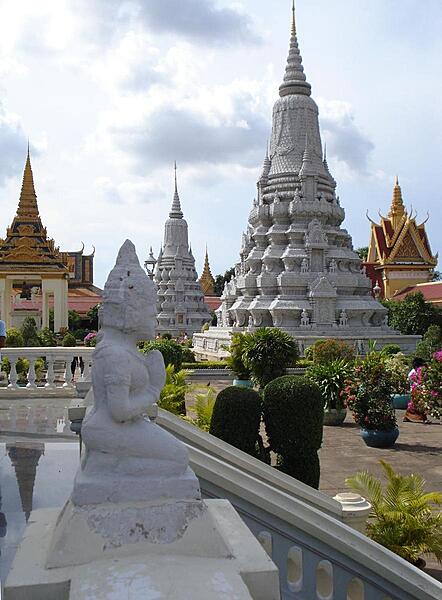
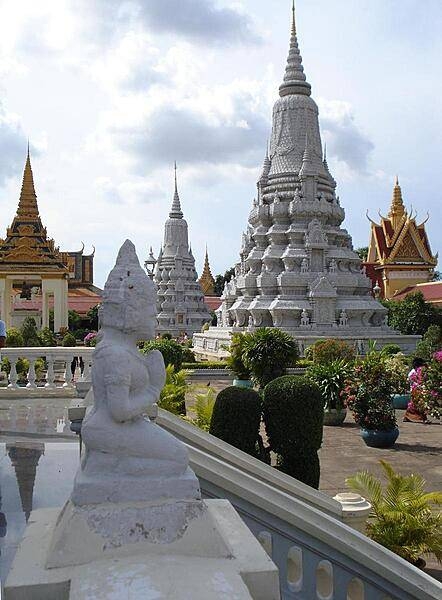
On the grounds of the Royal Palace in Phnom Penh. The palace area contains at least three stupas with royal remains.
On the grounds of the Royal Palace in Phnom Penh. The palace area contains at least three stupas with royal remains. • CIA World Factbook • 2020
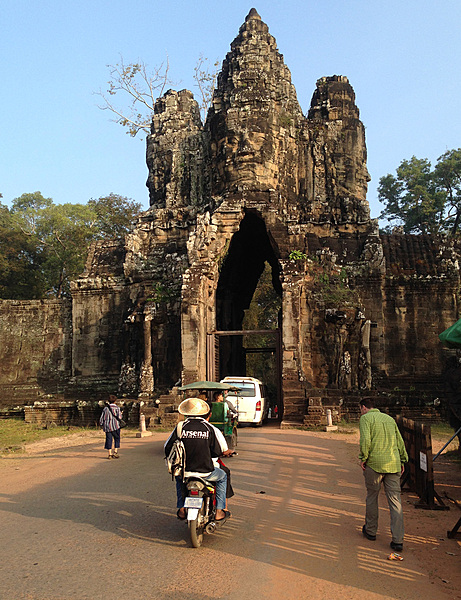
The South Gate at Angkor Thom has been extensively restored and is the most complete. On the road from Angkor Wat and Siem Reap, it is the first point of entry to Angkor Thom.
The South Gate at Angkor Thom has been extensively restored and is the most complete. On the road from Angkor Wat and Siem Reap, it is the first point of entry to Angkor Thom. • CIA World Factbook • 2020
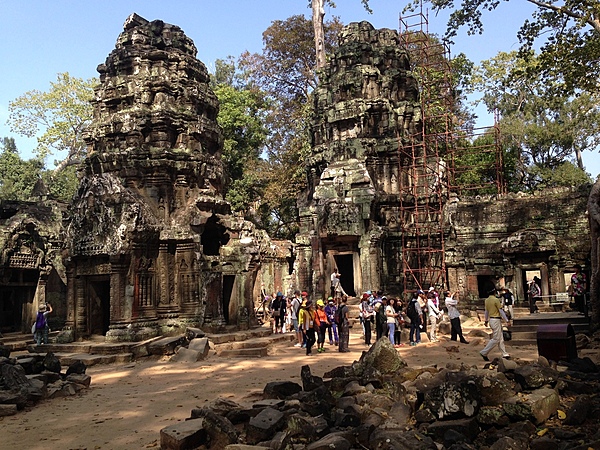
Ta Prohm is the modern name of the temple in Siem Reap, built largely in the late 12th and early 13th centuries. Located approximately 1 km east of Angkor Thom, it was founded by the Khmer King Jayavarman VII as a Buddhist monastery and university. Unlike most Angkorian temples, Ta Prohm remains in much the same condition as when it was found. The photogenic and atmospheric combination of trees growing out of the ruins and the jungle surroundings have made it one of Angkor's most popular temples with visitors. UNESCO inscribed Ta Prohm on its World Heritage List in 1992. Today, it is one of the most visited complexes in Cambodia’s Angkor region.
Ta Prohm is the modern name of the temple in Siem Reap, built largely in the late 12th and early 13th centuries. Located approximately 1 km east of Angkor Thom, it was founded by the Khmer King Jayavarman VII as a Buddhist monastery and university. Unlike most Angkorian temples, Ta Prohm remains in much the same condition as when it was found. The photogenic and atmospheric combination of trees growing out of the ruins and the jungle surroundings have made it one of Angkor's most popular temples with visitors. UNESCO inscribed Ta Prohm on its World Heritage List in 1992. Today, it is one of the most visited complexes in Cambodia’s Angkor region. • CIA World Factbook • 2020
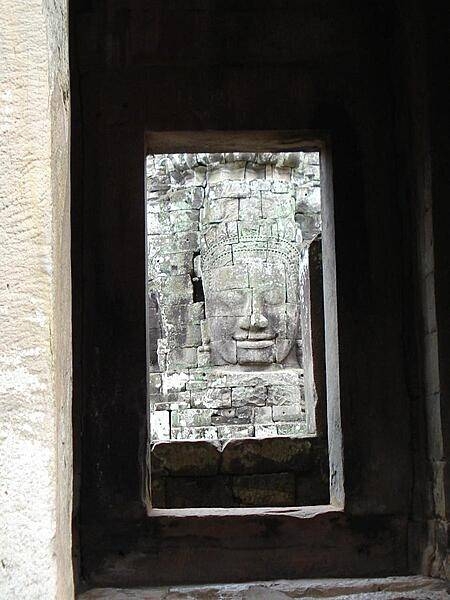
Face framed by windows at the Bayon temple at Angkor Thom.
Face framed by windows at the Bayon temple at Angkor Thom. • CIA World Factbook • 2020
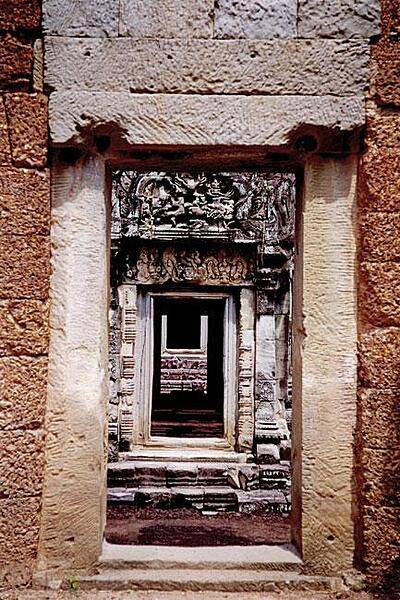
Temple Door at Banteay Srei, Angkor.
Temple Door at Banteay Srei, Angkor. • CIA World Factbook • 2020
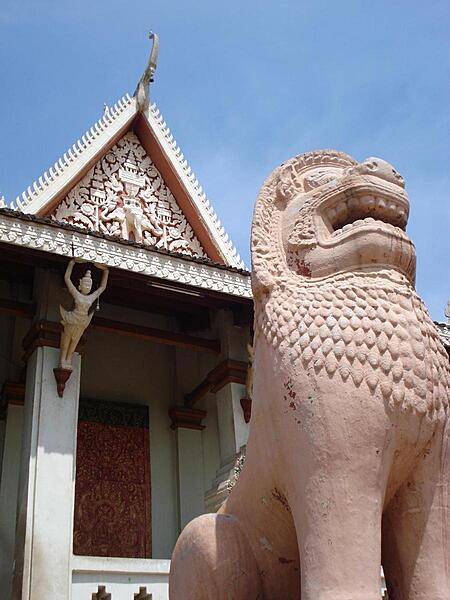
A lion-fronted temple at Wat Phnom.
A lion-fronted temple at Wat Phnom. • CIA World Factbook • 2020
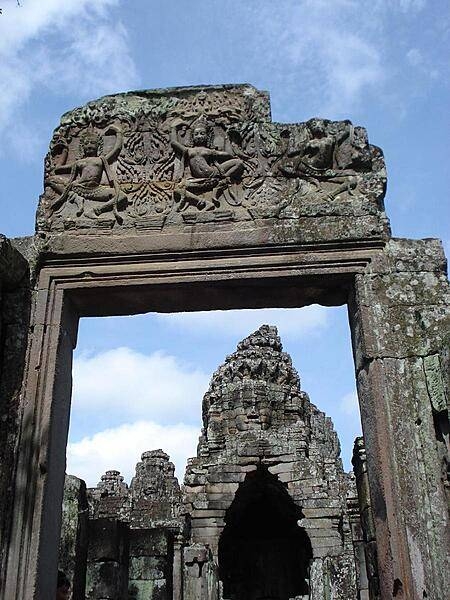
Entranceway at the Bayon, a richly decorated temple at Angkor Thom built in the late 12th and early 13th centuries by King Jayavarman VII.
Entranceway at the Bayon, a richly decorated temple at Angkor Thom built in the late 12th and early 13th centuries by King Jayavarman VII. • CIA World Factbook • 2020
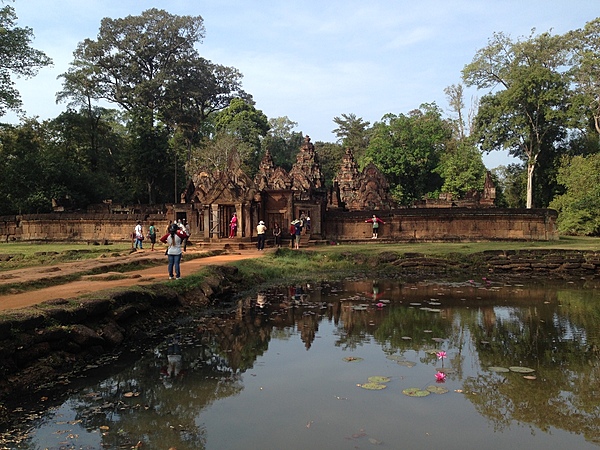
Banteay Srei is a 10th-century Cambodian temple dedicated to the Hindu god Shiva. The site lies 25 km (15 mi) north-east of the main group of temples at Angkor. Banteay Srei is built largely of red sandstone, a medium that lends itself to the elaborate decorative wall carvings that are still observable today. The buildings themselves are miniature in scale, unusually so when measured by the standards of Angkorian construction. These factors have made the temple extremely popular with tourists. This photo shows the entrance way and part of the moat that surrounds the temple complex.
Banteay Srei is a 10th-century Cambodian temple dedicated to the Hindu god Shiva. The site lies 25 km (15 mi) north-east of the main group of temples at Angkor. Banteay Srei is built largely of red sandstone, a medium that lends itself to the elaborate decorative wall carvings that are still observable today. The buildings themselves are miniature in scale, unusually so when measured by the standards of Angkorian construction. These factors have made the temple extremely popular with tourists. This photo shows the entrance way and part of the moat that surrounds the temple complex. • CIA World Factbook • 2020
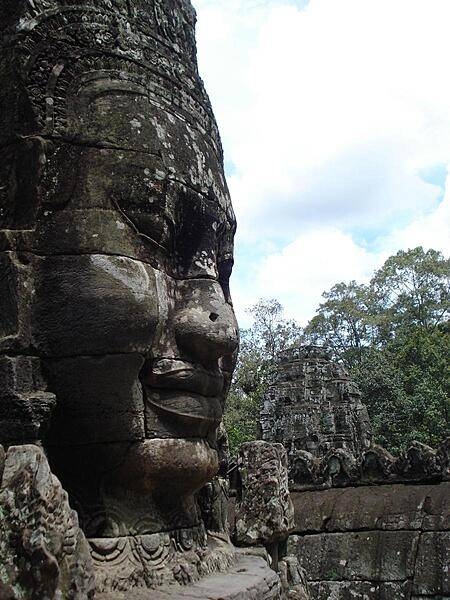
Close up of one of the 216 faces at the Bayon temple at Angkor Thom.
Close up of one of the 216 faces at the Bayon temple at Angkor Thom. • CIA World Factbook • 2020
CIA World Factbook • 2020
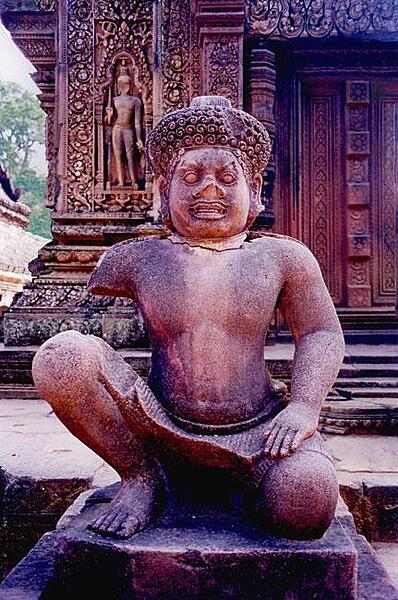
Statue at Banteay Srei, a temple at Angkor.
Statue at Banteay Srei, a temple at Angkor. • CIA World Factbook • 2020
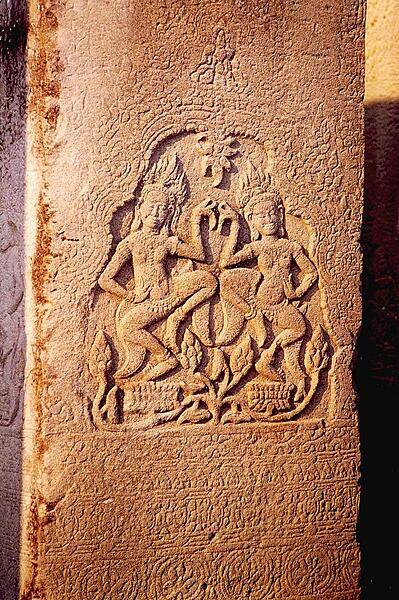
Carving at Banteay Srei, a 10th century red sandstone temple at Angkor that is much smaller than the other temple complexes in the region. Many of the exquisite carvings in this temple were stolen and sent to museums around the world. Today, some of these carvings have been replaced by cement replicas.
Carving at Banteay Srei, a 10th century red sandstone temple at Angkor that is much smaller than the other temple complexes in the region. Many of the exquisite carvings in this temple were stolen and sent to museums around the world. Today, some of these carvings have been replaced by cement replicas. • CIA World Factbook • 2020
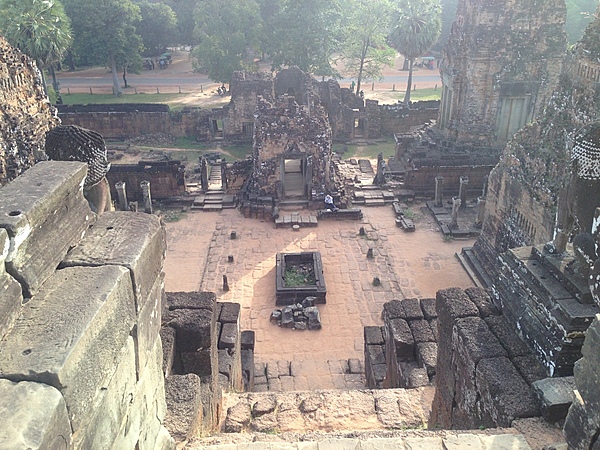
View from the top of the Pre Rup temple looking down into a courtyard with a central "cistern."
View from the top of the Pre Rup temple looking down into a courtyard with a central "cistern." • CIA World Factbook • 2020
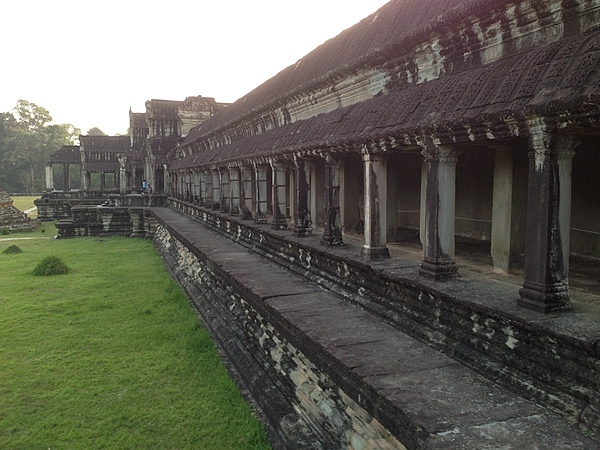
A covered promenade at Angkor Wat.
A covered promenade at Angkor Wat. • CIA World Factbook • 2020
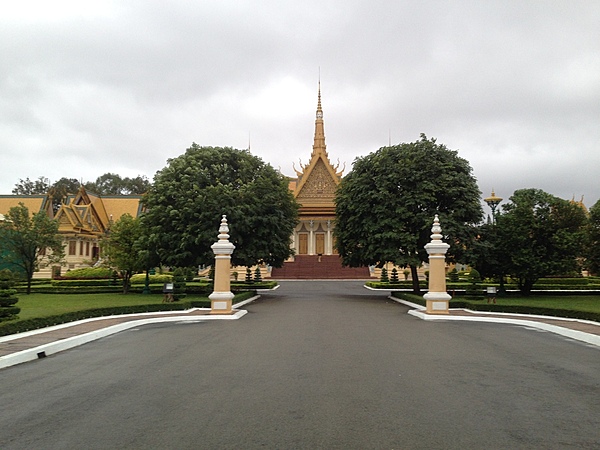
Approaching the Royal Palace grounds in Phnom Penh, Cambodia's capital.
Approaching the Royal Palace grounds in Phnom Penh, Cambodia's capital. • CIA World Factbook • 2020
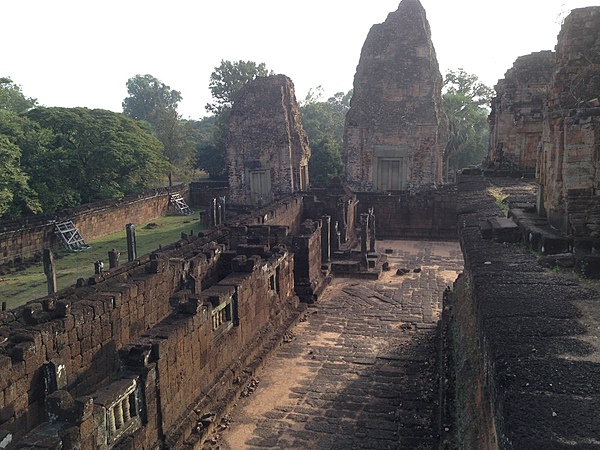
Side view along one of the elevated platforms at Pre Rup.
Side view along one of the elevated platforms at Pre Rup. • CIA World Factbook • 2020
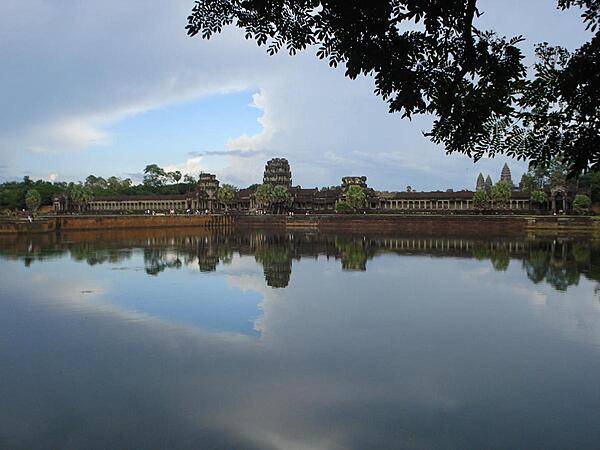
A portion of the sprawling Angkor Wat temple complex as viewed across a moat.
A portion of the sprawling Angkor Wat temple complex as viewed across a moat. • CIA World Factbook • 2020
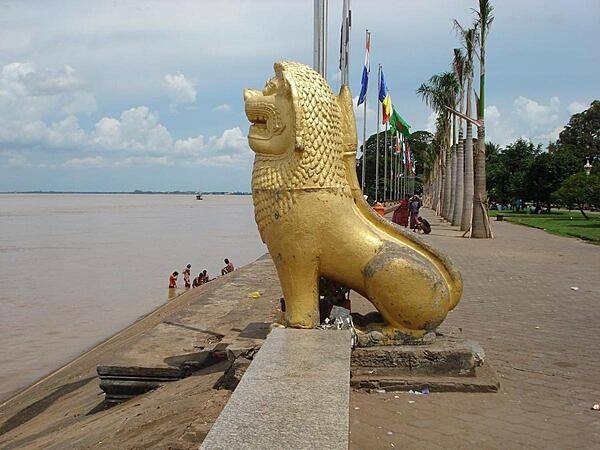
CIA World Factbook • 2020
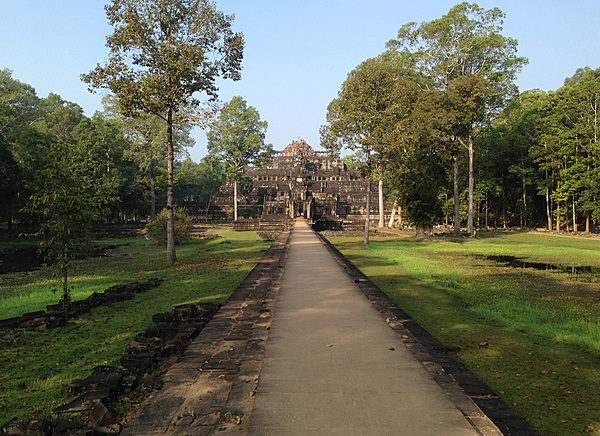
The Baphuon is a temple located in Angkor Thom, northwest of the Bayon. Built in the mid-11th century, it is a three-tiered temple mountain.
The Baphuon is a temple located in Angkor Thom, northwest of the Bayon. Built in the mid-11th century, it is a three-tiered temple mountain. • CIA World Factbook • 2020
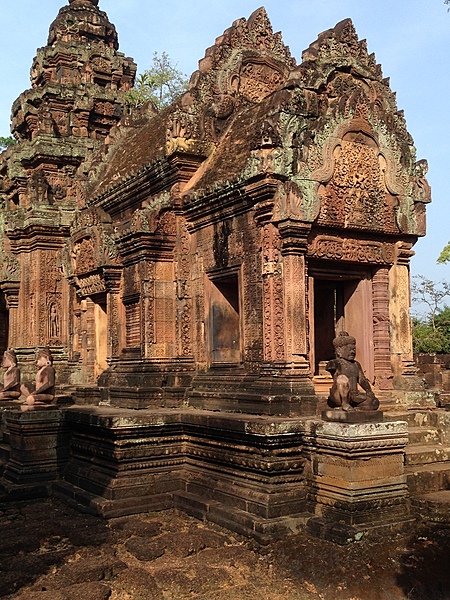
Another view of the intricate reliefs on the mandapa (pillared hall) and central tower at Banteay Srei.
Another view of the intricate reliefs on the mandapa (pillared hall) and central tower at Banteay Srei. • CIA World Factbook • 2020
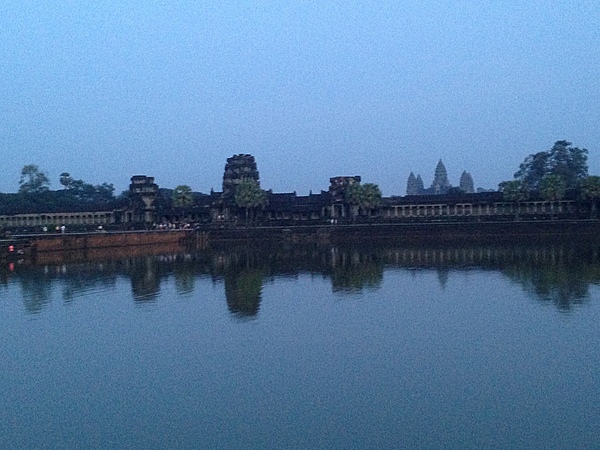
Evening at Angkor Wat.
Evening at Angkor Wat. • CIA World Factbook • 2020
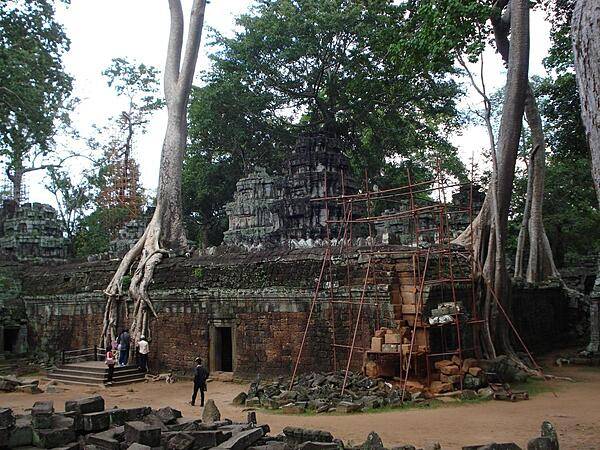
A portion of the Angkor temple area undergoing restoration.
A portion of the Angkor temple area undergoing restoration. • CIA World Factbook • 2020
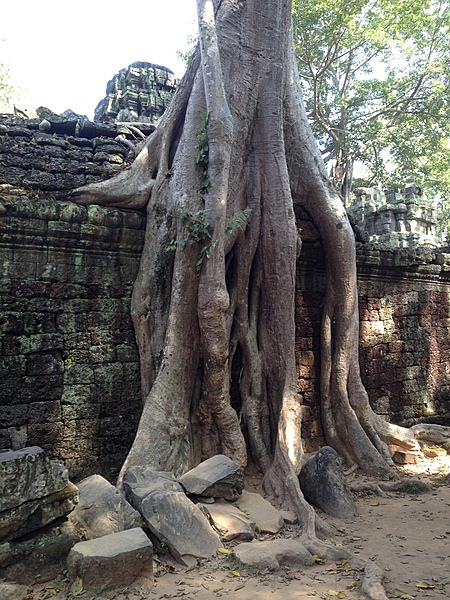
Tree roots drape over a wall at Ta Prohm, the modern name for the late 12th and early 13th century temple in Siem Reap. Located approximately 1 km east of Angkor Thom, Ta Prohm was founded by the Khmer King Jayavarman VII as a Buddhist monastery and university. Unlike most Angkorian temples, Ta Prohm remains in much the same condition as when it was found. The photogenic and atmospheric combination of trees growing out of the ruins and the jungle surroundings have made it one of Angkor's most popular temples with visitors. UNESCO inscribed Ta Prohm on its World Heritage List in 1992. Today, it is one of the most visited complexes in Cambodia’s Angkor region.
Tree roots drape over a wall at Ta Prohm, the modern name for the late 12th and early 13th century temple in Siem Reap. Located approximately 1 km east of Angkor Thom, Ta Prohm was founded by the Khmer King Jayavarman VII as a Buddhist monastery and university. Unlike most Angkorian temples, Ta Prohm remains in much the same condition as when it was found. The photogenic and atmospheric combination of trees growing out of the ruins and the jungle surroundings have made it one of Angkor's most popular temples with visitors. UNESCO inscribed Ta Prohm on its World Heritage List in 1992. Today, it is one of the most visited complexes in Cambodia’s Angkor region. • CIA World Factbook • 2020
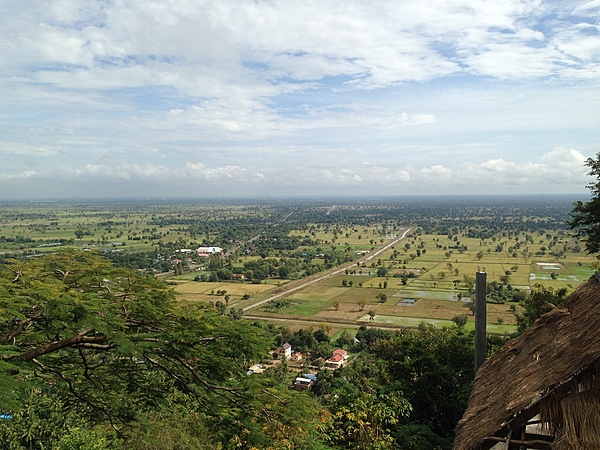
Battambang province in northwestern Cambodia is the leading rice-producing province of the country.
Battambang province in northwestern Cambodia is the leading rice-producing province of the country. • CIA World Factbook • 2020
CIA World Factbook • 2020
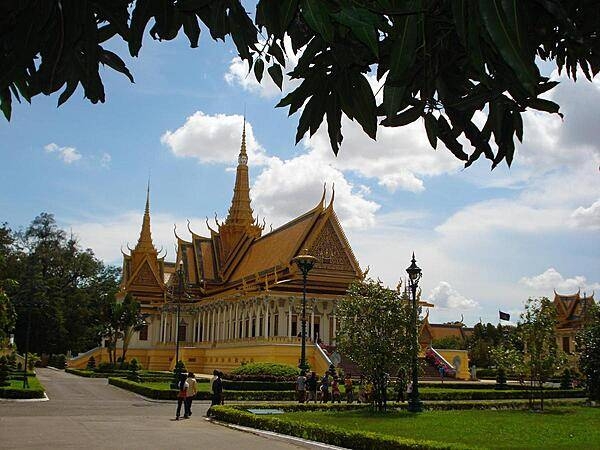
CIA World Factbook • 2020
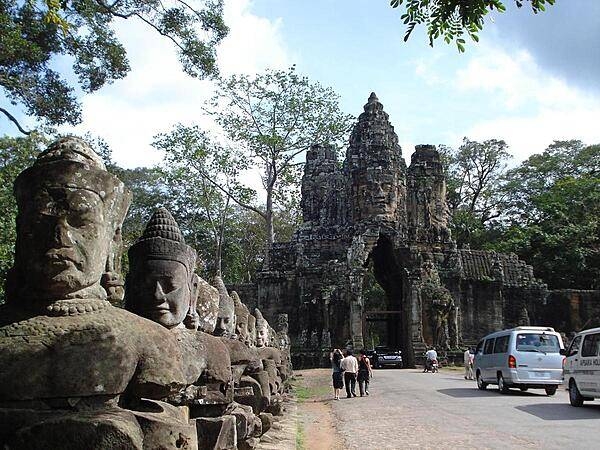
The entrance to the temple complex of Angkor Wat, built in the 12th century by King Suryavarman II.
The entrance to the temple complex of Angkor Wat, built in the 12th century by King Suryavarman II. • CIA World Factbook • 2020
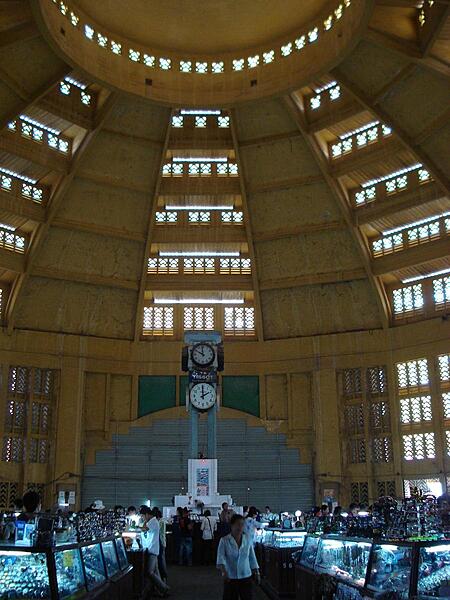
The Central Market (Phsar Thom Thmey) is an art deco landmark in Phnom Penh constructed in 1936-37; it underwent renovation between 2009-11 and is always packed with vendors.
The Central Market (Phsar Thom Thmey) is an art deco landmark in Phnom Penh constructed in 1936-37; it underwent renovation between 2009-11 and is always packed with vendors. • CIA World Factbook • 2020
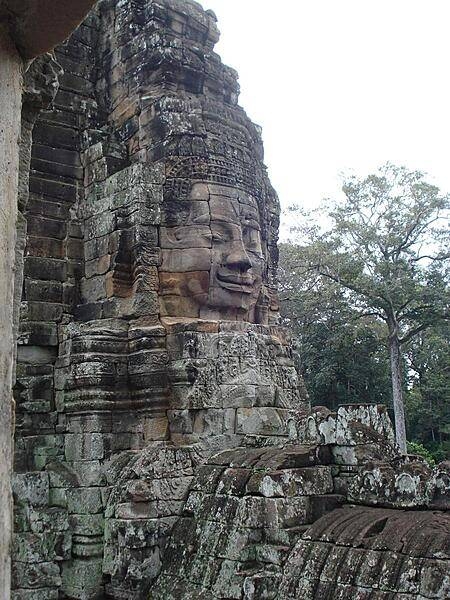
The Bayon is chiefly known for the multitude of serene and massive stone faces on its many towers.
The Bayon is chiefly known for the multitude of serene and massive stone faces on its many towers. • CIA World Factbook • 2020
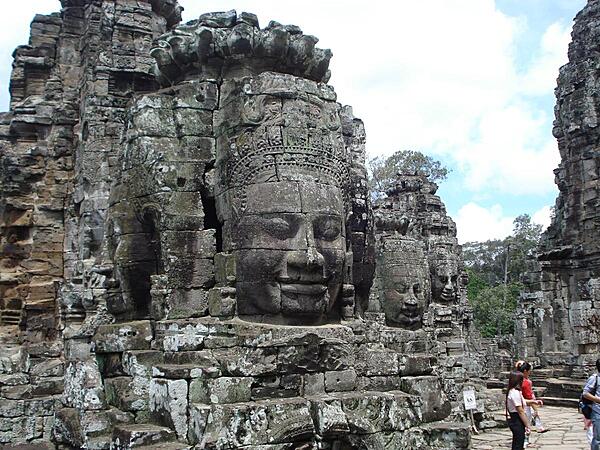
Another view of the Bayon temple. How many faces can you find?
Another view of the Bayon temple. How many faces can you find? • CIA World Factbook • 2020
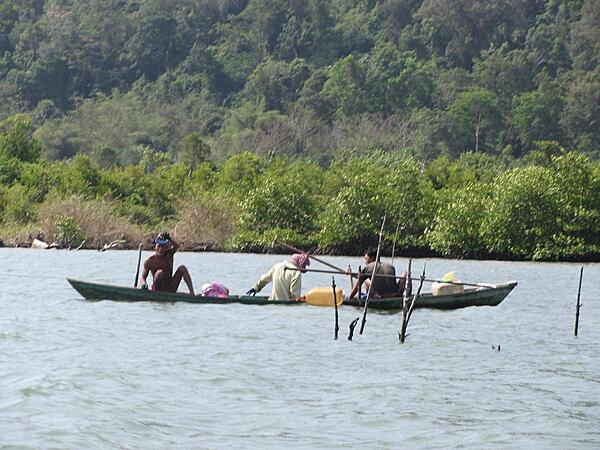
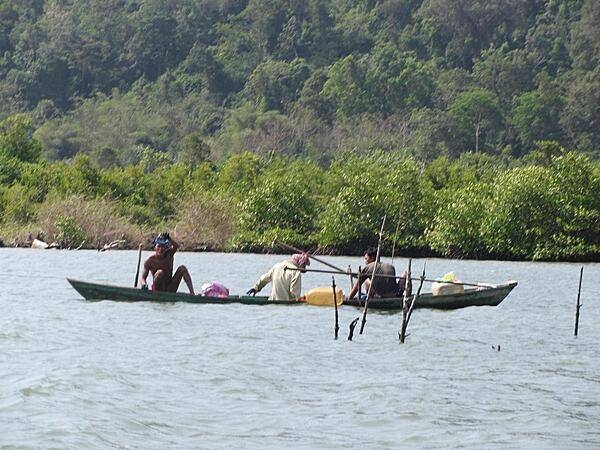
Fishing on the Prek Toeuk Sap River in Ream National Park about 18 km (11 mi) from Sihanoukville. The park, which covers approximately 15,000 ha (37,000 acres), was founded by King Norodom SIHANOUK in 1993. It contains about 150 species of birds and has a large monkey population.
Fishing on the Prek Toeuk Sap River in Ream National Park about 18 km (11 mi) from Sihanoukville. The park, which covers approximately 15,000 ha (37,000 acres), was founded by King Norodom SIHANOUK in 1993. It contains about 150 species of birds and has a large monkey population. • CIA World Factbook • 2020
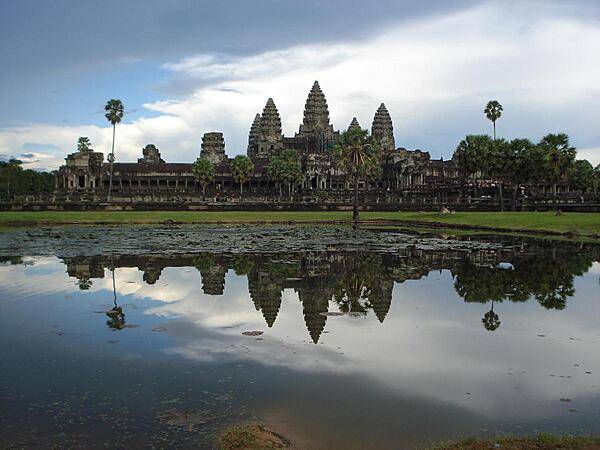
View of the main Angkor Wat temple complex reflected in a pool. The central towered portion appears on the Cambodian flag.
View of the main Angkor Wat temple complex reflected in a pool. The central towered portion appears on the Cambodian flag. • CIA World Factbook • 2020
CIA World Factbook • 2020
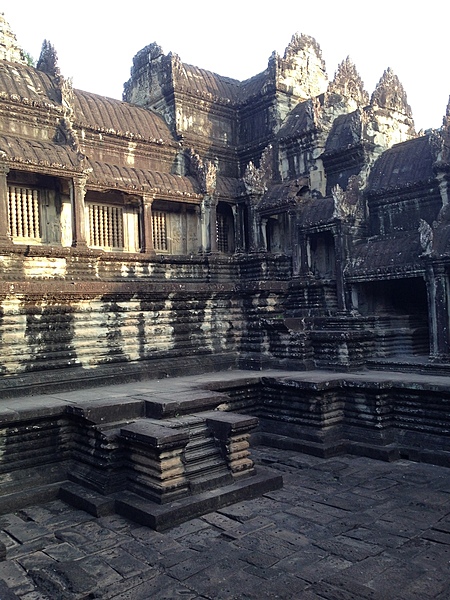
Closeup of building details at Angkor Wat.
Closeup of building details at Angkor Wat. • CIA World Factbook • 2020
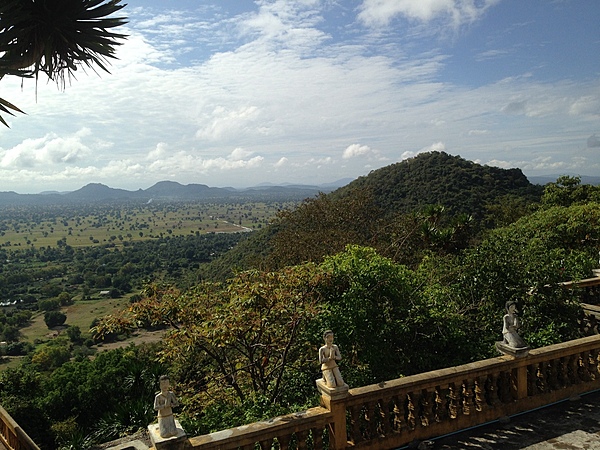
Countryside view of Battambang province in northwestern Cambodia with its scattered low hills that break up the flat terrain.
Countryside view of Battambang province in northwestern Cambodia with its scattered low hills that break up the flat terrain. • CIA World Factbook • 2020
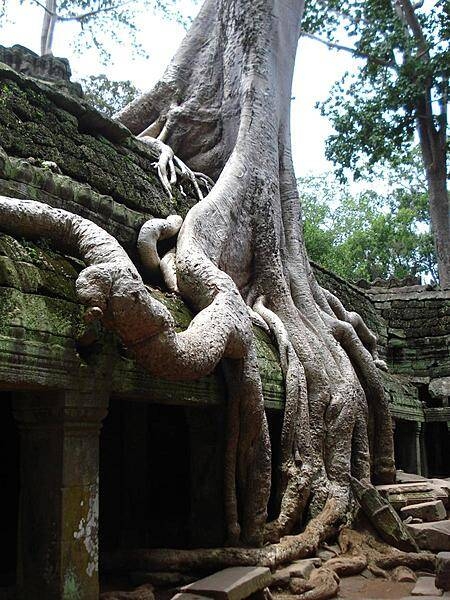
Sections of the Angkor Wat temple area are overgrown with trees. Here a massive root system is slowly engulfing a temple building.
Sections of the Angkor Wat temple area are overgrown with trees. Here a massive root system is slowly engulfing a temple building. • CIA World Factbook • 2020
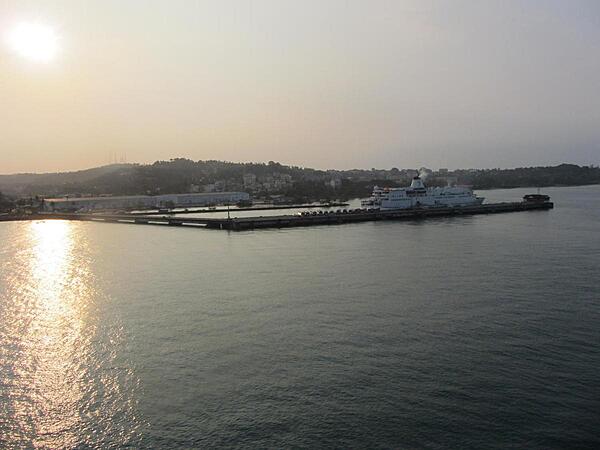
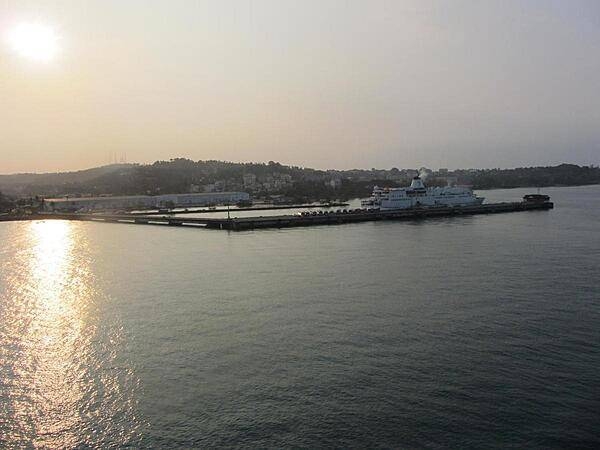
Sihanoukville, part of which is seen here at sunrise, is a major port in Cambodia and a growing beach resort. It was called Kampong Saom during the time of the Khmer Rouge. Construction on the port began in 1955 at the direction of King Norodom SIHANOUK after Vietnam began to restrict Cambodian access to ports in that country. The deep-water port, which opened in 1960, lies on the Gulf of Thailand about 185 km (115 mi) south of the capital at Phnom Penh.
Sihanoukville, part of which is seen here at sunrise, is a major port in Cambodia and a growing beach resort. It was called Kampong Saom during the time of the Khmer Rouge. Construction on the port began in 1955 at the direction of King Norodom SIHANOUK after Vietnam began to restrict Cambodian access to ports in that country. The deep-water port, which opened in 1960, lies on the Gulf of Thailand about 185 km (115 mi) south of the capital at Phnom Penh. • CIA World Factbook • 2020
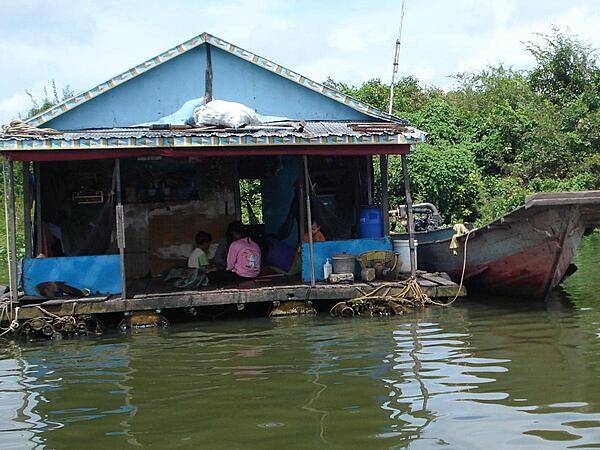
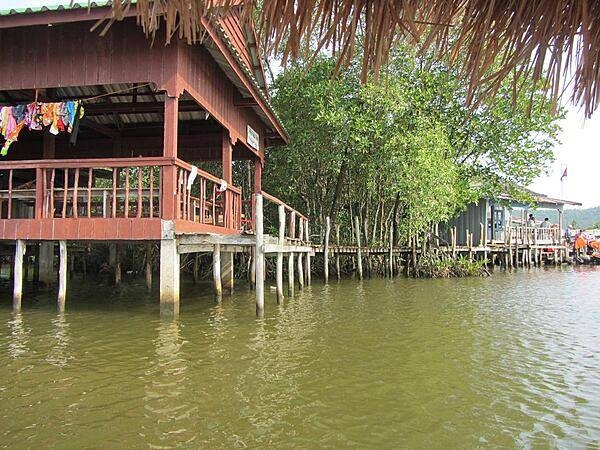
Typical floating house on Tonle Sap.
Typical floating house on Tonle Sap. • CIA World Factbook • 2020
CIA World Factbook • 2020
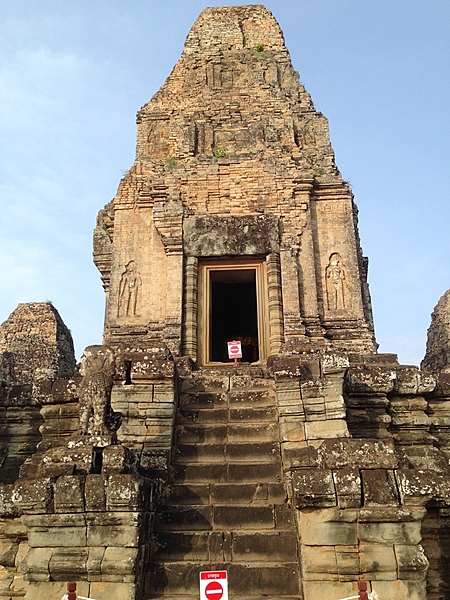
The central tower of the Pre Rup temple at Angkor.
The central tower of the Pre Rup temple at Angkor. • CIA World Factbook • 2020
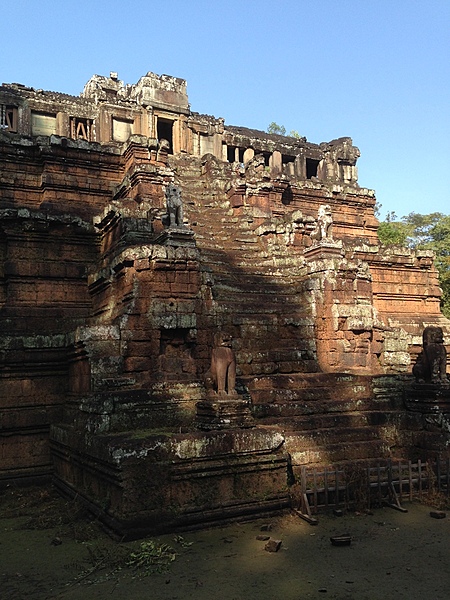
Phimeanakas is a three-tiered Hindu temple at Angkor Thom that dates to the end of the 10th century.
Phimeanakas is a three-tiered Hindu temple at Angkor Thom that dates to the end of the 10th century. • CIA World Factbook • 2020
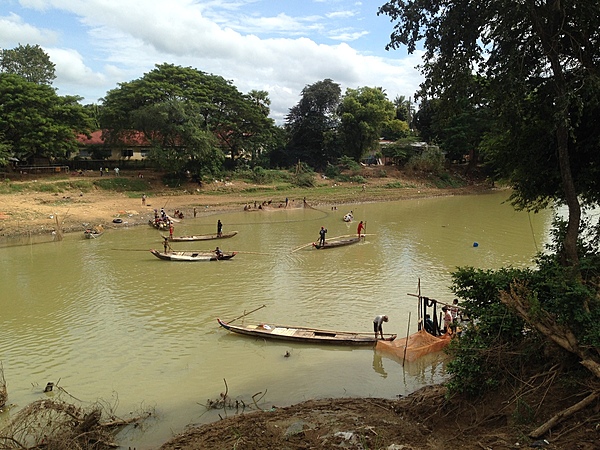
Along the Sangkor River in Battambang province in northwestern Cambodia.
Along the Sangkor River in Battambang province in northwestern Cambodia. • CIA World Factbook • 2020
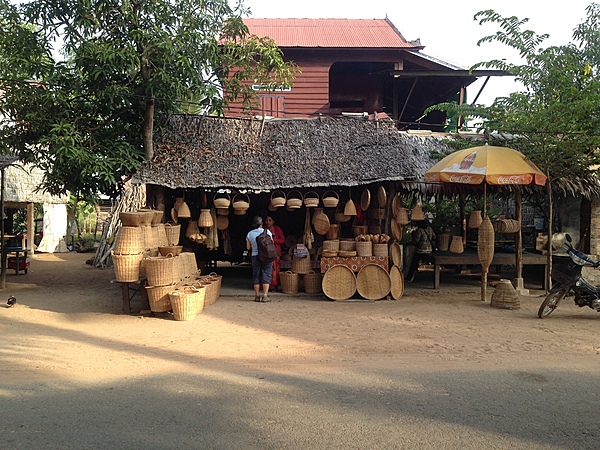
A store selling a wide variety of baskets in a typical Angkor-area village.
A store selling a wide variety of baskets in a typical Angkor-area village. • CIA World Factbook • 2020
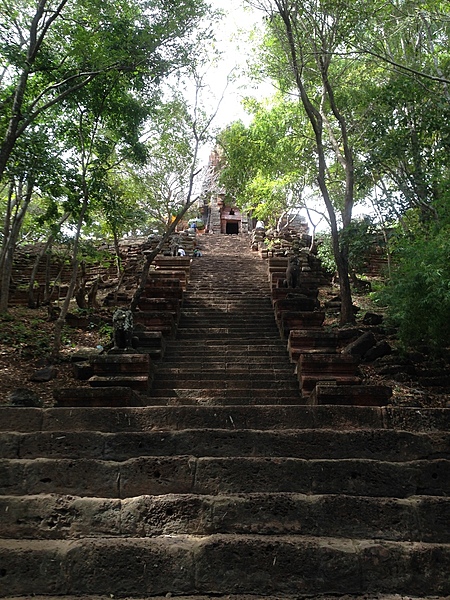
Steep stairway leading to a temple at Prasat Bayang.
Steep stairway leading to a temple at Prasat Bayang. • CIA World Factbook • 2020
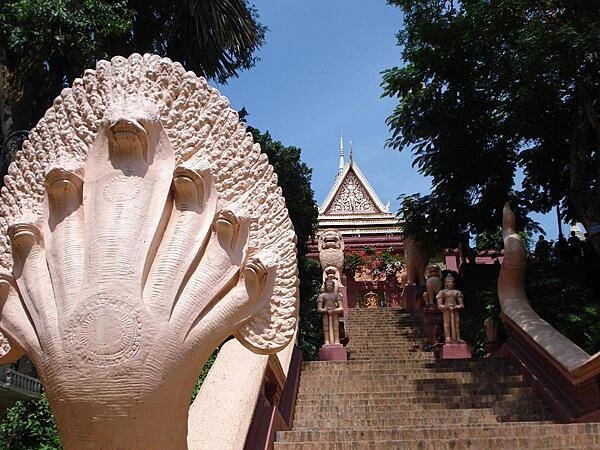
Stairway leading to the temple at Wat Phnom.
Stairway leading to the temple at Wat Phnom. • CIA World Factbook • 2020
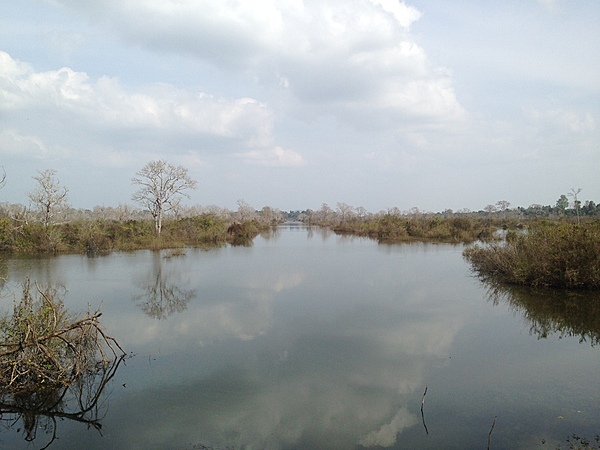
Much of the countryside around Angkor has a high water table and requires drainage.
Much of the countryside around Angkor has a high water table and requires drainage. • CIA World Factbook • 2020
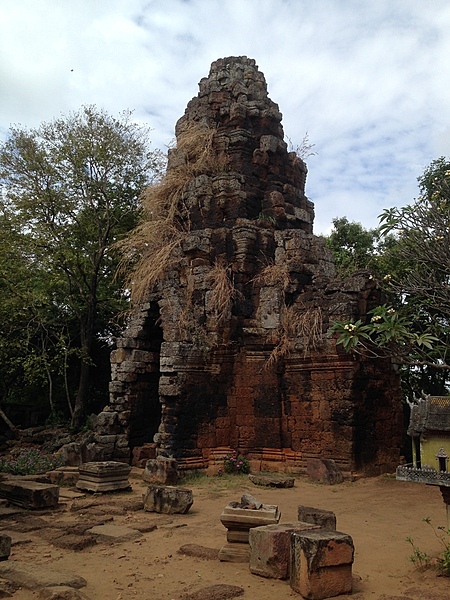
Prasat Bayang is a ruined temple near Angkor Borei, in eastern Cambodia. The temple is known for having the earliest known depictions of Khmer numerals, dating back to AD 604.
Prasat Bayang is a ruined temple near Angkor Borei, in eastern Cambodia. The temple is known for having the earliest known depictions of Khmer numerals, dating back to AD 604. • CIA World Factbook • 2020
CIA World Factbook • 2020
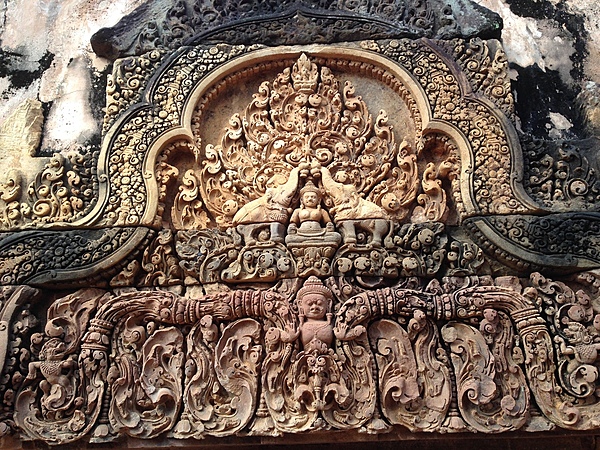
Intricate decorative carvings at Banteay Srei.
Intricate decorative carvings at Banteay Srei. • CIA World Factbook • 2020
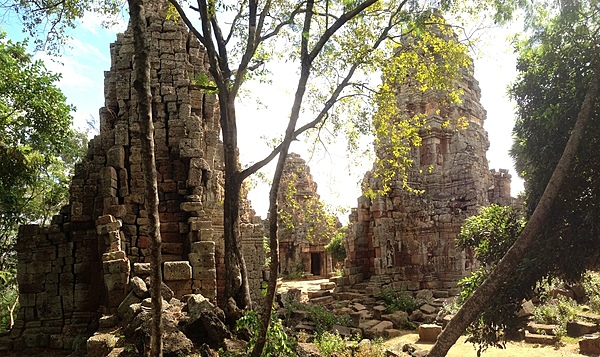
Prasat Bayang is a ruined temple complex near Angkor Borei, in southern Cambodia, renowned for having the earliest known depictions of Khmer numerals, dating back to A.D. 604.
Prasat Bayang is a ruined temple complex near Angkor Borei, in southern Cambodia, renowned for having the earliest known depictions of Khmer numerals, dating back to A.D. 604. • CIA World Factbook • 2020
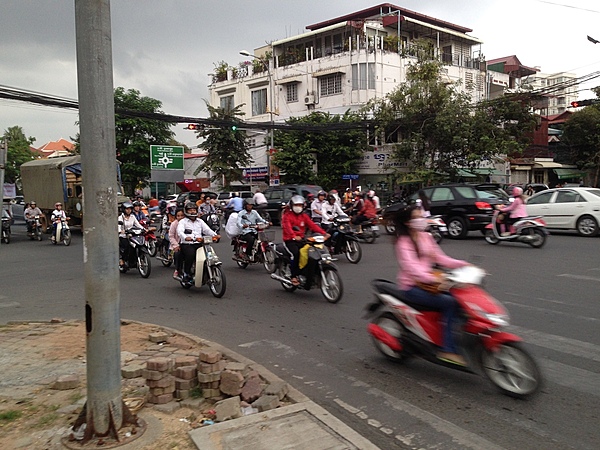
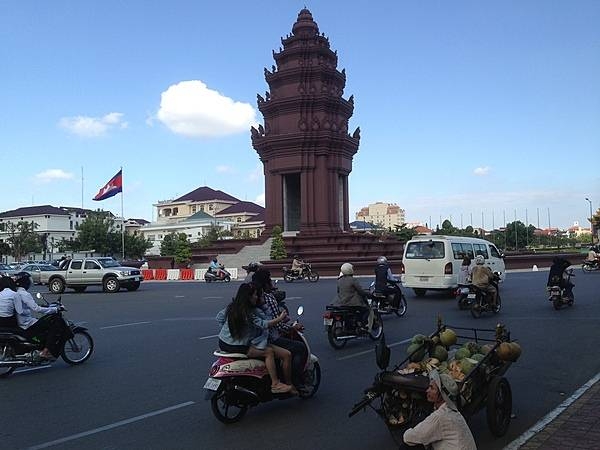
Busy street in Phnom Penh where motorcycles are a very common form of transportation.
Busy street in Phnom Penh where motorcycles are a very common form of transportation. • CIA World Factbook • 2020
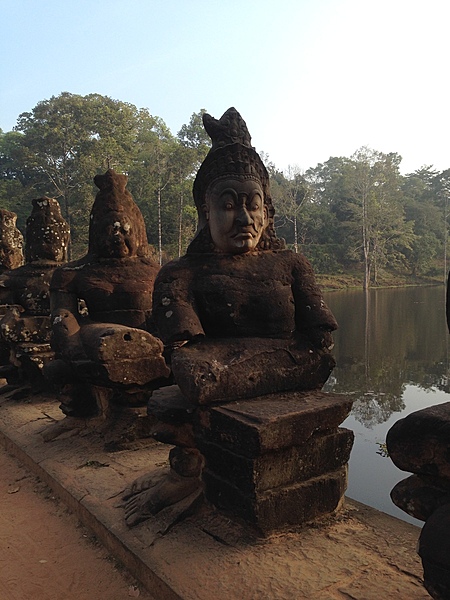
Serene statues on a bridge at the South Gate at Angkor Thom.
Serene statues on a bridge at the South Gate at Angkor Thom. • CIA World Factbook • 2020
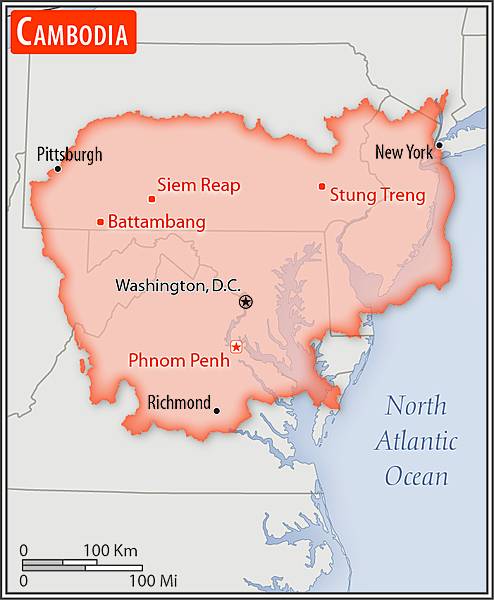
Area comparison map
Area comparison map • CIA World Factbook • 2020
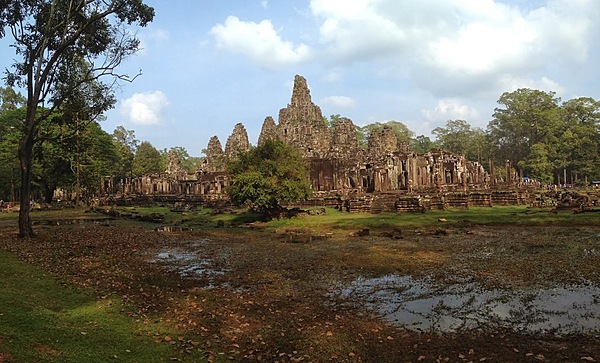
The Bayon is a richly decorated Khmer temple at Angkor best known for the multitude of serene and smiling stone faces on its many towers.
The Bayon is a richly decorated Khmer temple at Angkor best known for the multitude of serene and smiling stone faces on its many towers. • CIA World Factbook • 2020
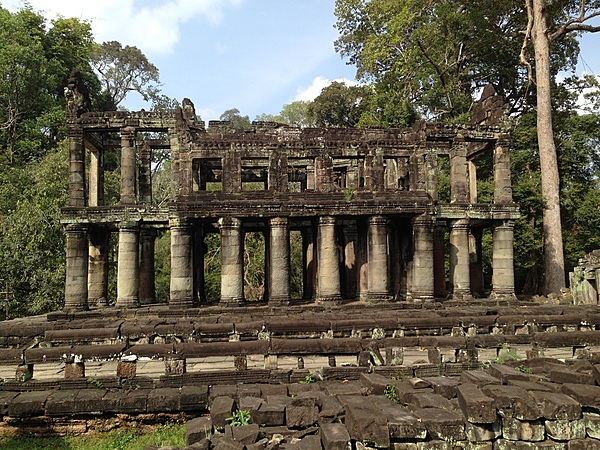
Preah Khan is a temple located northeast of Angkor Thom, it was built in the 12th century for King Jayavarman VII to honor his father. Preah Khan remains largely unrestored, with numerous trees and other vegetation growing among the ruins. The purpose of this two-story building with round columns is unknown, but it is referred to as "the library."
Preah Khan is a temple located northeast of Angkor Thom, it was built in the 12th century for King Jayavarman VII to honor his father. Preah Khan remains largely unrestored, with numerous trees and other vegetation growing among the ruins. The purpose of this two-story building with round columns is unknown, but it is referred to as "the library." • CIA World Factbook • 2020
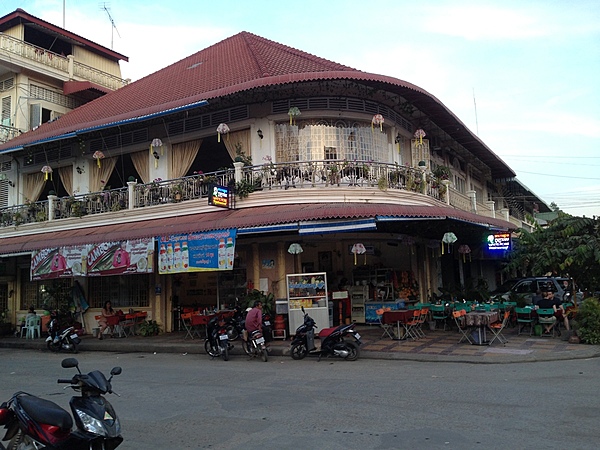
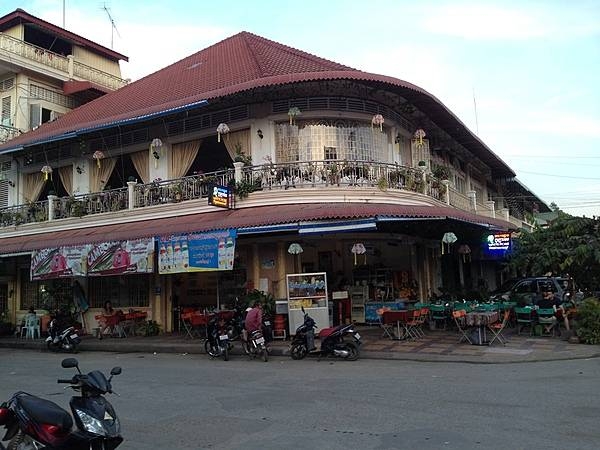
A restaurant in Battambang, a city founded in the 11th century and capital of Battambang province in northwestern Cambodia.
A restaurant in Battambang, a city founded in the 11th century and capital of Battambang province in northwestern Cambodia. • CIA World Factbook • 2020
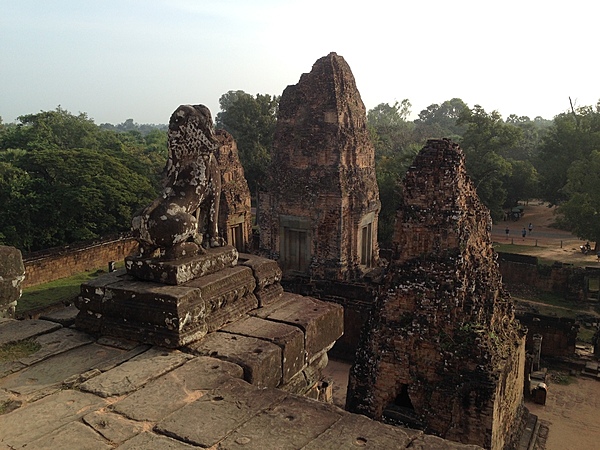
Pre Rup is a Hindu temple at Angkor dedicated to the god Shiva; it was built as the state temple of Khmer King Rajendravarman in the mid 10th century. This view is from the top of the temple.
Pre Rup is a Hindu temple at Angkor dedicated to the god Shiva; it was built as the state temple of Khmer King Rajendravarman in the mid 10th century. This view is from the top of the temple. • CIA World Factbook • 2020
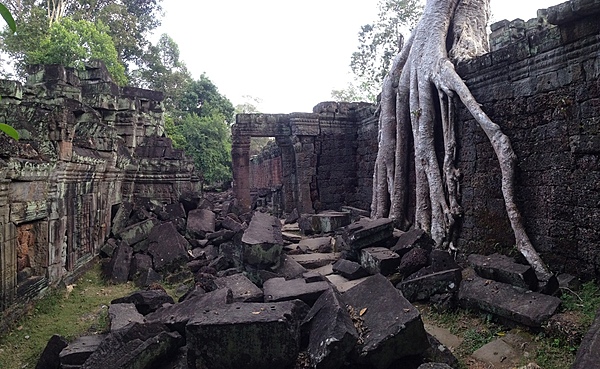
An area of the Preah Khan temple that has not undergone any restoration and is full of tumbled building blocks and encroaching vegetation.
An area of the Preah Khan temple that has not undergone any restoration and is full of tumbled building blocks and encroaching vegetation. • CIA World Factbook • 2020
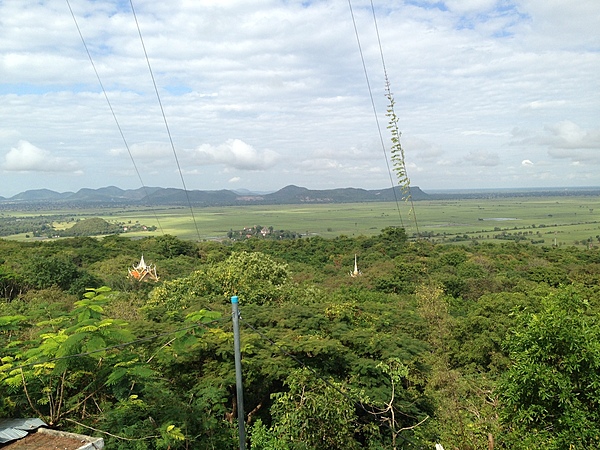
View of the countryside in Battambang province (northwestern Cambodia), which is the leading rice-producing province of the country.
View of the countryside in Battambang province (northwestern Cambodia), which is the leading rice-producing province of the country. • CIA World Factbook • 2020
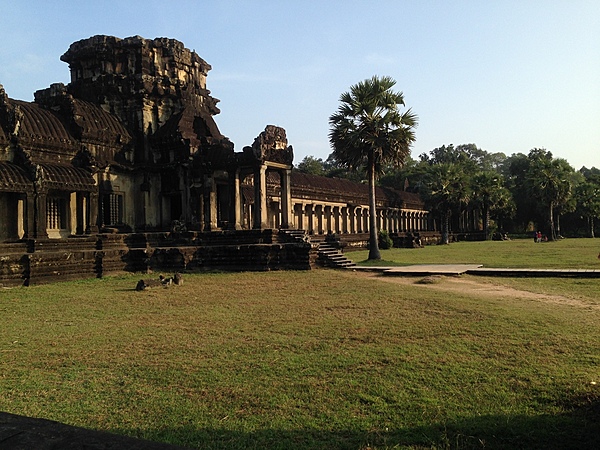
Some of the well-preserved temples at Angkor Wat.
Some of the well-preserved temples at Angkor Wat. • CIA World Factbook • 2020
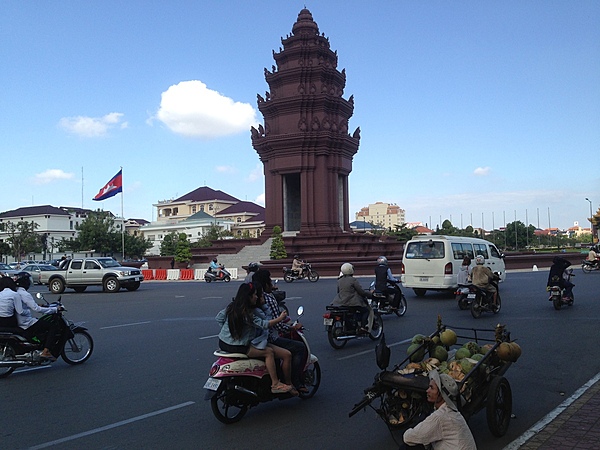
The Independence Monument in Phnom Penh, capital of Cambodia, was completed in 1958 to memorialize Cambodia's independence from France in 1953. Its lotus-shaped stupa form mimics the style seen at the Khmer temple at Banteay Srei and other Khmer historical sites.
The Independence Monument in Phnom Penh, capital of Cambodia, was completed in 1958 to memorialize Cambodia's independence from France in 1953. Its lotus-shaped stupa form mimics the style seen at the Khmer temple at Banteay Srei and other Khmer historical sites. • CIA World Factbook • 2020
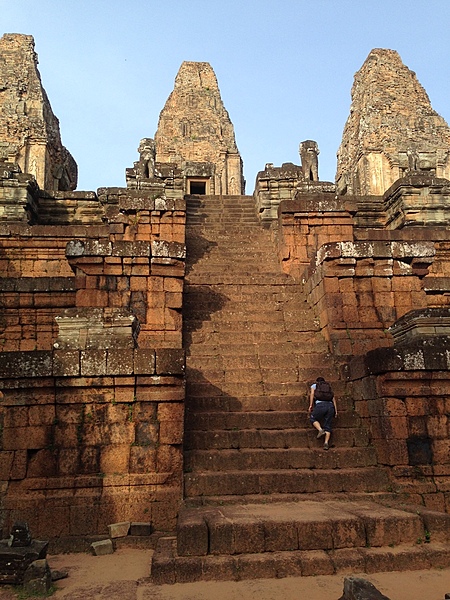
Pre Rup is a Hindu temple at Angkor dedicated to the god Shiva; it was built as the state temple of Khmer King Rajendravarman in the mid 10th century.
Pre Rup is a Hindu temple at Angkor dedicated to the god Shiva; it was built as the state temple of Khmer King Rajendravarman in the mid 10th century. • CIA World Factbook • 2020
Media source: CIA World Factbook (2020) — Public Domain