›››
Albania — Media Gallery
12 items available (flags, maps, photos)
Photos
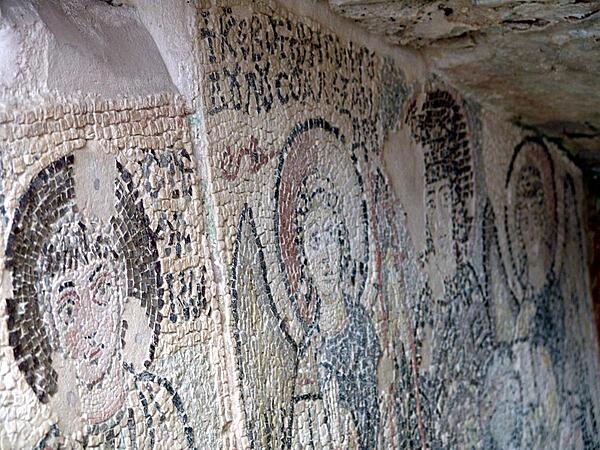
Mosaics in the Durres Amphitheater. Constructed in the 2nd century A.D., the structure could seat 20,000 people. First discovered in the late 1900's, the amphitheater is only half unearthed.
Mosaics in the Durres Amphitheater. Constructed in the 2nd century A.D., the structure could seat 20,000 people. First discovered in the late 1900's, the amphitheater is only half unearthed. • CIA World Factbook • 2020
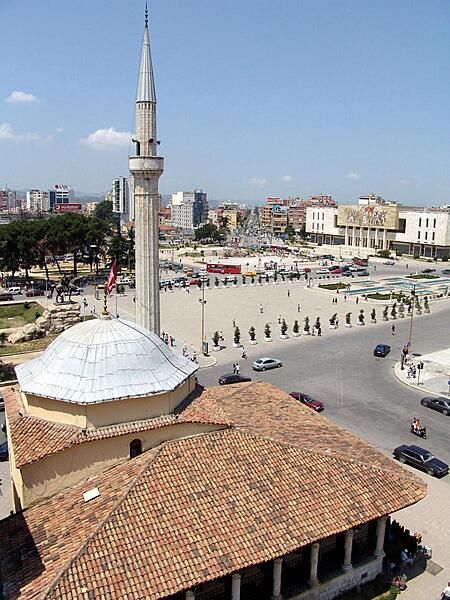
Skanderbeg Square in the center of Tirana as viewed from the city's clock tower.
Skanderbeg Square in the center of Tirana as viewed from the city's clock tower. • CIA World Factbook • 2020
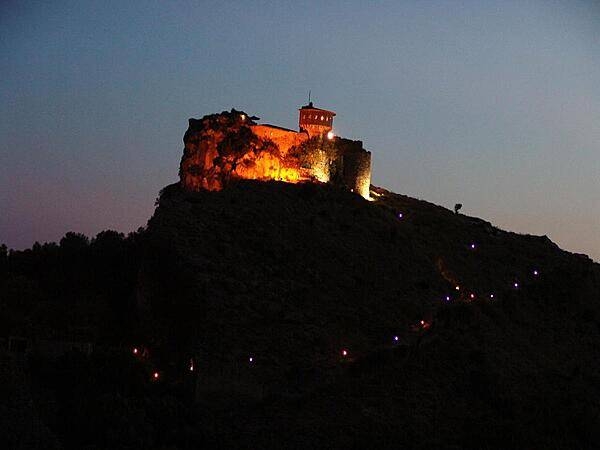
Petrela Castle (outside Tirana) was the home of Skanderbeg's sister and part of his defense network against the Ottomans. The central tower dates from 500 A.D. and the surrounding Byzantine fortifications date from the 11th to the 14th centuries.
Petrela Castle (outside Tirana) was the home of Skanderbeg's sister and part of his defense network against the Ottomans. The central tower dates from 500 A.D. and the surrounding Byzantine fortifications date from the 11th to the 14th centuries. • CIA World Factbook • 2020
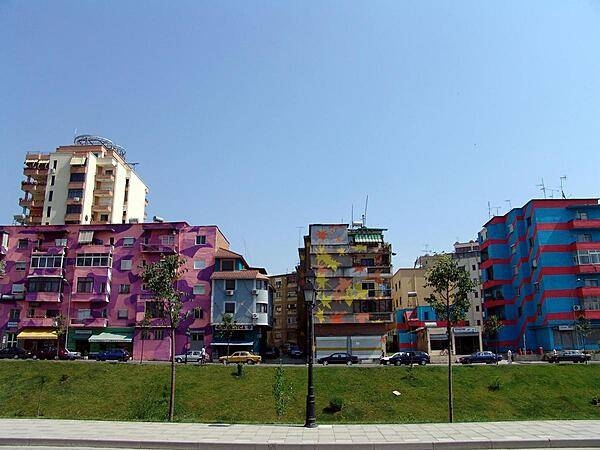
Under Communism, everything was grey and dreary. Today, Tirana's buildings are splashed with color; these are apartment buildings.
Under Communism, everything was grey and dreary. Today, Tirana's buildings are splashed with color; these are apartment buildings. • CIA World Factbook • 2020
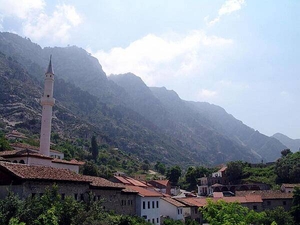
The town of Kruje is renowned as the hometown of Skanderbeg, Albania's national hero. The 15th-century military leader is remembered for his prolonged but successful struggle against the Ottoman Empire.
The town of Kruje is renowned as the hometown of Skanderbeg, Albania's national hero. The 15th-century military leader is remembered for his prolonged but successful struggle against the Ottoman Empire. • CIA World Factbook • 2020
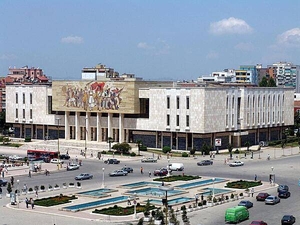
"The Albanians," a colorful mosaic on the facade of the National Historical Museum in Tirana, depicts the evolution of Albanian history from ancient Illyrians to 20th-century partisans.
"The Albanians," a colorful mosaic on the facade of the National Historical Museum in Tirana, depicts the evolution of Albanian history from ancient Illyrians to 20th-century partisans. • CIA World Factbook • 2020
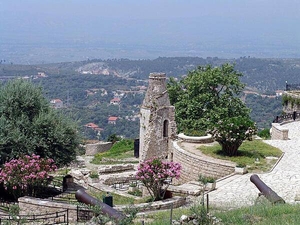
View from the castle at Kruje.
View from the castle at Kruje. • CIA World Factbook • 2020
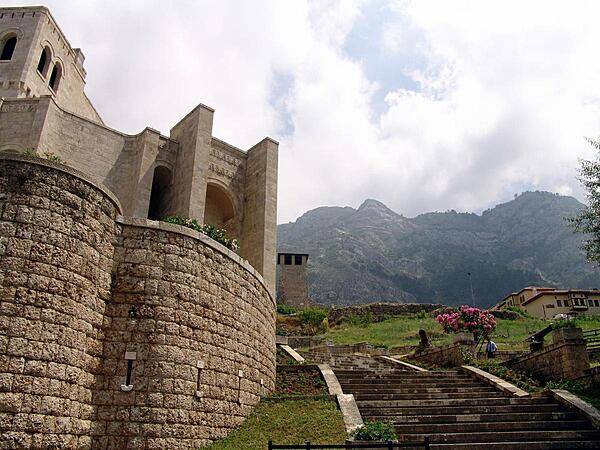
Stairs leading up to the Castle in Kruje where Skanderbeg and his troops withstood three sieges by the Ottomans.
Stairs leading up to the Castle in Kruje where Skanderbeg and his troops withstood three sieges by the Ottomans. • CIA World Factbook • 2020
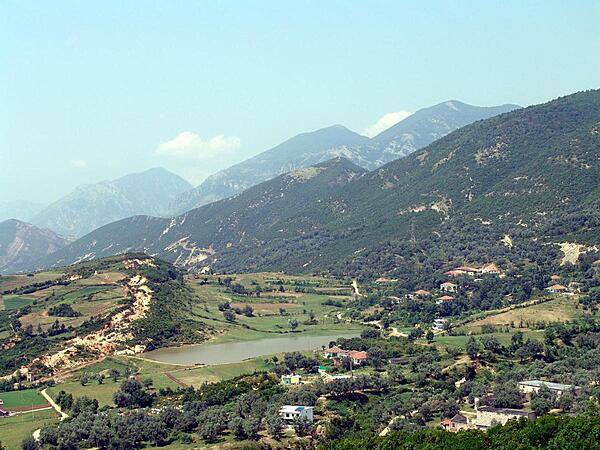
Seventy percent of the surface of Albania is covered by the mountains of the Dinaric and Pindus Alps. The 1,230-meter tall Mount Dajti of the Dinaric range overlooks Tirana.
Seventy percent of the surface of Albania is covered by the mountains of the Dinaric and Pindus Alps. The 1,230-meter tall Mount Dajti of the Dinaric range overlooks Tirana. • CIA World Factbook • 2020
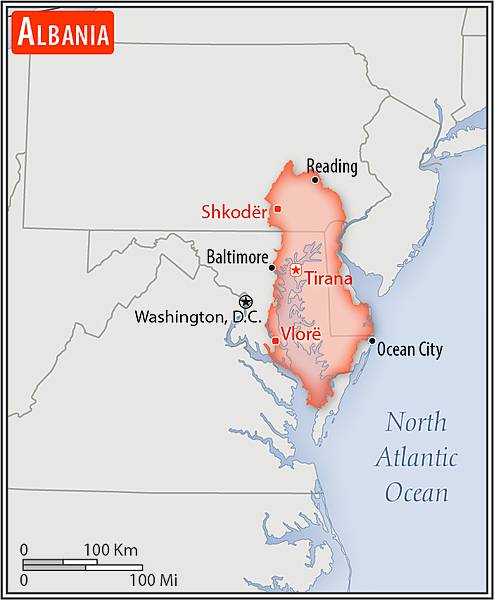
Area comparison map
Area comparison map • CIA World Factbook • 2020
Sunset over the Dinaric Alps.
Sunset over the Dinaric Alps. • CIA World Factbook • 2020
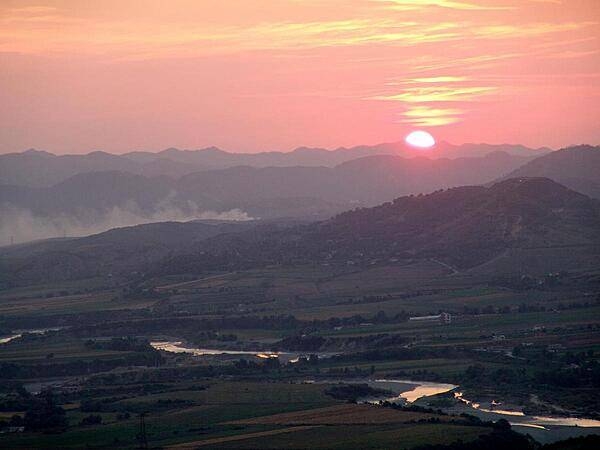
Sunset over the Dinaric Alps.
Sunset over the Dinaric Alps. • CIA World Factbook • 2020
Media source: CIA World Factbook (2020) — Public Domain