›››
Spain — Media Gallery
105 items available (flags, maps, photos)
Photos
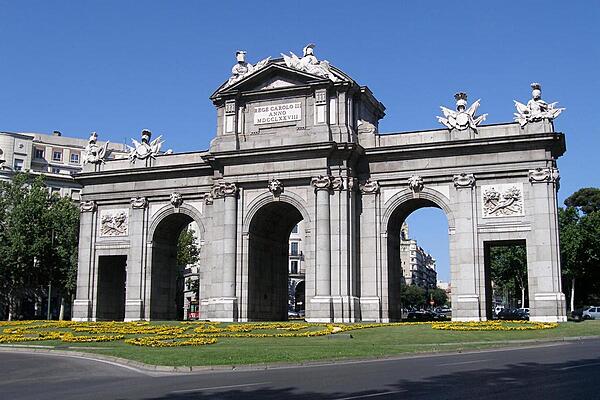
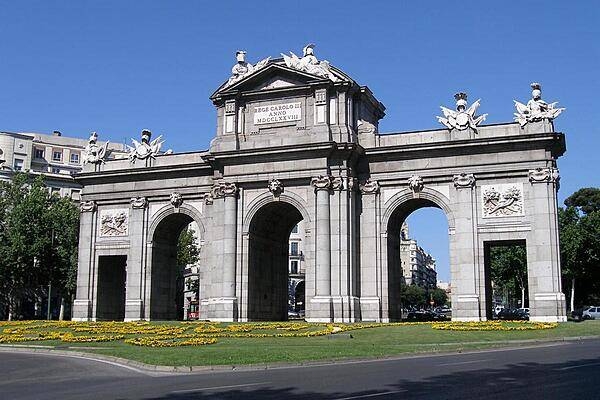
The Puerta de Alcala (Alcala Gate) monument in the Plaza de la Independencia (Independence Square) in Madrid. Inaugurated by King Carlos III in 1778, it originally functioned as an enormous gate in the city's wall.
The Puerta de Alcala (Alcala Gate) monument in the Plaza de la Independencia (Independence Square) in Madrid. Inaugurated by King Carlos III in 1778, it originally functioned as an enormous gate in the city's wall. • CIA World Factbook • 2020
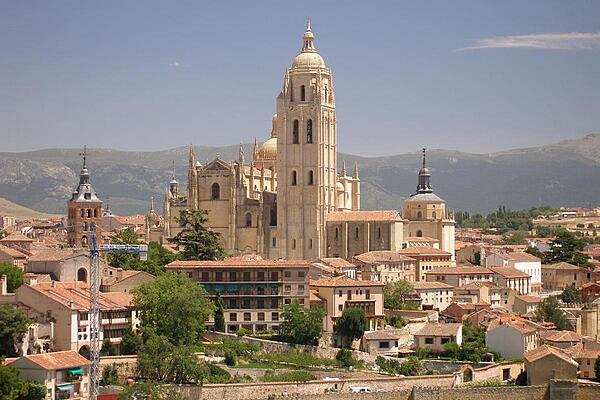
View of the 16th-century Cathedral of Segovia as seen from the Torre de Juan II (Tower of John II) in the Alcazar. Built between 1525 and 1577, this late Gothic structure - dedicated to the Virgin Mary - is referred to as the "Dame of Spanish Cathedrals."
View of the 16th-century Cathedral of Segovia as seen from the Torre de Juan II (Tower of John II) in the Alcazar. Built between 1525 and 1577, this late Gothic structure - dedicated to the Virgin Mary - is referred to as the "Dame of Spanish Cathedrals." • CIA World Factbook • 2020
CIA World Factbook • 2020
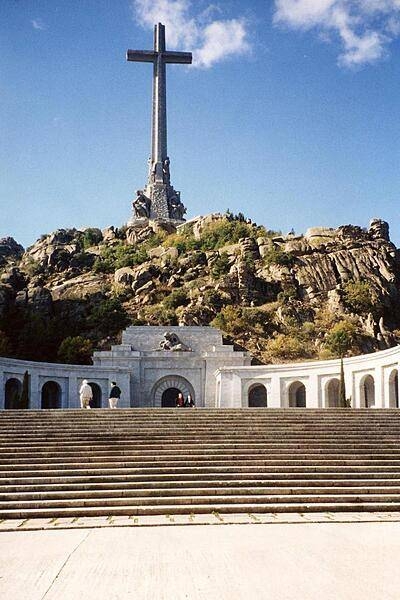
View of the Valley of the Fallen, a memorial to the dead of the Spanish Civil War (1936-1939), in the municipality of San Lorenzo de El Escorial.
View of the Valley of the Fallen, a memorial to the dead of the Spanish Civil War (1936-1939), in the municipality of San Lorenzo de El Escorial. • CIA World Factbook • 2020
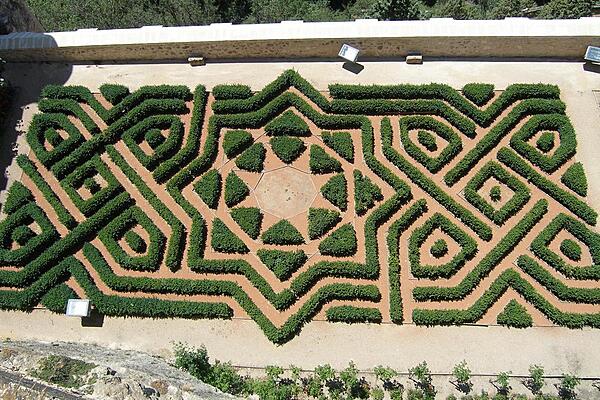
Garden at the Alcazar (fortress) in Segovia.
Garden at the Alcazar (fortress) in Segovia. • CIA World Factbook • 2020
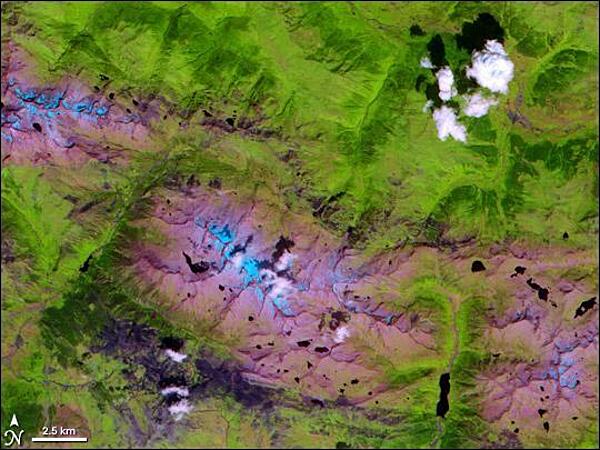
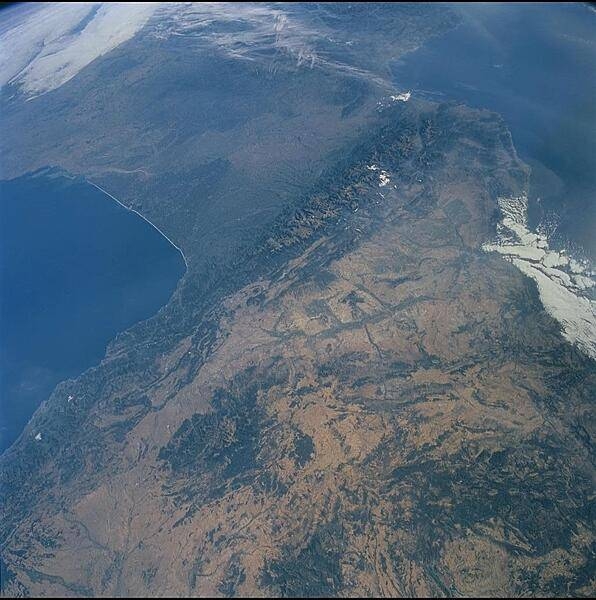
The Alps may be more famous, but the Pyrenees have been around much longer - tens of millions of years longer, in fact. These mountains formed between 100 and 150 million years ago when the landmass that Spain occupies pushed into the one that France occupies. The mountains have served as a natural barrier between the Iberian Peninsula (Spain and Portugal) and the rest of Europe ever since. Stretching east to west across 430 sq km (166 sq mi), the Pyrenees fall mostly within Spain's borders, but also pass into the independent state of Andorra. The NASA Terra satellite captured this image of part of the Central Pyrenees - the highest part of the range - on 1 August 2000. In this false-color image, clouds appear white, snow appears pale blue, vegetation appears green, and bare ground appears as either pink or dark, bluish-purple. Water on the ground appears dark blue (or nearly black). In this shot, the vegetated areas are mostly to the north, and the peaks to the south are mostly bare rock. Patches of dark purple that are visible along rivers and in valley floors are probably developed areas. Image courtesy of NASA.
The Alps may be more famous, but the Pyrenees have been around much longer - tens of millions of years longer, in fact. These mountains formed between 100 and 150 million years ago when the landmass that Spain occupies pushed into the one that France occupies. The mountains have served as a natural barrier between the Iberian Peninsula (Spain and Portugal) and the rest of Europe ever since. Stretching east to west across 430 sq km (166 sq mi), the Pyrenees fall mostly within Spain's borders, but also pass into the independent state of Andorra. The NASA Terra satellite captured this image of part of the Central Pyrenees - the highest part of the range - on 1 August 2000. In this false-color image, clouds appear white, snow appears pale blue, vegetation appears green, and bare ground appears as either pink or dark, bluish-purple. Water on the ground appears dark blue (or nearly black). In this shot, the vegetated areas are mostly to the north, and the peaks to the south are mostly bare rock. Patches of dark purple that are visible along rivers and in valley floors are probably developed areas. Image courtesy of NASA. • CIA World Factbook • 2020
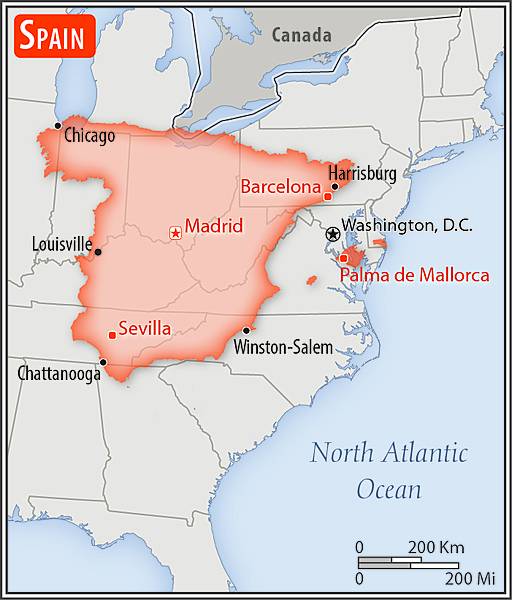
Area comparison map
Area comparison map • CIA World Factbook • 2020
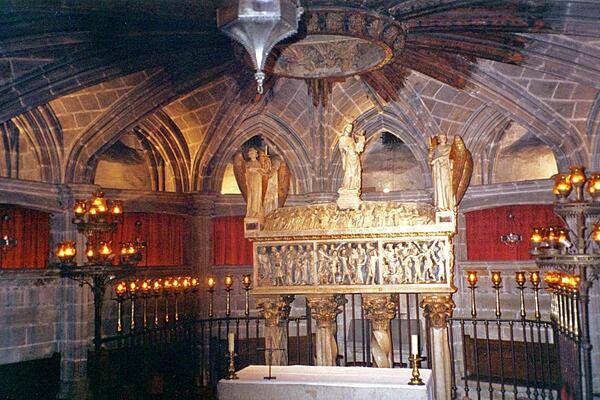
The crypt of the Cathedral of the Holy Cross and Santa Eulalia in Barcelona. The saint is the patron of the Spanish city.
The crypt of the Cathedral of the Holy Cross and Santa Eulalia in Barcelona. The saint is the patron of the Spanish city. • CIA World Factbook • 2020
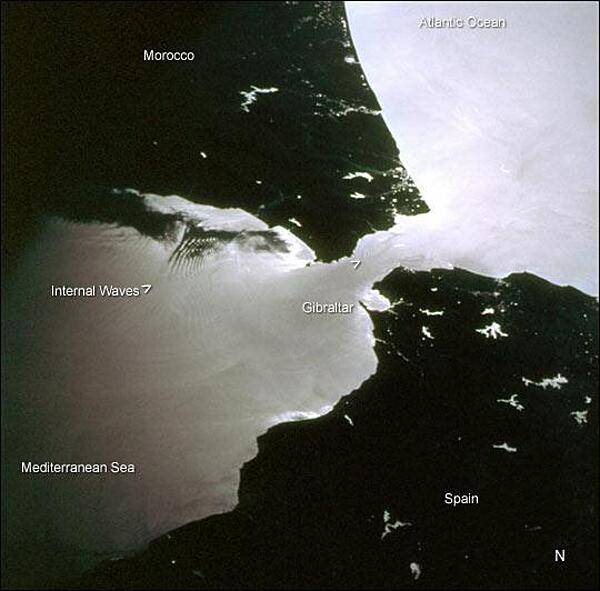
This space shuttle photo was taken near sunset. Two packets of tidally-generated internal waves are highlighted by sunglint off the surface waters in the Strait of Gibraltar. The older packet (labeled) contains at least 14 waves, which can be counted like tree rings. A younger group is forming near the middle of the strait (marked by the carat south of Gibraltar). The waves are generated as a diurnal tidal pulse flows over the shallow Camarinal Sill at Gibraltar. The waves flow eastward and refract around coastal features; they can be traced for as much as 150 km. Image credit: NASA.
This space shuttle photo was taken near sunset. Two packets of tidally-generated internal waves are highlighted by sunglint off the surface waters in the Strait of Gibraltar. The older packet (labeled) contains at least 14 waves, which can be counted like tree rings. A younger group is forming near the middle of the strait (marked by the carat south of Gibraltar). The waves are generated as a diurnal tidal pulse flows over the shallow Camarinal Sill at Gibraltar. The waves flow eastward and refract around coastal features; they can be traced for as much as 150 km. Image credit: NASA. • CIA World Factbook • 2020
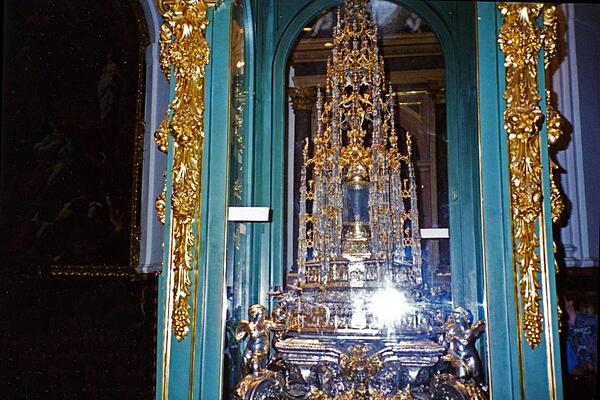
The treasure chamber in the Mezquita of Cordoba houses a remarkable monstrance - a vessel used to display a consecrated Eucharistic Host - constructed by the German master goldsmith Heinrich von Arfe between 1510 and 1516.
The treasure chamber in the Mezquita of Cordoba houses a remarkable monstrance - a vessel used to display a consecrated Eucharistic Host - constructed by the German master goldsmith Heinrich von Arfe between 1510 and 1516. • CIA World Factbook • 2020
CIA World Factbook • 2020
CIA World Factbook • 2020
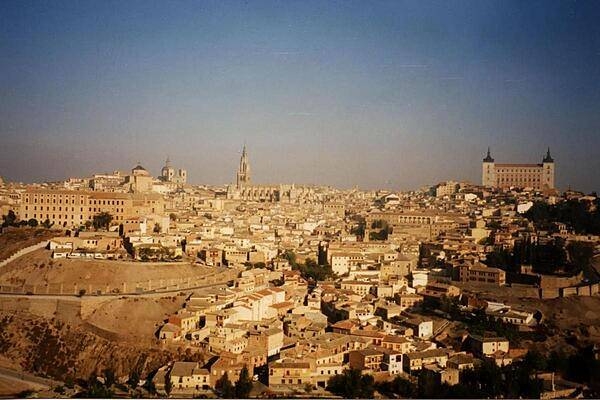
A view of the city of Toledo. On the right is the castle-fortress known as the Alcazar.
A view of the city of Toledo. On the right is the castle-fortress known as the Alcazar. • CIA World Factbook • 2020
CIA World Factbook • 2020
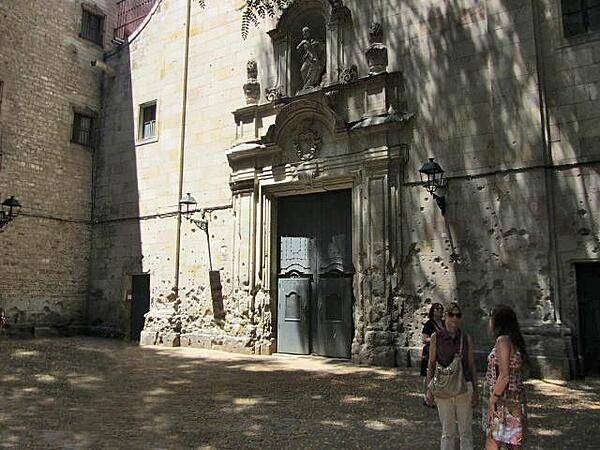
Evidence of damage dating back to the Spanish Civil War (1936-1939) may be seen on this church wall in the Old City in Barcelona.
Evidence of damage dating back to the Spanish Civil War (1936-1939) may be seen on this church wall in the Old City in Barcelona. • CIA World Factbook • 2020
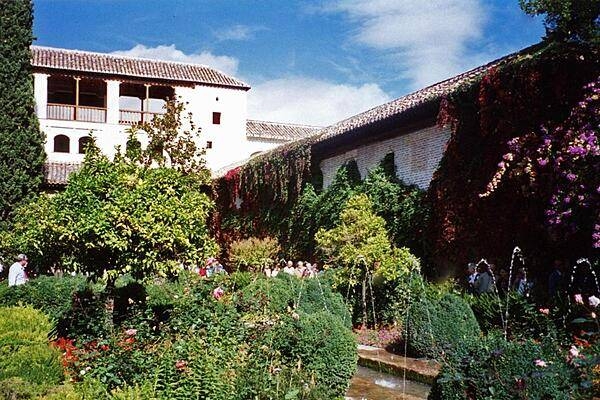
Original Moorish Garden at the Alhambra, Granada.
Original Moorish Garden at the Alhambra, Granada. • CIA World Factbook • 2020
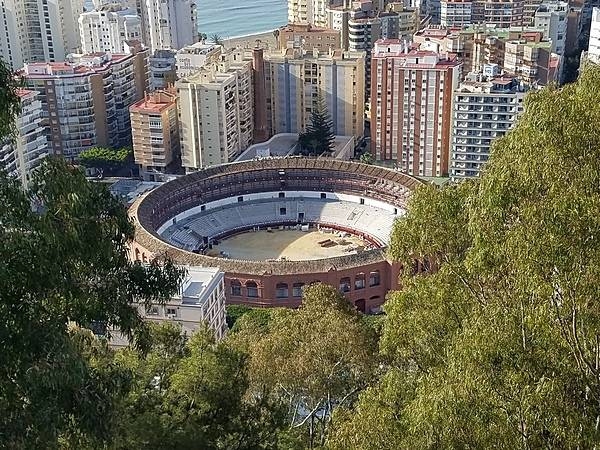
The bull ring in Malaga.
The bull ring in Malaga. • CIA World Factbook • 2020
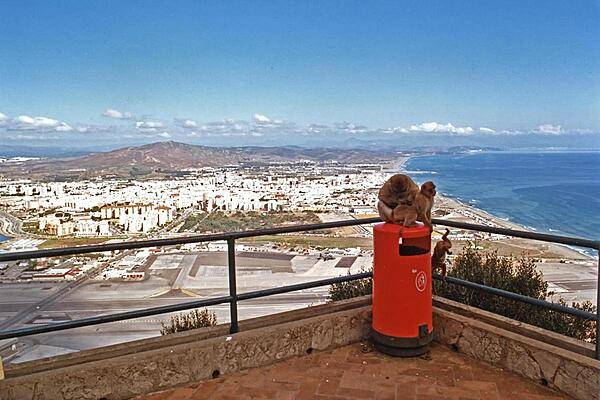
Looking north to Spain from the side of The Rock of Gibraltar.
Looking north to Spain from the side of The Rock of Gibraltar. • CIA World Factbook • 2020
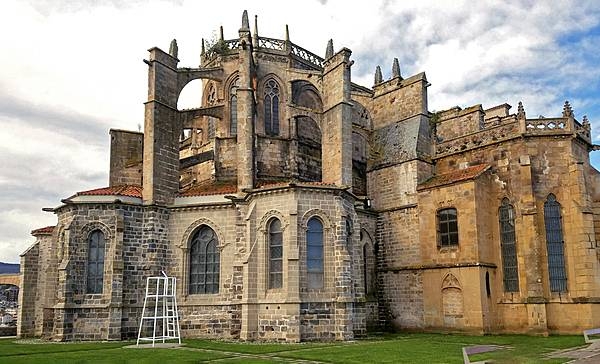
Church of Santa Maria de la Asuncion in Castro Urdiales, a northern Spain seaport town in the autonomous community of Cantabria; rear view.
Church of Santa Maria de la Asuncion in Castro Urdiales, a northern Spain seaport town in the autonomous community of Cantabria; rear view. • CIA World Factbook • 2020
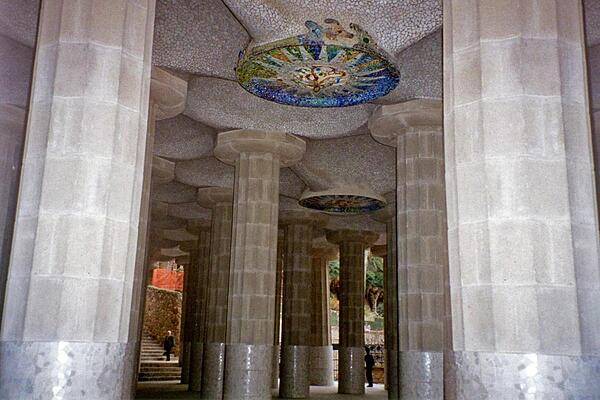
Doric columns supporting the roof of the lower court that forms the central terrace at the unique Park Guell garden complex in Barcelona. Designed by the Catalan architect Antoni Gaudi and built between 1910 and 1914, the park is full of his mosaics including this ceiling rondel.
Doric columns supporting the roof of the lower court that forms the central terrace at the unique Park Guell garden complex in Barcelona. Designed by the Catalan architect Antoni Gaudi and built between 1910 and 1914, the park is full of his mosaics including this ceiling rondel. • CIA World Factbook • 2020
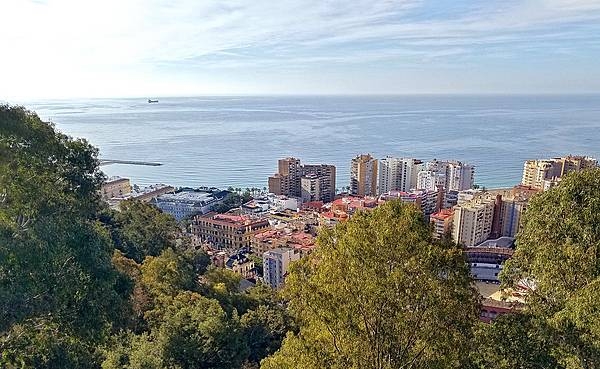
View from the Gibralfaro Castle over the city of Malaga, the second largest port in Spain.
View from the Gibralfaro Castle over the city of Malaga, the second largest port in Spain. • CIA World Factbook • 2020
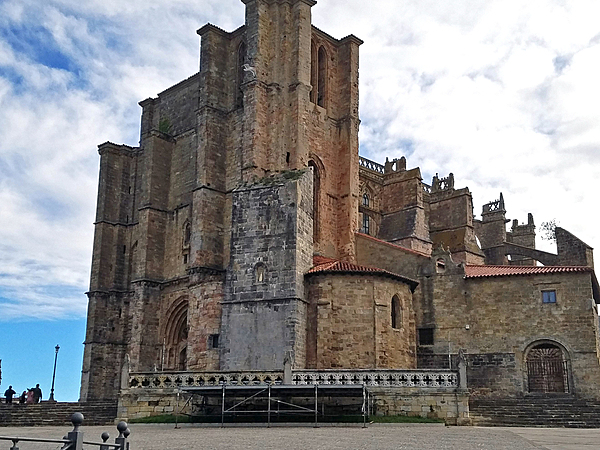
Church of Santa Maria de la Asuncion in Castro Urdiales, a northern Spain seaport town in the autonomous community of Cantabria; front view.
Church of Santa Maria de la Asuncion in Castro Urdiales, a northern Spain seaport town in the autonomous community of Cantabria; front view. • CIA World Factbook • 2020
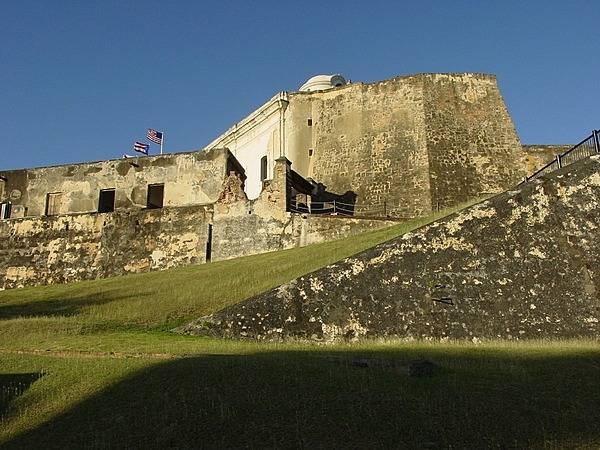
Castillo San Cristóbal is a fortress in San Juan that was built by Spain to protect against land-based attacks on the city; it is part of San Juan National Historic Site. This is a view of the from Norzagaray Street. Photo courtesy of the US National Park Service.
Castillo San Cristóbal is a fortress in San Juan that was built by Spain to protect against land-based attacks on the city; it is part of San Juan National Historic Site. This is a view of the from Norzagaray Street. Photo courtesy of the US National Park Service. • CIA World Factbook • 2020
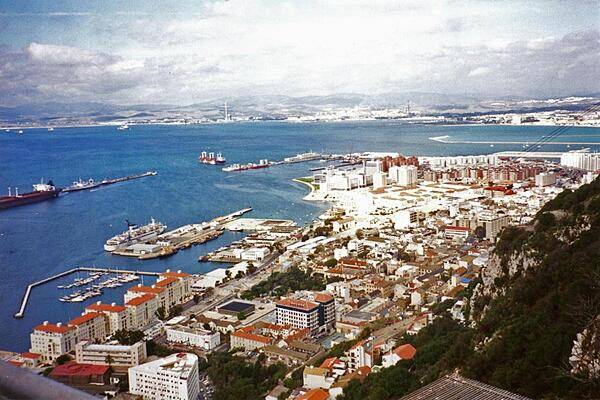
A view of Gibraltar Harbour with Algeciras, Spain in the background.
A view of Gibraltar Harbour with Algeciras, Spain in the background. • CIA World Factbook • 2020
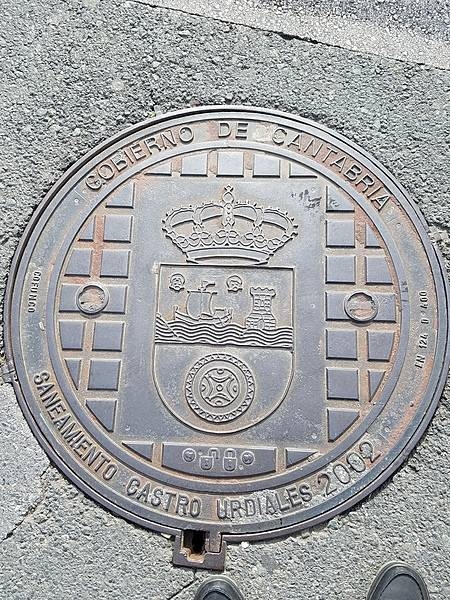
Town seal of Castro Urdiales on a manhole cover.
Town seal of Castro Urdiales on a manhole cover. • CIA World Factbook • 2020
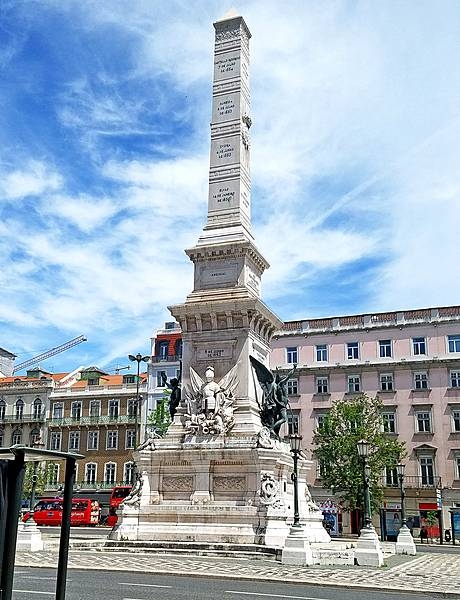
The Monument to the Restorers in Lisbon was erected in 1886 to celebrate the restoration of Portuguese independence from Spain in 1640.
The Monument to the Restorers in Lisbon was erected in 1886 to celebrate the restoration of Portuguese independence from Spain in 1640. • CIA World Factbook • 2020
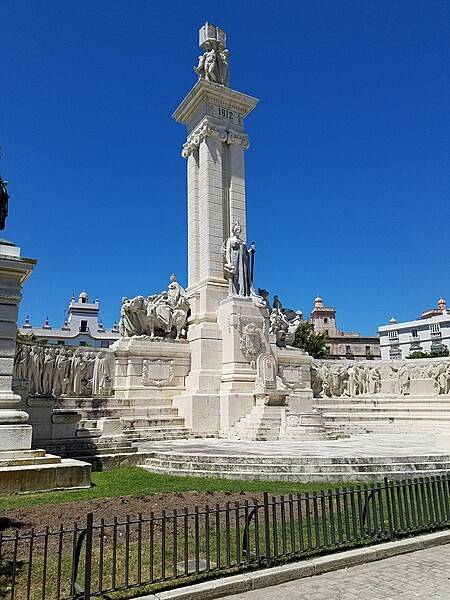
Monument in Cadiz to the 1812 Spanish Constitution, the first in Spain. The Constitution was established on 19 March 1812 by the Cortes of Cadiz, the first Spanish legislature.
Monument in Cadiz to the 1812 Spanish Constitution, the first in Spain. The Constitution was established on 19 March 1812 by the Cortes of Cadiz, the first Spanish legislature. • CIA World Factbook • 2020
CIA World Factbook • 2020
CIA World Factbook • 2020
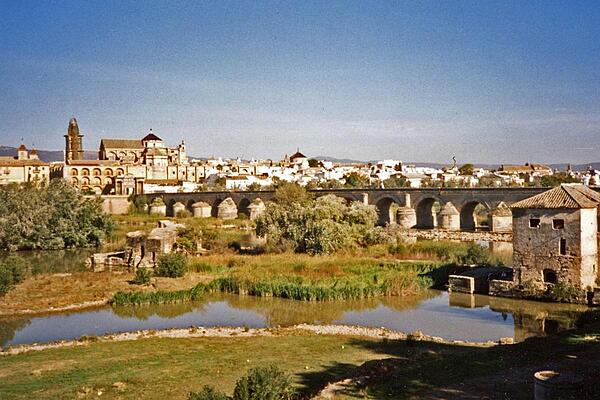
View of Cordoba showing the Roman Bridge and the massive Mesquita complex on the left.
View of Cordoba showing the Roman Bridge and the massive Mesquita complex on the left. • CIA World Factbook • 2020
Looking north along the crest of The Rock of Gibraltar one can see just how narrow the rock formation is. The coast of Spain is visible in the background.
Looking north along the crest of The Rock of Gibraltar one can see just how narrow the rock formation is. The coast of Spain is visible in the background. • CIA World Factbook • 2020
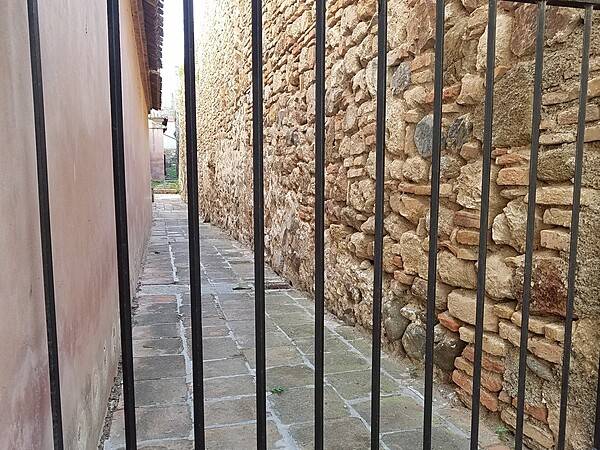
Contrasting walls. The wall on the right belongs to one of the palaces in the Alcazaba in Malaga.
Contrasting walls. The wall on the right belongs to one of the palaces in the Alcazaba in Malaga. • CIA World Factbook • 2020
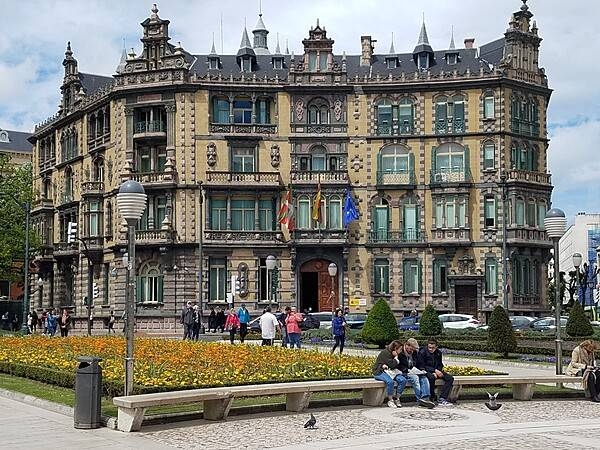
Building of the Government Subdelagation along the Gran Via in Bilbao, Bizkaia Province.
Building of the Government Subdelagation along the Gran Via in Bilbao, Bizkaia Province. • CIA World Factbook • 2020
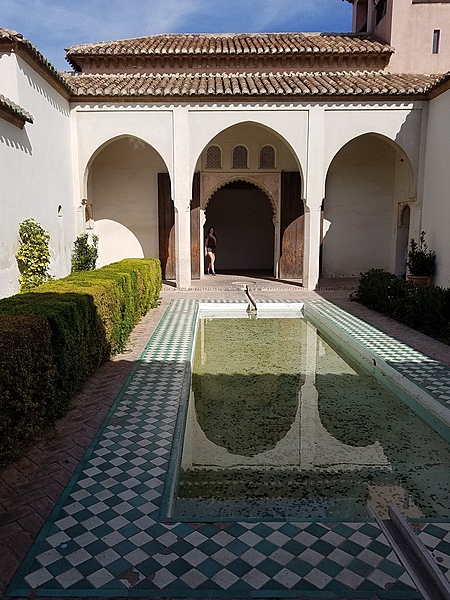
Courtyard garden of the Cuartos de Granada (The Granada Quarters) in the Inner Citadel of the Alcazaba of Malaga.
Courtyard garden of the Cuartos de Granada (The Granada Quarters) in the Inner Citadel of the Alcazaba of Malaga. • CIA World Factbook • 2020
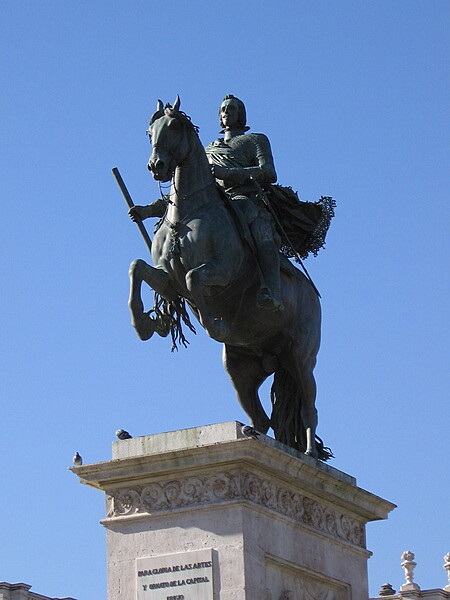
Equestrian statue of King Philip IV at the Royal Palace in Madrid.
Equestrian statue of King Philip IV at the Royal Palace in Madrid. • CIA World Factbook • 2020
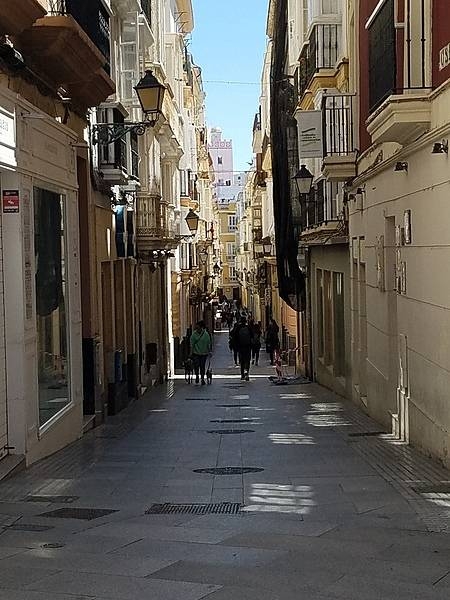
Narrow street in Cadiz.
Narrow street in Cadiz. • CIA World Factbook • 2020
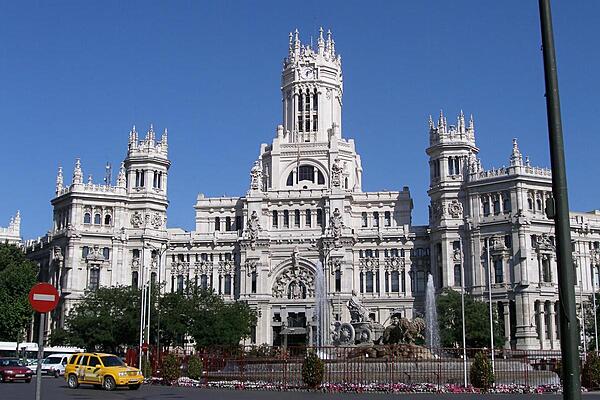
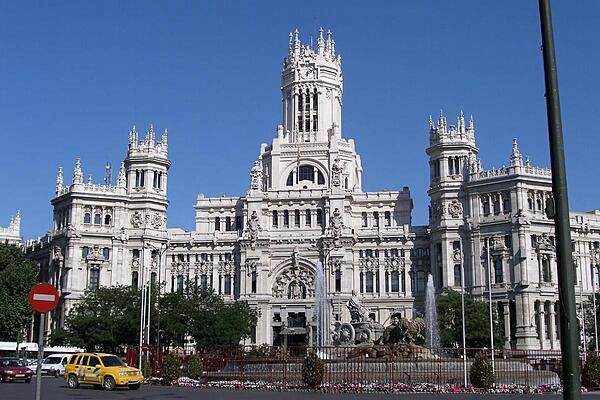
The eclectic Palacio de Comunicaciones (Palace of Communications) in Madrid successfully combines elements of Gothic, Romanesque, and Renaissance architecture. Opened as the headqusrters for the Post and Telegraph State Company in 1909, it became the municipal headquarters of Madrid in 2007.
The eclectic Palacio de Comunicaciones (Palace of Communications) in Madrid successfully combines elements of Gothic, Romanesque, and Renaissance architecture. Opened as the headqusrters for the Post and Telegraph State Company in 1909, it became the municipal headquarters of Madrid in 2007. • CIA World Factbook • 2020
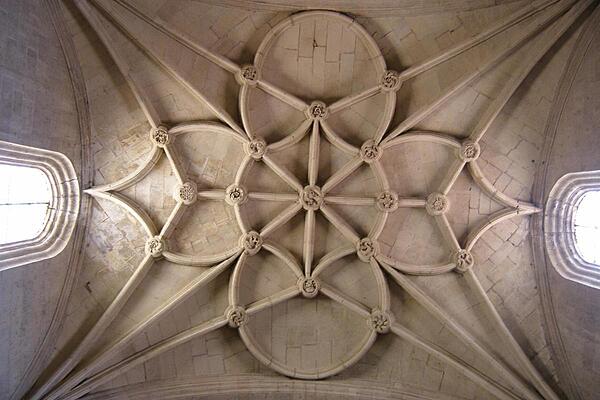
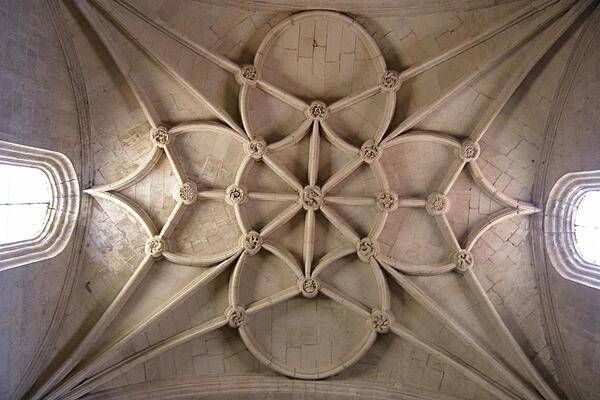
Ceiling detail in the Cathedral of Segovia.
Ceiling detail in the Cathedral of Segovia. • CIA World Factbook • 2020
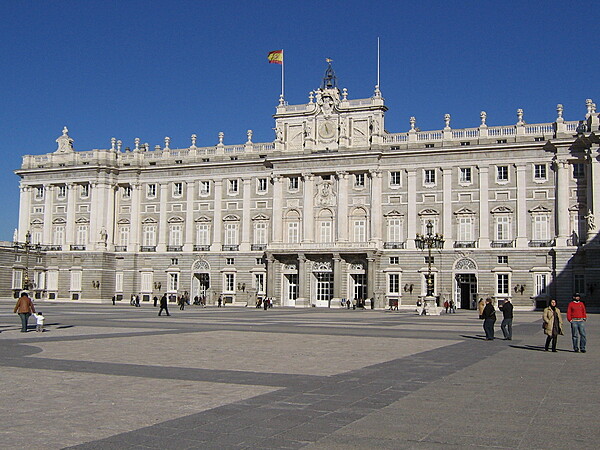
View of the Royal Palace in Madrid from the Plaza de la Armeria.
View of the Royal Palace in Madrid from the Plaza de la Armeria. • CIA World Factbook • 2020
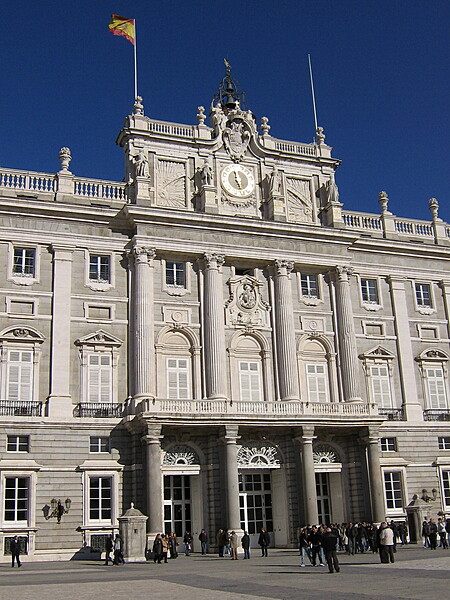
The south facade of the Royal Palace in Madrid.
The south facade of the Royal Palace in Madrid. • CIA World Factbook • 2020
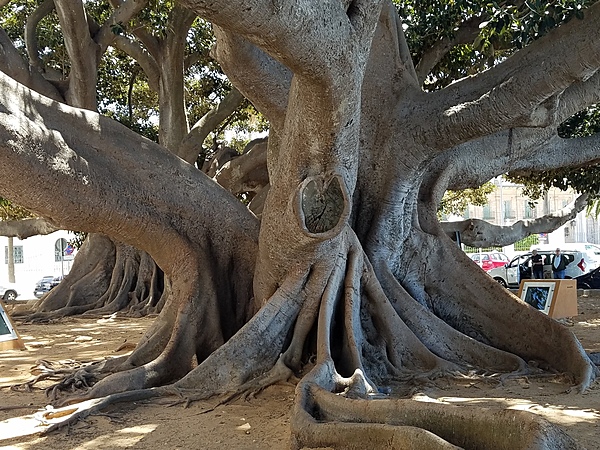
Huge Ficus Centenario tree in Cadiz. The city is among the oldest settlements in Spain, founded by the Phoenicians about 1100 B.C. It was a major port for trade with the Americas.
Huge Ficus Centenario tree in Cadiz. The city is among the oldest settlements in Spain, founded by the Phoenicians about 1100 B.C. It was a major port for trade with the Americas. • CIA World Factbook • 2020
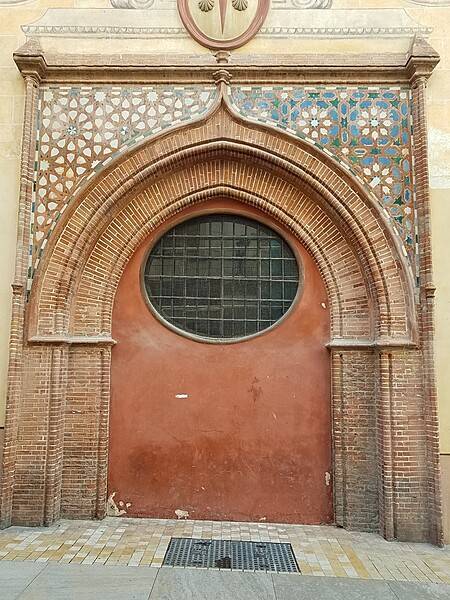
Moorish doorway in the Inner Citadel of the Alcazaba of Malaga.
Moorish doorway in the Inner Citadel of the Alcazaba of Malaga. • CIA World Factbook • 2020
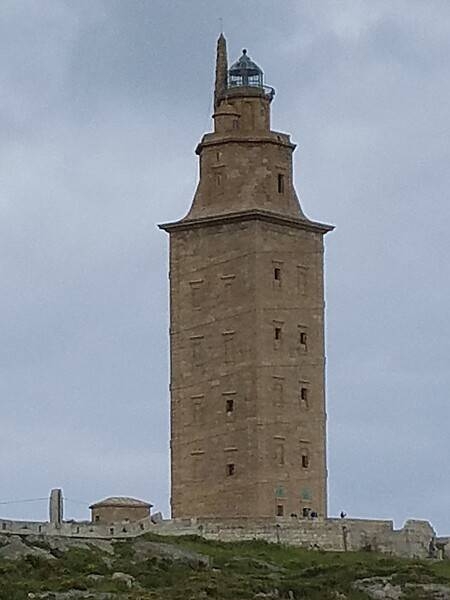
The Tower of Hercules in La Coruna was built by the Romans as a lighthouse in the 2nd century A.D. The 55 m Tower sits on a 57 m hill. The first 34 m of the Tower date back to Roman times; the rest of the Tower was added during a renovation in 1791. The lighthouse is still working, and its light can be seen from 35 km at sea. The Tower is the best- preserved Greco-Roman structure of its kind and is the oldest functioning lighthouse in the world.
The Tower of Hercules in La Coruna was built by the Romans as a lighthouse in the 2nd century A.D. The 55 m Tower sits on a 57 m hill. The first 34 m of the Tower date back to Roman times; the rest of the Tower was added during a renovation in 1791. The lighthouse is still working, and its light can be seen from 35 km at sea. The Tower is the best- preserved Greco-Roman structure of its kind and is the oldest functioning lighthouse in the world. • CIA World Factbook • 2020
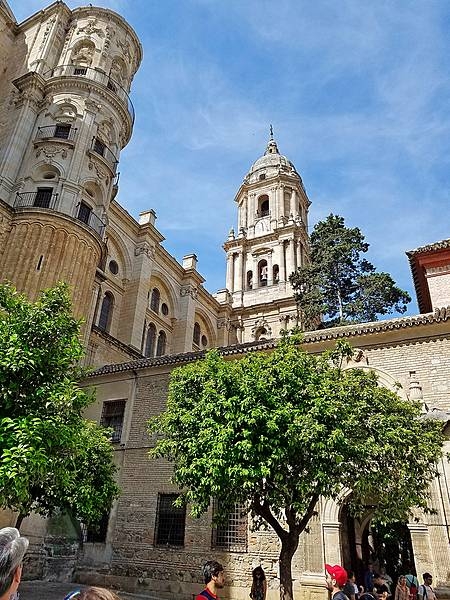
The Catedral Basílica de la Encarnación (Cathedral Basilica of the Incarnation) in Malaga was constructed over a 250-year period (between 1528 and 1782).
The Catedral Basílica de la Encarnación (Cathedral Basilica of the Incarnation) in Malaga was constructed over a 250-year period (between 1528 and 1782). • CIA World Factbook • 2020
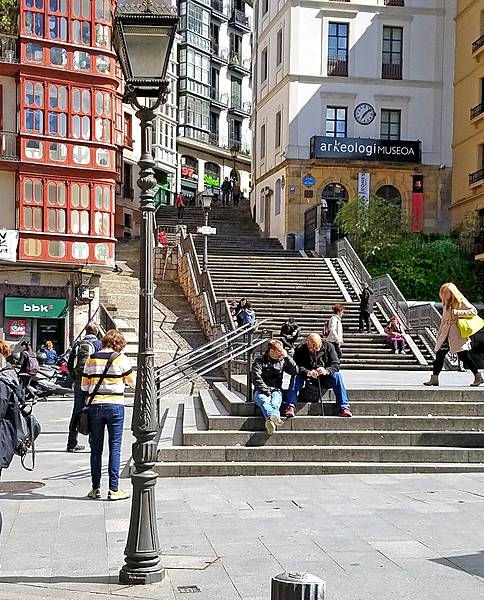
Town steps in Castro Urdiales.
Town steps in Castro Urdiales. • CIA World Factbook • 2020
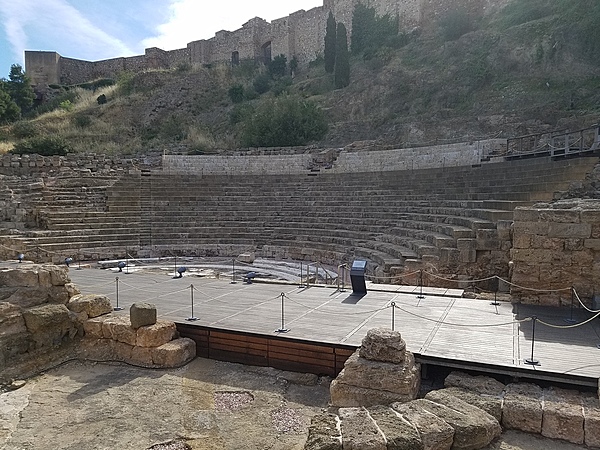
Remains of a Roman amphitheater in Malaga. Some Roman building materials were used in constructing the Alcazaba (Moorish castle complex), which may be seen in the background.
Remains of a Roman amphitheater in Malaga. Some Roman building materials were used in constructing the Alcazaba (Moorish castle complex), which may be seen in the background. • CIA World Factbook • 2020
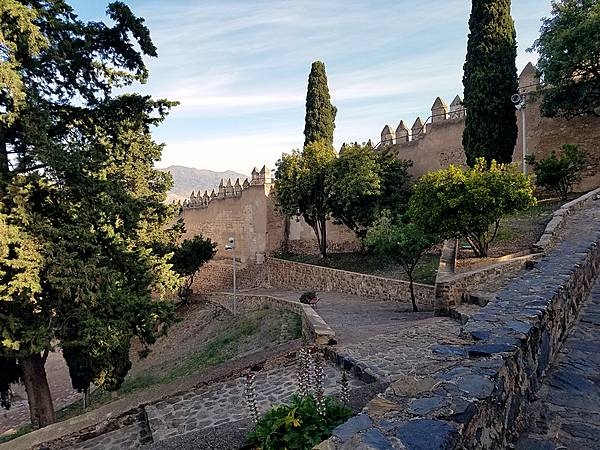
Gibralfaro Castle walls, Malaga.
Gibralfaro Castle walls, Malaga. • CIA World Factbook • 2020
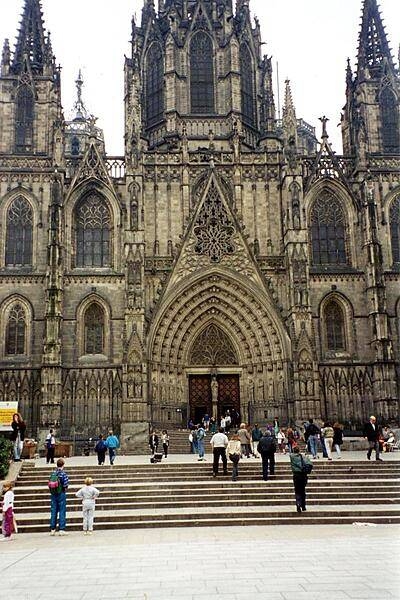
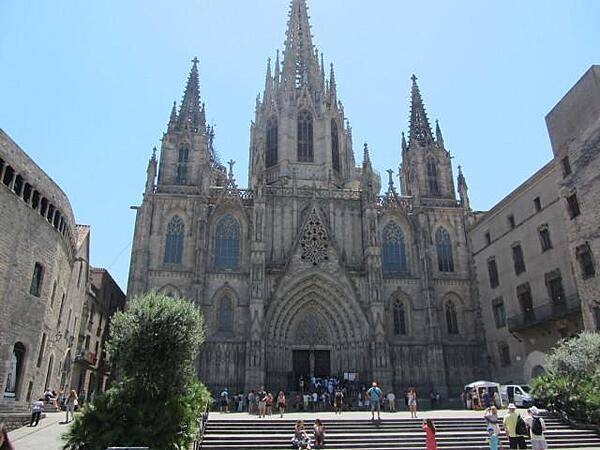
The neo-Gothic facade of the Cathedral of the Holy Cross and Santa Eulalia in Barcelona (built 13th-15th centuries).
The neo-Gothic facade of the Cathedral of the Holy Cross and Santa Eulalia in Barcelona (built 13th-15th centuries). • CIA World Factbook • 2020
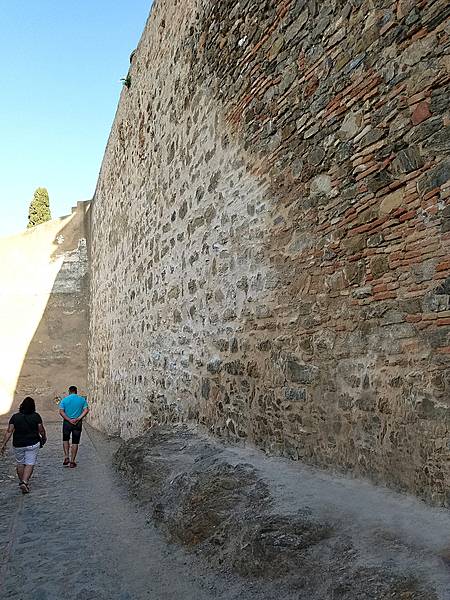
The stone walls in the Alcazaba in Malaga show different periods of construction. The Alcazaba is a complex of palaces that sits high atop a hillside. It was built by the Moors in the 11th century and formerly connected to the Gibralfaro fortification that overlooks the city and is situated higher still.
The stone walls in the Alcazaba in Malaga show different periods of construction. The Alcazaba is a complex of palaces that sits high atop a hillside. It was built by the Moors in the 11th century and formerly connected to the Gibralfaro fortification that overlooks the city and is situated higher still. • CIA World Factbook • 2020
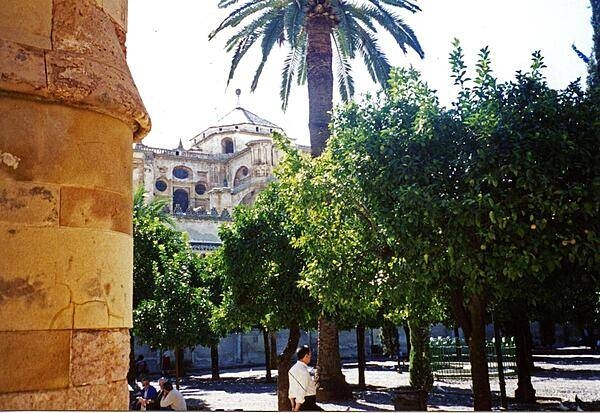
Courtyard of the Cathedral of the Assumption of the Virgin (Mezquita) in Cordoba. The cathedral was originally a church (constructed about A.D. 600) that was considerably expanded and converted to a mosque during the Muslim conquest (it became the second-largest mosque in the world). Following the recapture of the city in 1236, the building was reconsecrated as a Christian church and additional architectural alterations were added in subsequent centuries.
Courtyard of the Cathedral of the Assumption of the Virgin (Mezquita) in Cordoba. The cathedral was originally a church (constructed about A.D. 600) that was considerably expanded and converted to a mosque during the Muslim conquest (it became the second-largest mosque in the world). Following the recapture of the city in 1236, the building was reconsecrated as a Christian church and additional architectural alterations were added in subsequent centuries. • CIA World Factbook • 2020
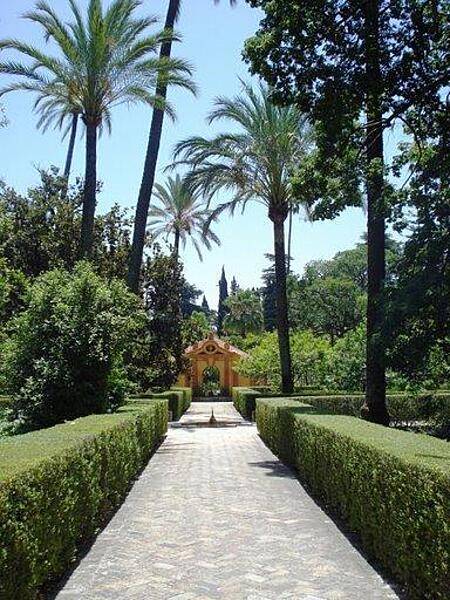
Pathway in the gardens of the Alcazar in Seville.
Pathway in the gardens of the Alcazar in Seville. • CIA World Factbook • 2020
Algeciras, Spain (left), the Bay of Gibraltar (Bahia de Algecira), and Gibraltar itself (right) are featured in this detailed vertical view over the European side of the Strait of Gibraltar. Ship traffic in the bay can easily be seen. Image courtesy of NASA.
Algeciras, Spain (left), the Bay of Gibraltar (Bahia de Algecira), and Gibraltar itself (right) are featured in this detailed vertical view over the European side of the Strait of Gibraltar. Ship traffic in the bay can easily be seen. Image courtesy of NASA. • CIA World Factbook • 2020
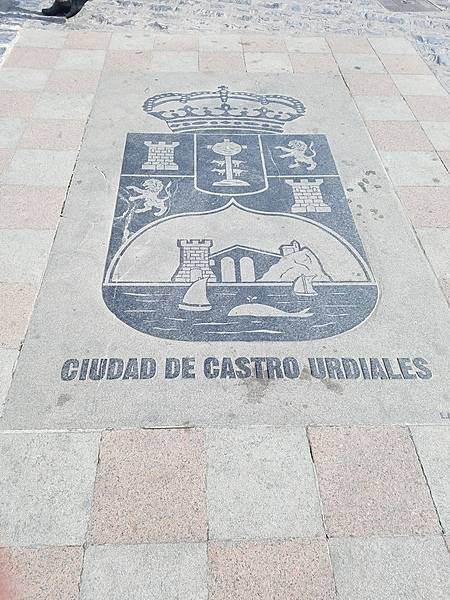
The town seal of Castro Urdiales in street tiles.
The town seal of Castro Urdiales in street tiles. • CIA World Factbook • 2020
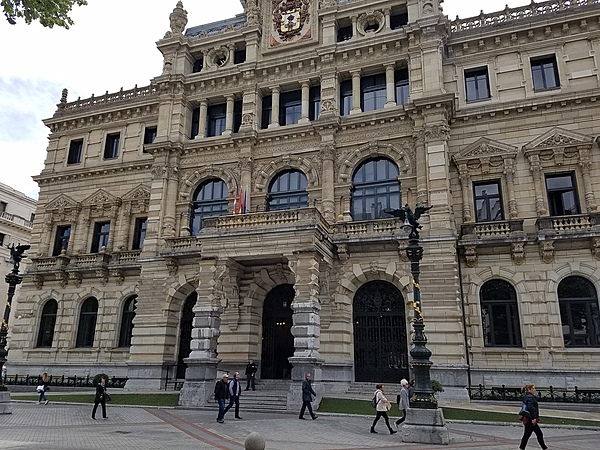
Completed in 1900, the Palacio de la Diputacion de Bizkaia in Bilbao is the seat of the local provincial government.
Completed in 1900, the Palacio de la Diputacion de Bizkaia in Bilbao is the seat of the local provincial government. • CIA World Factbook • 2020
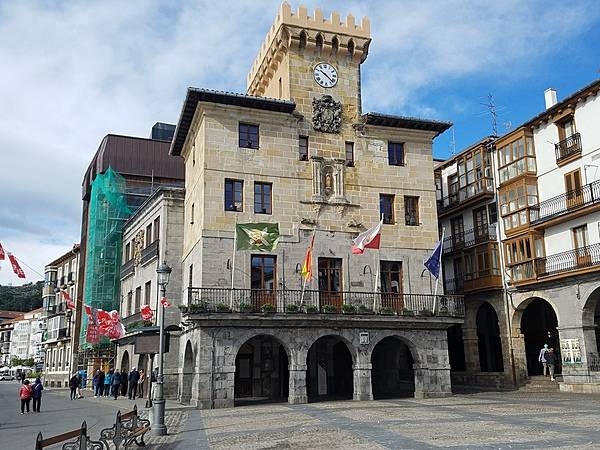
Town Hall in Ayuntamieto Square in Castro Urdiales.
Town Hall in Ayuntamieto Square in Castro Urdiales. • CIA World Factbook • 2020
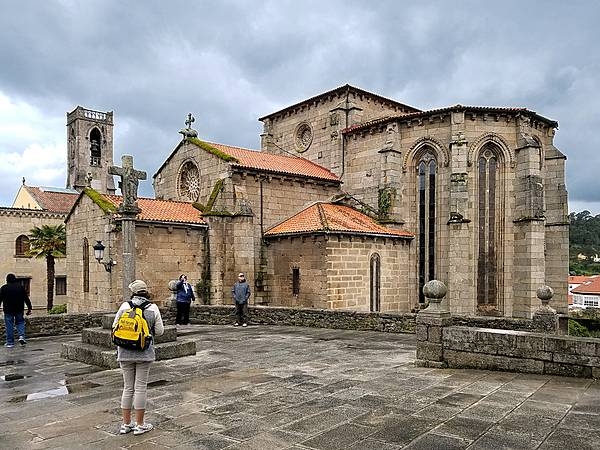
The Igrexa de San Francisco (Saint Francis Church) in the town of Betanzos dates to 1387.
The Igrexa de San Francisco (Saint Francis Church) in the town of Betanzos dates to 1387. • CIA World Factbook • 2020
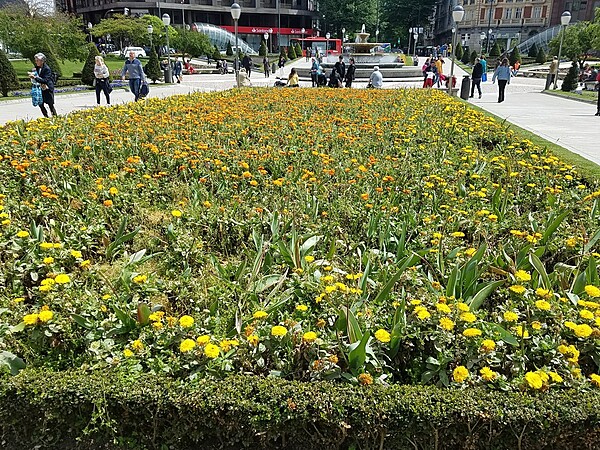
Flowers in a square in Bilbao, the capital of Bizkaia (Basque) Province. Signs are in Spanish and Basque.
Flowers in a square in Bilbao, the capital of Bizkaia (Basque) Province. Signs are in Spanish and Basque. • CIA World Factbook • 2020
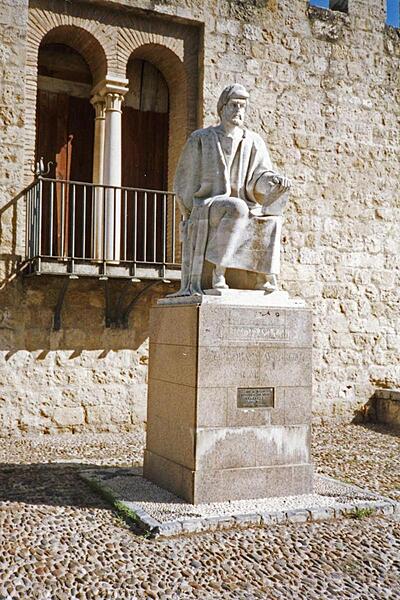
Monument in Cordoba to the famous Andalusian-Arab polymath Ibn Rushd (1126-1198; known in European literature as Averroes).
Monument in Cordoba to the famous Andalusian-Arab polymath Ibn Rushd (1126-1198; known in European literature as Averroes). • CIA World Factbook • 2020
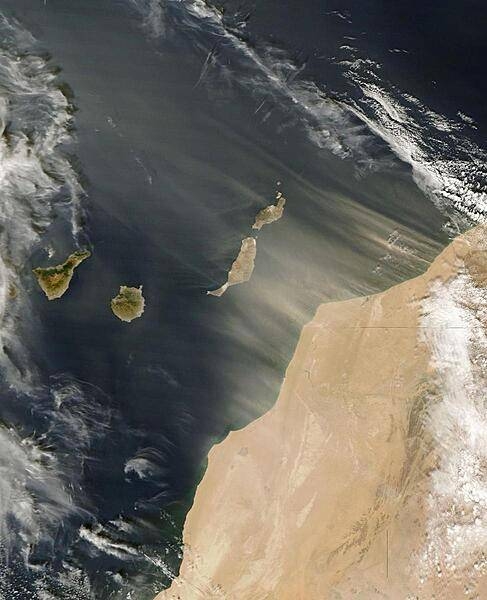
Saharan dust blowing off the west coast of Africa and over the Canary Islands (a Spanish archipelago) on 11 November 2006. The horizontal line is the border between Morocco (to the north) and Western Sahara. The plumes of dust are more distinct off the coast of the former than the latter. The fine particles blow to the northwest, and although the islands of Tenerife and Gran Canaria appear unaffected, the neighboring islands of Fuerteventura and Lanzarote are receiving a strong dusting. Click on photo for higher resolution. Image courtesy of NASA.
Saharan dust blowing off the west coast of Africa and over the Canary Islands (a Spanish archipelago) on 11 November 2006. The horizontal line is the border between Morocco (to the north) and Western Sahara. The plumes of dust are more distinct off the coast of the former than the latter. The fine particles blow to the northwest, and although the islands of Tenerife and Gran Canaria appear unaffected, the neighboring islands of Fuerteventura and Lanzarote are receiving a strong dusting. Click on photo for higher resolution. Image courtesy of NASA. • CIA World Factbook • 2020
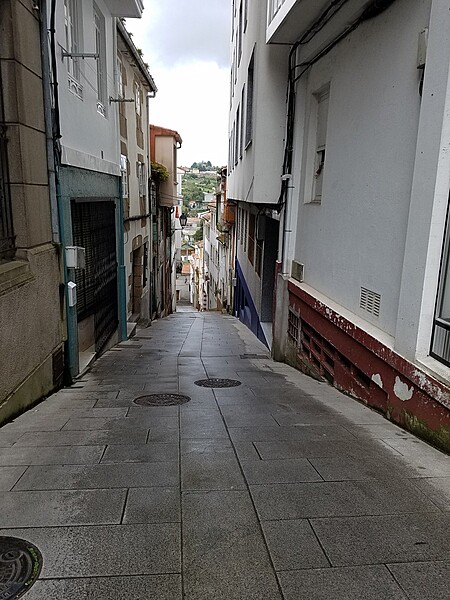
Alley in Betanzos, a Galician municipality about 20 minutes inland from La Coruna.
Alley in Betanzos, a Galician municipality about 20 minutes inland from La Coruna. • CIA World Factbook • 2020
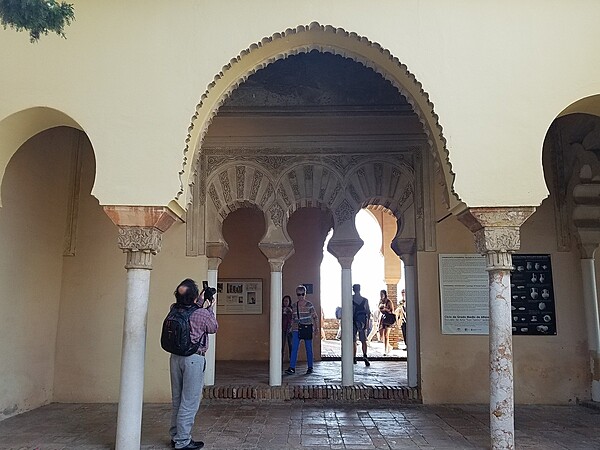
Moorish gateway in the Inner Citadel of the Alcazaba of Malaga.
Moorish gateway in the Inner Citadel of the Alcazaba of Malaga. • CIA World Factbook • 2020
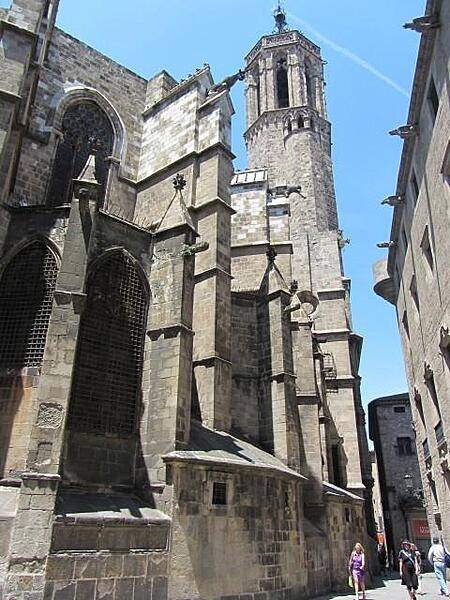
CIA World Factbook • 2020
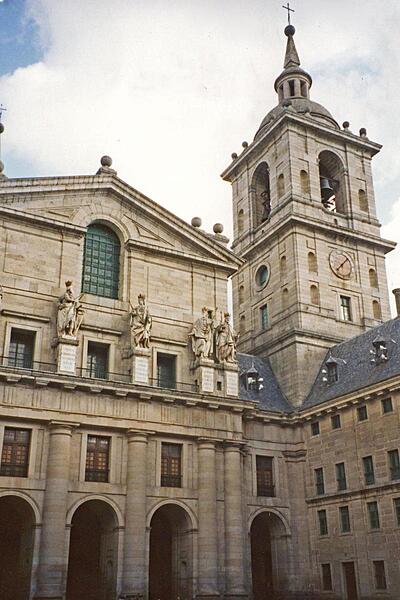
Courtyard in front of the Royal Monastery of San Lorenzo de El Escorial.
Courtyard in front of the Royal Monastery of San Lorenzo de El Escorial. • CIA World Factbook • 2020
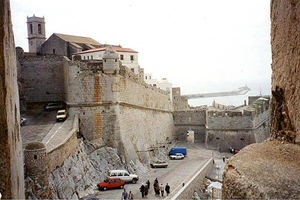
Scene in the old walled town of Pensicola in Andalusia.
Scene in the old walled town of Pensicola in Andalusia. • CIA World Factbook • 2020
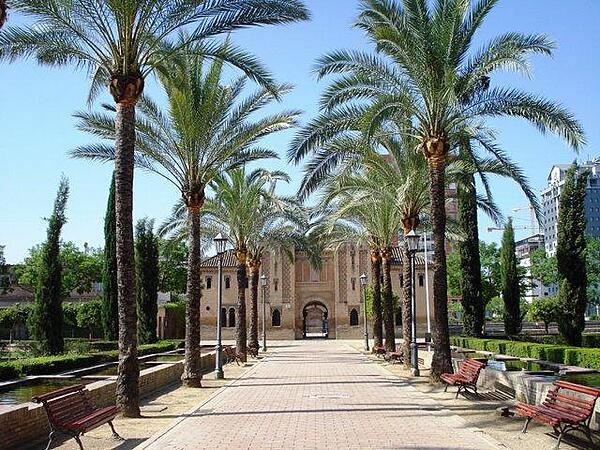
Gateway in the gardens of the Alcazar in Seville.
Gateway in the gardens of the Alcazar in Seville. • CIA World Factbook • 2020
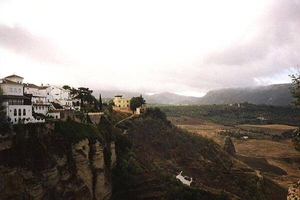
Ronda, a city perched on cliffs in the province of Malaga. This mountainous area of Andalucia is roughly 750 m (2,500 ft) above sea level.
Ronda, a city perched on cliffs in the province of Malaga. This mountainous area of Andalucia is roughly 750 m (2,500 ft) above sea level. • CIA World Factbook • 2020
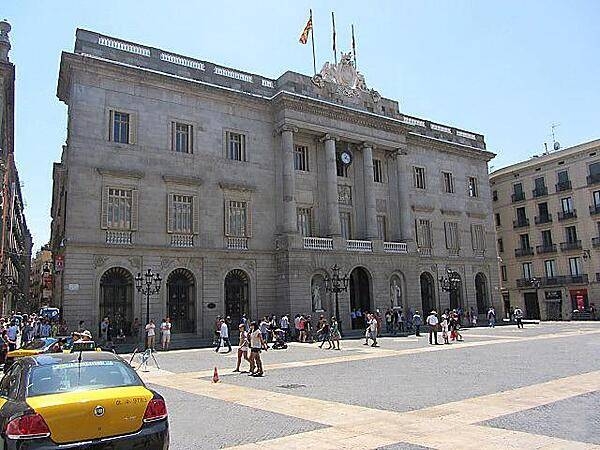
The facade of the City Hall in Barcelona.
The facade of the City Hall in Barcelona. • CIA World Factbook • 2020
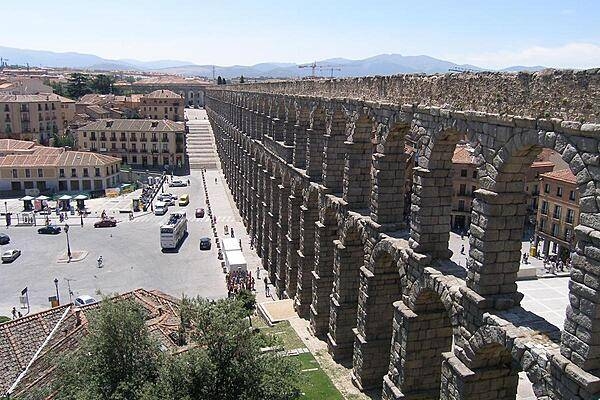
CIA World Factbook • 2020
CIA World Factbook • 2020
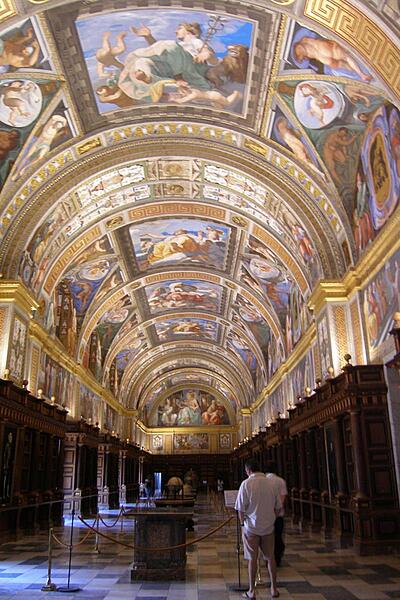
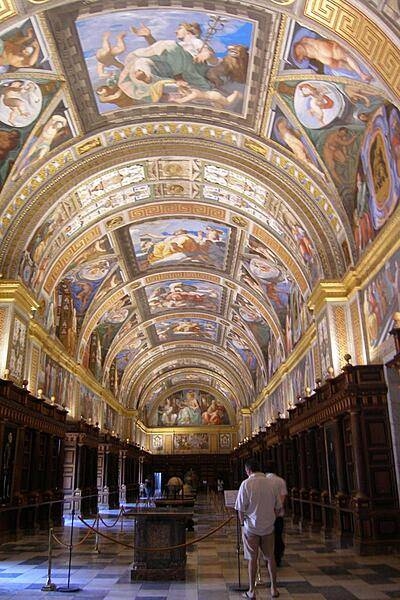
The library at El Escorial, the Royal Monastery of San Lorenzo El Real, contains many priceless manuscripts, as well as artwork by Titian, El Greco, Valazquez, and many others.
The library at El Escorial, the Royal Monastery of San Lorenzo El Real, contains many priceless manuscripts, as well as artwork by Titian, El Greco, Valazquez, and many others. • CIA World Factbook • 2020
CIA World Factbook • 2020
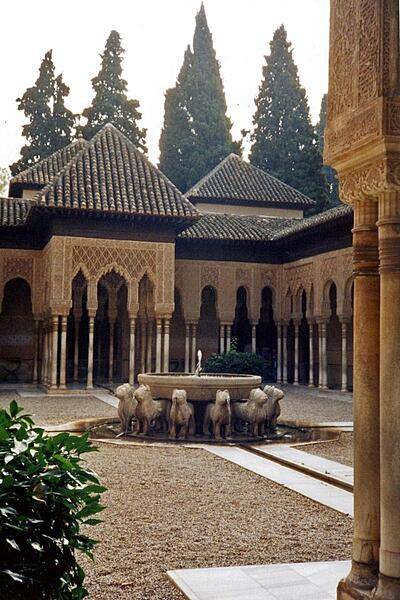
Courtyard of the Lions at the Alhambra, Granada.
Courtyard of the Lions at the Alhambra, Granada. • CIA World Factbook • 2020
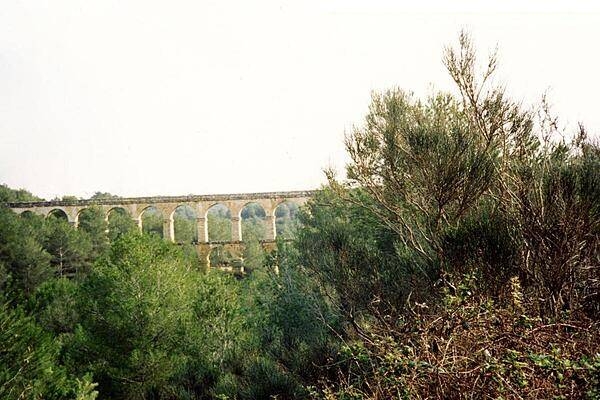
Well-preserved Roman aqueduct a few kilometers north of the city of Tarragona.
Well-preserved Roman aqueduct a few kilometers north of the city of Tarragona. • CIA World Factbook • 2020
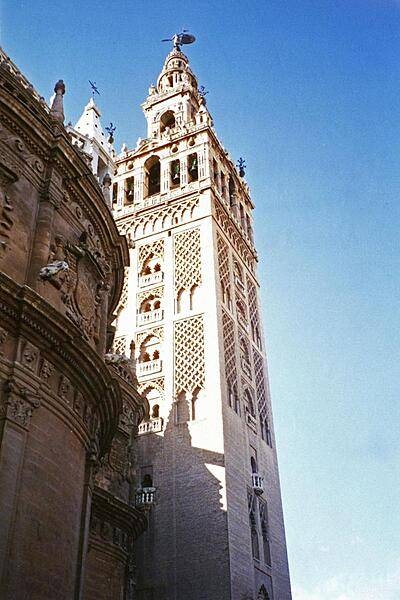
La Giralda, one of the two bell towers of the Catedral de Santa Maria de la Sede (Cathedral of Saint Mary of the See) at Seville. The lower two-thirds of the structure are a former minaret.
La Giralda, one of the two bell towers of the Catedral de Santa Maria de la Sede (Cathedral of Saint Mary of the See) at Seville. The lower two-thirds of the structure are a former minaret. • CIA World Factbook • 2020
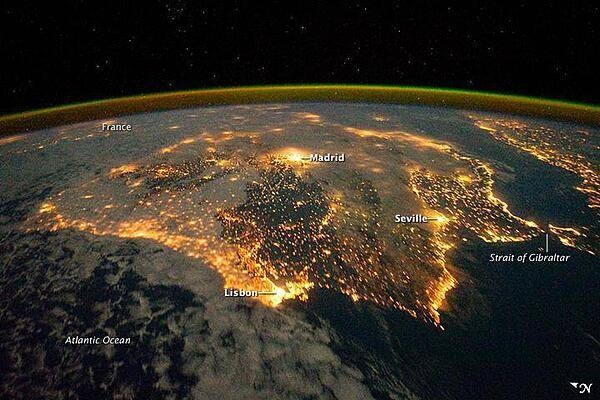
CIA World Factbook • 2020
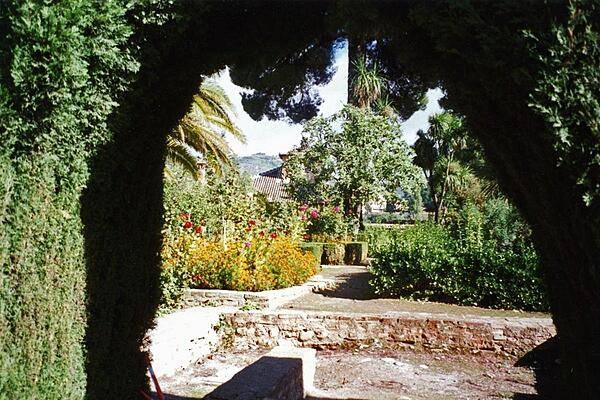
Alhambra garden viewed through an archway, Granada.
Alhambra garden viewed through an archway, Granada. • CIA World Factbook • 2020
CIA World Factbook • 2020
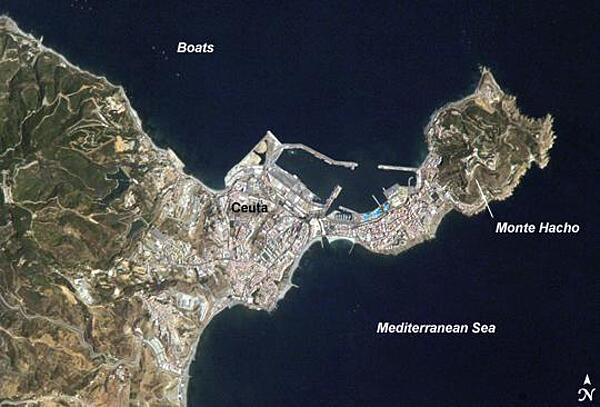
The small Spanish enclave of Ceuta occupies a narrow isthmus of land on the African side of the Strait of Gibraltar; the rest of the surrounding territory is Morocco. Densely populated Ceuta occupies the center of the image, its pink and white residential and industrial rooftops occasionally broken by patches of green - city parks and athletic fields. North of the city, seawalls enclose a small bay and harbor. On the beach, bright blue patches are large water parks. The Spanish fort at Monte Hacho on the eastern isthmus tip commands a clear view of the Strait. Image credit: NASA.
The small Spanish enclave of Ceuta occupies a narrow isthmus of land on the African side of the Strait of Gibraltar; the rest of the surrounding territory is Morocco. Densely populated Ceuta occupies the center of the image, its pink and white residential and industrial rooftops occasionally broken by patches of green - city parks and athletic fields. North of the city, seawalls enclose a small bay and harbor. On the beach, bright blue patches are large water parks. The Spanish fort at Monte Hacho on the eastern isthmus tip commands a clear view of the Strait. Image credit: NASA. • CIA World Factbook • 2020
CIA World Factbook • 2020
CIA World Factbook • 2020
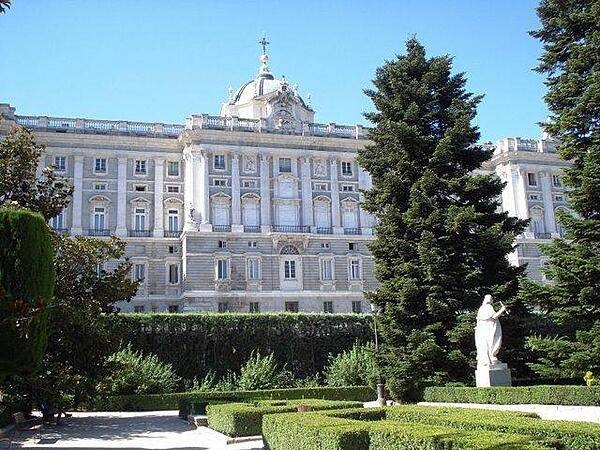
North facade of the Royal Palace in Madrid.
North facade of the Royal Palace in Madrid. • CIA World Factbook • 2020
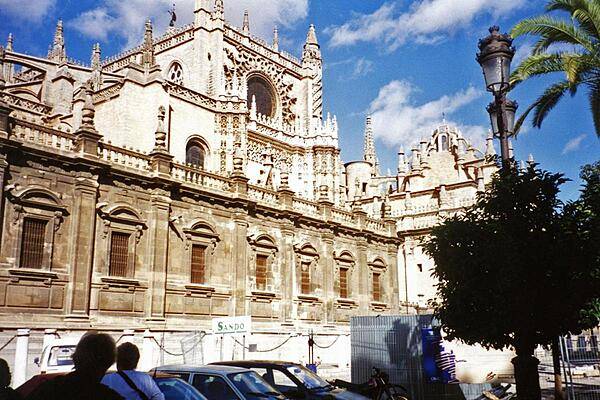
The Catedral de Santa Maria de la Sede (Cathedral of Saint Mary of the See) at Seville is the largest Gothic cathedral - and the third largest church - in the world.
The Catedral de Santa Maria de la Sede (Cathedral of Saint Mary of the See) at Seville is the largest Gothic cathedral - and the third largest church - in the world. • CIA World Factbook • 2020
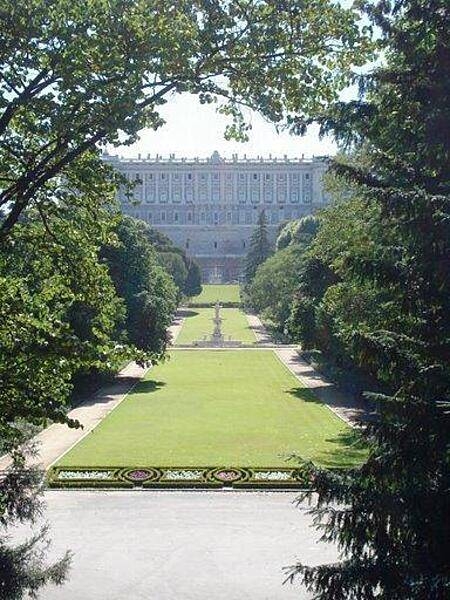
West facade of the Royal Palace in Madrid as seen from the Campo del Moro (Garden of the Moors).
West facade of the Royal Palace in Madrid as seen from the Campo del Moro (Garden of the Moors). • CIA World Factbook • 2020
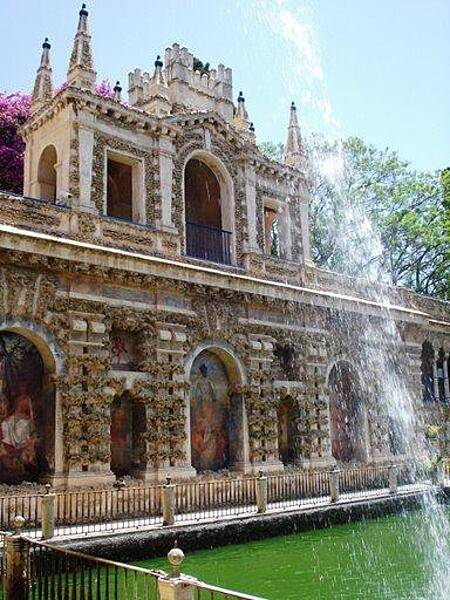
Fountain in the Garden of El Estanque in the Alcazar in Seville.
Fountain in the Garden of El Estanque in the Alcazar in Seville. • CIA World Factbook • 2020
CIA World Factbook • 2020
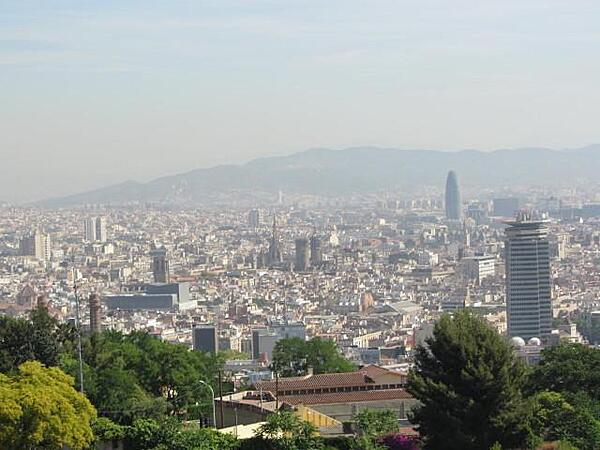
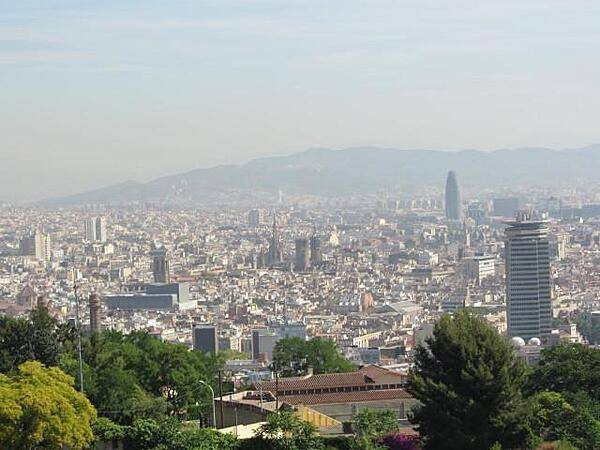
A view of Barcelona from the heights overlooking the city.
A view of Barcelona from the heights overlooking the city. • CIA World Factbook • 2020
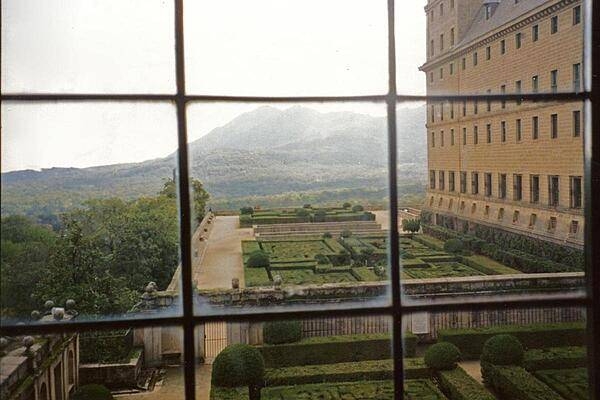
View of the gardens through a window at the El Escorial.
View of the gardens through a window at the El Escorial. • CIA World Factbook • 2020
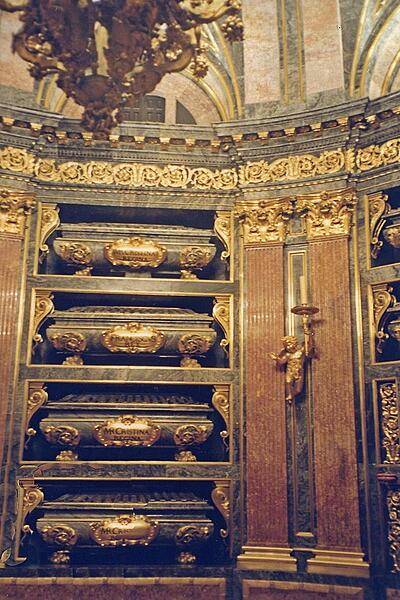
Tombs of Spanish kings and queens at the El Escorial.
Tombs of Spanish kings and queens at the El Escorial. • CIA World Factbook • 2020
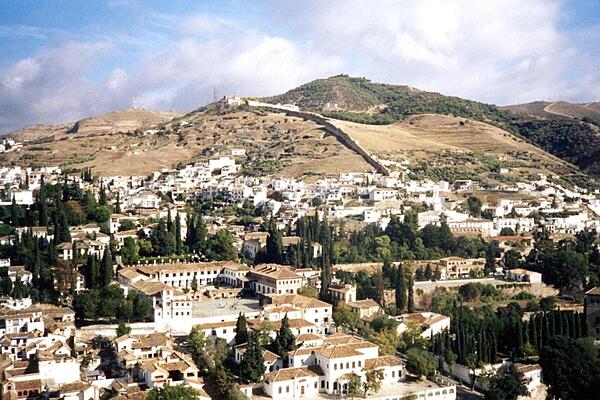
View of Granada from the Alhambra.
View of Granada from the Alhambra. • CIA World Factbook • 2020
CIA World Factbook • 2020
CIA World Factbook • 2020
CIA World Factbook • 2020
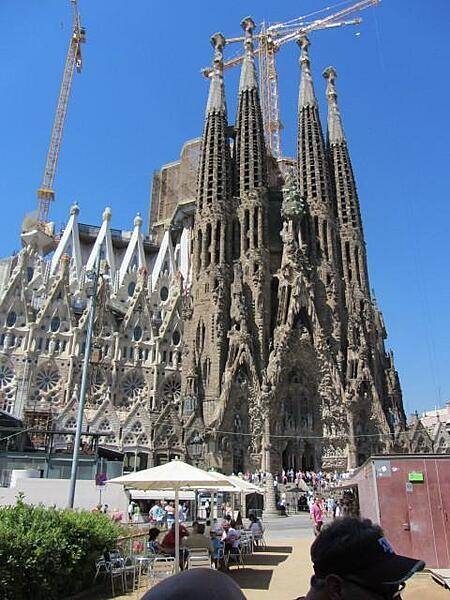
CIA World Factbook • 2020
CIA World Factbook • 2020
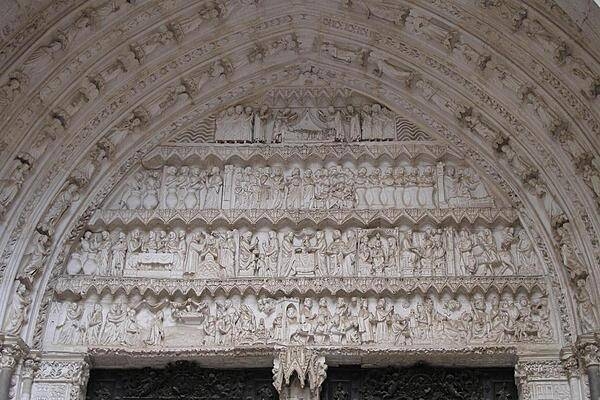
CIA World Factbook • 2020
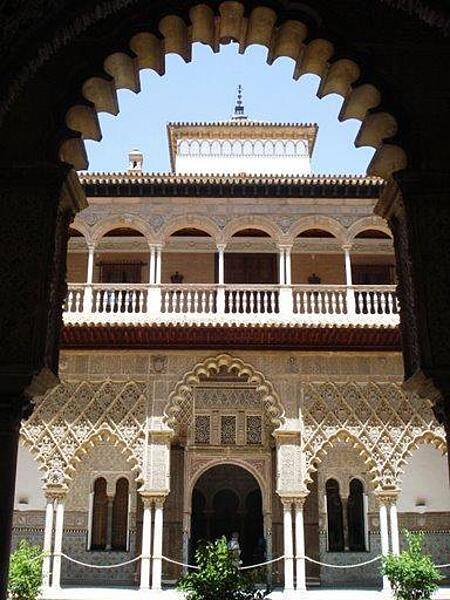
The Patio de las Doncellas (Courtyard of the Maidens) in the Alcazar in Seville.
The Patio de las Doncellas (Courtyard of the Maidens) in the Alcazar in Seville. • CIA World Factbook • 2020
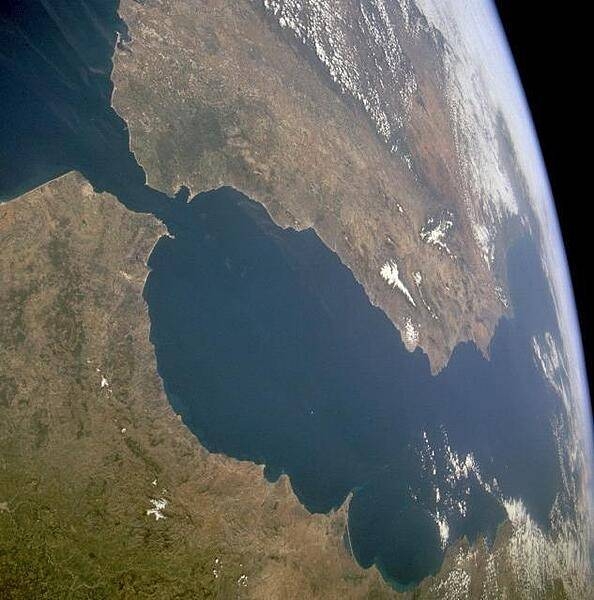
The Strait of Gibraltar provides a natural physical barrier between the countries of Spain (north) and Morocco (south). This photo shows the mountainous northern coast of Morocco and the coastal mountains of southern Spain, including the dagger-shaped, snow-covered Sierra Nevada Mountains of southeastern Spain. The British territory of Gibraltar is located on the thin, wedge-shaped peninsula on the east side of the bay in the southernmost protrusion of Spain. The city of Ceuta is a Spanish enclave on the extreme northeastern coast of Morocco. Image courtesy of NASA.
The Strait of Gibraltar provides a natural physical barrier between the countries of Spain (north) and Morocco (south). This photo shows the mountainous northern coast of Morocco and the coastal mountains of southern Spain, including the dagger-shaped, snow-covered Sierra Nevada Mountains of southeastern Spain. The British territory of Gibraltar is located on the thin, wedge-shaped peninsula on the east side of the bay in the southernmost protrusion of Spain. The city of Ceuta is a Spanish enclave on the extreme northeastern coast of Morocco. Image courtesy of NASA. • CIA World Factbook • 2020
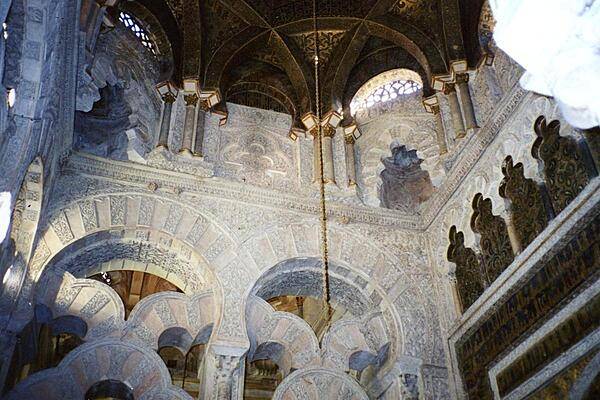
Interior of the Mezquita in Cordoba showing some of the distinctive Muslim architecture and a section of the dome.
Interior of the Mezquita in Cordoba showing some of the distinctive Muslim architecture and a section of the dome. • CIA World Factbook • 2020
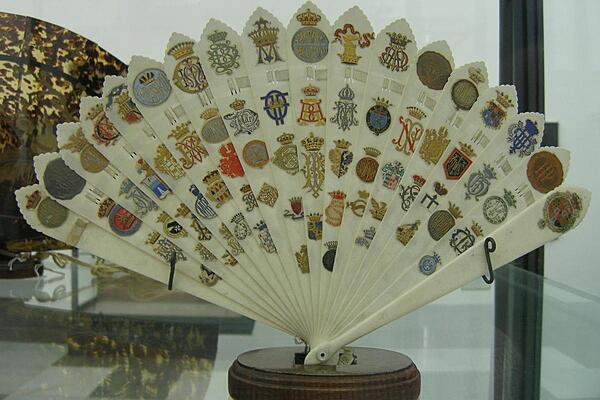
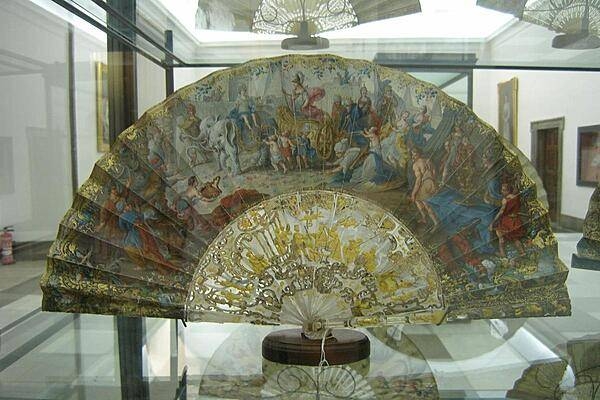
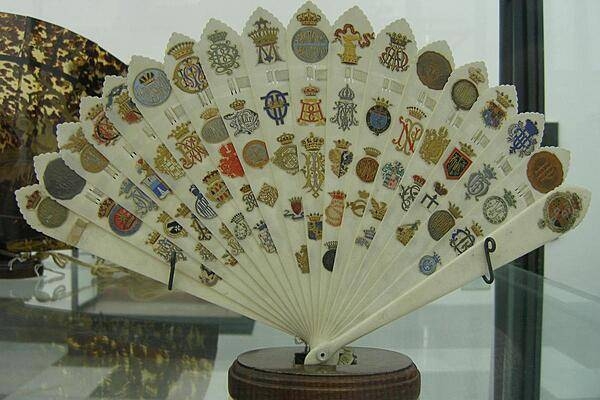
Part of the Palacio Real de Aranjuez fan collection.
Part of the Palacio Real de Aranjuez fan collection. • CIA World Factbook • 2020
CIA World Factbook • 2020
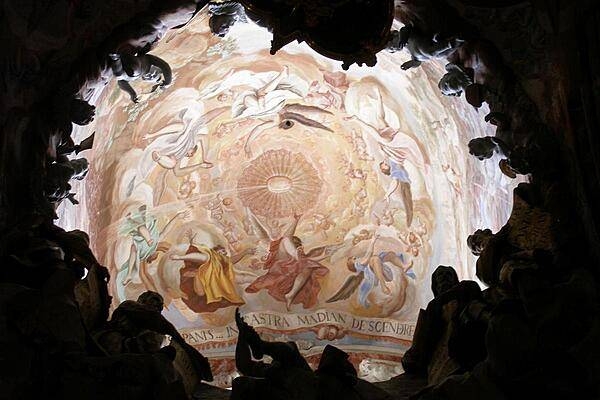
CIA World Factbook • 2020
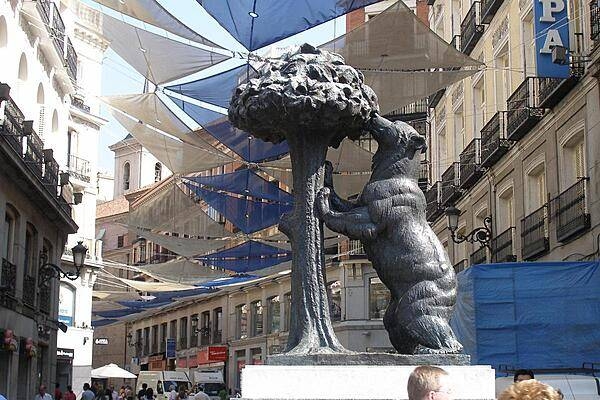
CIA World Factbook • 2020
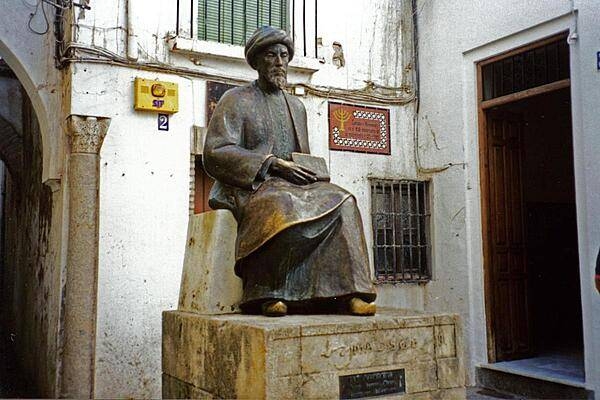
Cordoba monument honoring a native son, the eminent Jewish philosopher Maimonides (1135-1204).
Cordoba monument honoring a native son, the eminent Jewish philosopher Maimonides (1135-1204). • CIA World Factbook • 2020
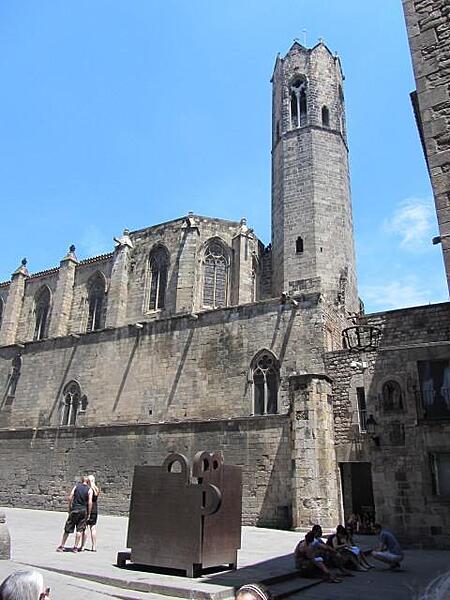
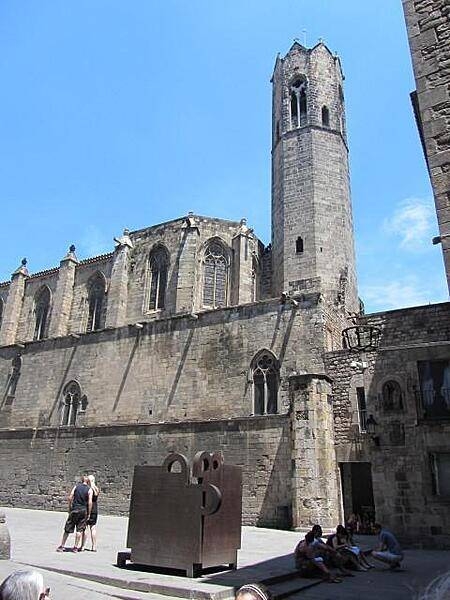
Chapel of St. Agatha in the Palau Reial Major (Grand Royal Palace) in Barcelona. The royal chapel was built in the 14th century.
Chapel of St. Agatha in the Palau Reial Major (Grand Royal Palace) in Barcelona. The royal chapel was built in the 14th century. • CIA World Factbook • 2020
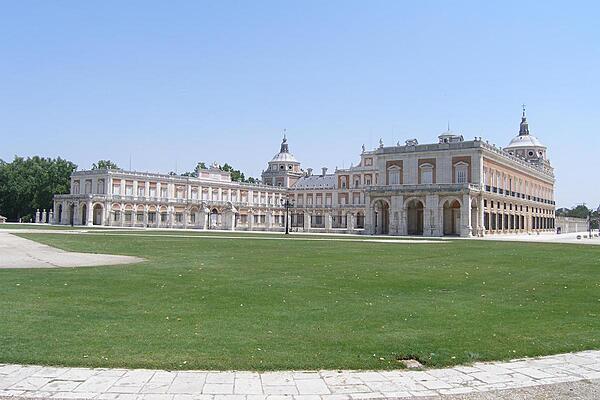
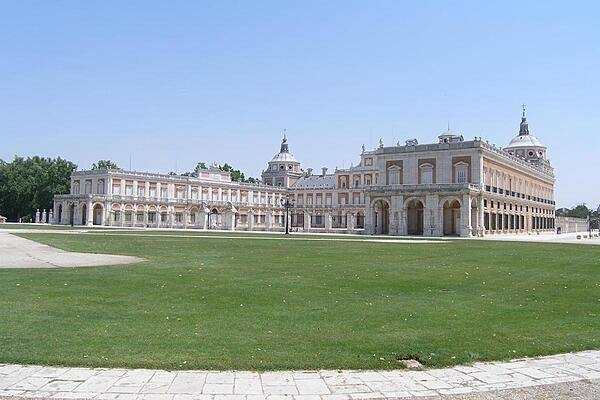
The Palacio Real (Royal Palace) in Aranjuez, 48 km (30 mi) south of Madrid, is one of the residences of the King of Spain. It was commissioned by Philip II in the late 16th century, but not completed until the middle of the 18th century.
The Palacio Real (Royal Palace) in Aranjuez, 48 km (30 mi) south of Madrid, is one of the residences of the King of Spain. It was commissioned by Philip II in the late 16th century, but not completed until the middle of the 18th century. • CIA World Factbook • 2020
Media source: CIA World Factbook (2020) — Public Domain