›››
Ethiopia — Media Gallery
18 items available (flags, maps, photos)
Photos
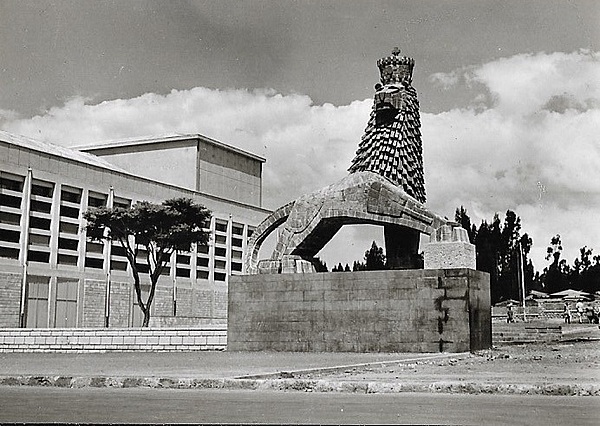
The Lion of Judah Monument is one of the most distinctive landmarks in Addis Ababa. The statue, by sculptor Maurice Calka, was commissioned by Emperor Haile Selassie and erected in front of the National Theater in 1954.
The Lion of Judah Monument is one of the most distinctive landmarks in Addis Ababa. The statue, by sculptor Maurice Calka, was commissioned by Emperor Haile Selassie and erected in front of the National Theater in 1954. • CIA World Factbook • 2020
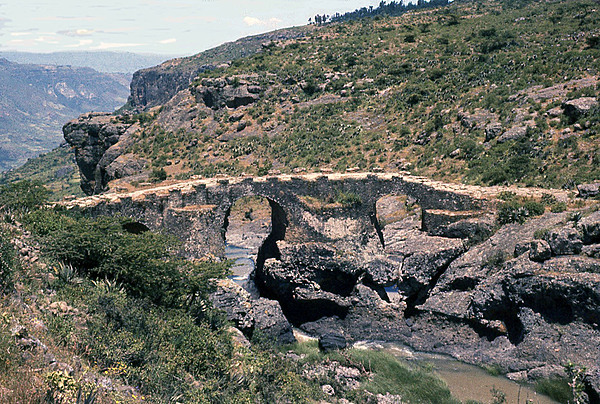
The "Portuguese Bridge" near Debre Libanos in the Oromia Region is a three-arched footbridge that locals claim dates to the 17th, or even the 16th, century (a period when Portugal assisted the Ethiopian monarchy). In fact, it was built in the early 19th century by Ethiopians, although in the old Portuguese style. This is an upstream view.
The "Portuguese Bridge" near Debre Libanos in the Oromia Region is a three-arched footbridge that locals claim dates to the 17th, or even the 16th, century (a period when Portugal assisted the Ethiopian monarchy). In fact, it was built in the early 19th century by Ethiopians, although in the old Portuguese style. This is an upstream view. • CIA World Factbook • 2020
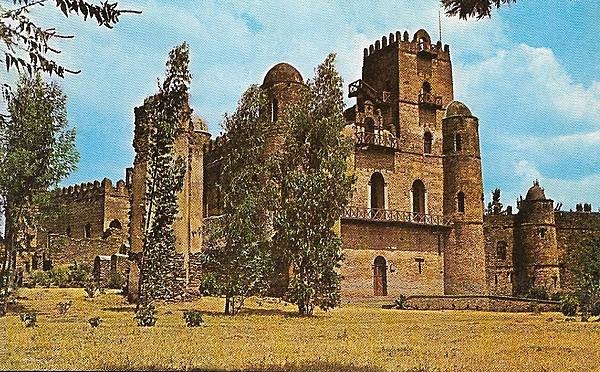
The Royal Enclosure or Fasil Ghebbi (Fasil’s Enclosure) is the remains of a fortress city in Gondar. Founded in the 17th century by Emperor Fasilides (Fasil), it was the home of Ethiopia's emperors. Its unique architecture shows diverse influences including Arab, Hindu, Nubian, and Baroque. The site was inscribed as a UNESCO World Heritage Site in 1979.
The Royal Enclosure or Fasil Ghebbi (Fasil’s Enclosure) is the remains of a fortress city in Gondar. Founded in the 17th century by Emperor Fasilides (Fasil), it was the home of Ethiopia's emperors. Its unique architecture shows diverse influences including Arab, Hindu, Nubian, and Baroque. The site was inscribed as a UNESCO World Heritage Site in 1979. • CIA World Factbook • 2020
CIA World Factbook • 2020
CIA World Factbook • 2020
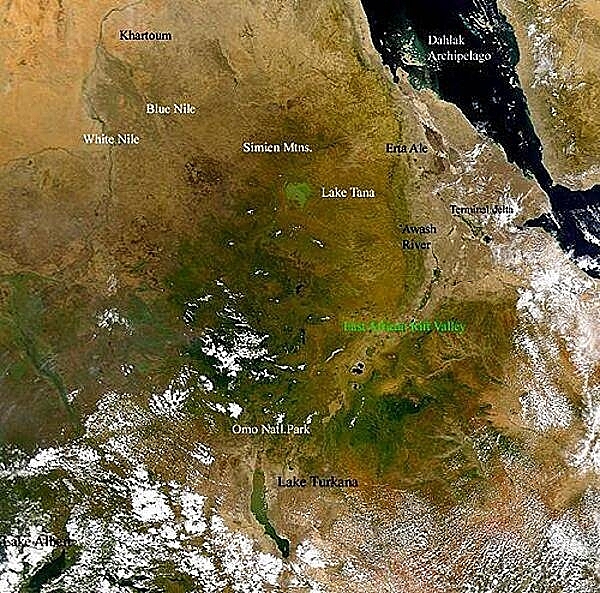
At the top left, the capital city of Sudan, Khartoum, is located at the convergence of the Blue Nile and the White Nile. Although the Blue Nile is much shorter than the White Nile, it contributes about 80% of the flow of the river. The Dahlak Archipelago is seen off the Red Sea coast of Eritrea. Because of their isolation, the numerous coral reefs of the Dahlak Archipelago are some of the most pristine in the world. North of the Rift Valley, in central Ethiopia, are the Simien Mountains and Lake Tana. Lake Tana is the source of the Blue Nile. Photo courtesy of NASA.
At the top left, the capital city of Sudan, Khartoum, is located at the convergence of the Blue Nile and the White Nile. Although the Blue Nile is much shorter than the White Nile, it contributes about 80% of the flow of the river. The Dahlak Archipelago is seen off the Red Sea coast of Eritrea. Because of their isolation, the numerous coral reefs of the Dahlak Archipelago are some of the most pristine in the world. North of the Rift Valley, in central Ethiopia, are the Simien Mountains and Lake Tana. Lake Tana is the source of the Blue Nile. Photo courtesy of NASA. • CIA World Factbook • 2020
CIA World Factbook • 2020
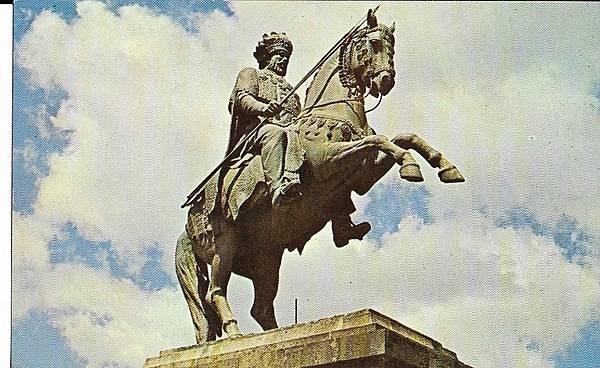
Equestrian statue of Emperor Menelik II in Addis Ababa. Menelik is remembered for leading Ethiopian troops against the Kingdom of Italy in the First Italo-Ethiopian War, where he scored a decisive victory at the Battle of Adwa in 1896 and secured Ethiopian independence.
Equestrian statue of Emperor Menelik II in Addis Ababa. Menelik is remembered for leading Ethiopian troops against the Kingdom of Italy in the First Italo-Ethiopian War, where he scored a decisive victory at the Battle of Adwa in 1896 and secured Ethiopian independence. • CIA World Factbook • 2020
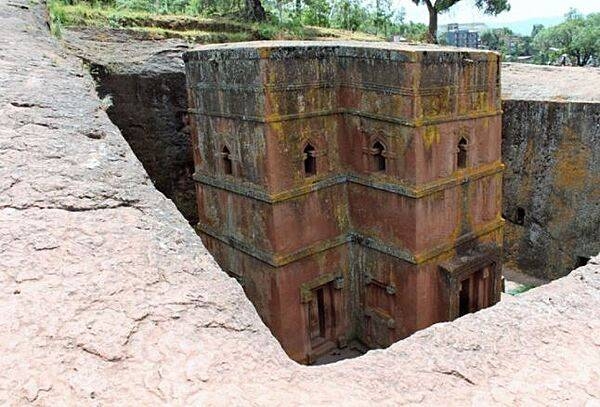
CIA World Factbook • 2020
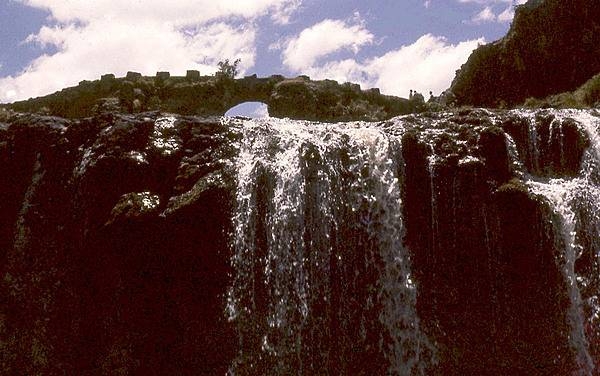
The "Portuguese Bridge" near Debre Libanos in the Oromia Region is a three-arched footbridge that locals claim dates to the 17th, or even the 16th, century (a period when Portugal assisted the Ethiopian monarchy). In fact, it was built in the early 19th century by Ethiopians, although in the old Portuguese style. The gushing cascade downstream from the bridge in the rainy season (July-September) makes for an impressive view.
The "Portuguese Bridge" near Debre Libanos in the Oromia Region is a three-arched footbridge that locals claim dates to the 17th, or even the 16th, century (a period when Portugal assisted the Ethiopian monarchy). In fact, it was built in the early 19th century by Ethiopians, although in the old Portuguese style. The gushing cascade downstream from the bridge in the rainy season (July-September) makes for an impressive view. • CIA World Factbook • 2020
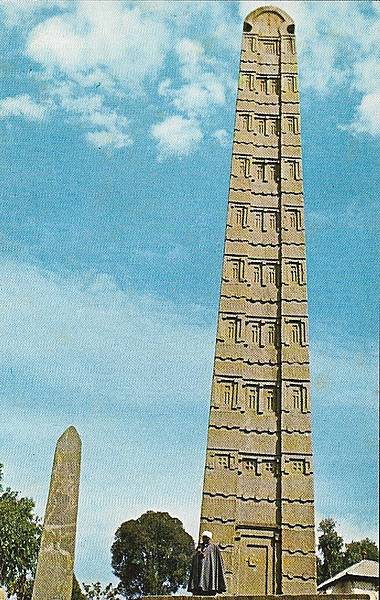
King Ezana's Stela is a 21-m (69-ft) tall obelisk in the ancient city of Axum. The monument, which dates to the 4th century A.D., stands at the center of the Northern Stelae Park along with hundreds of smaller and less decorated stelae. It is decorated with a false door at its base, and apertures resembling windows on all sides. The obelisk’s semi-circular apex used to be enclosed by metal frames. In 2007-08, the stela was structurally consolidated and today is braced to prevent its leaning any further.
King Ezana's Stela is a 21-m (69-ft) tall obelisk in the ancient city of Axum. The monument, which dates to the 4th century A.D., stands at the center of the Northern Stelae Park along with hundreds of smaller and less decorated stelae. It is decorated with a false door at its base, and apertures resembling windows on all sides. The obelisk’s semi-circular apex used to be enclosed by metal frames. In 2007-08, the stela was structurally consolidated and today is braced to prevent its leaning any further. • CIA World Factbook • 2020
CIA World Factbook • 2020

CIA World Factbook • 2020
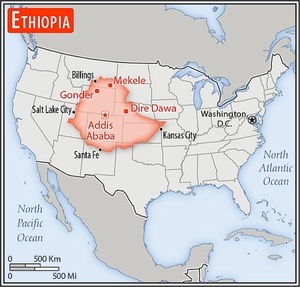
Area comparison map
Area comparison map • CIA World Factbook • 2020
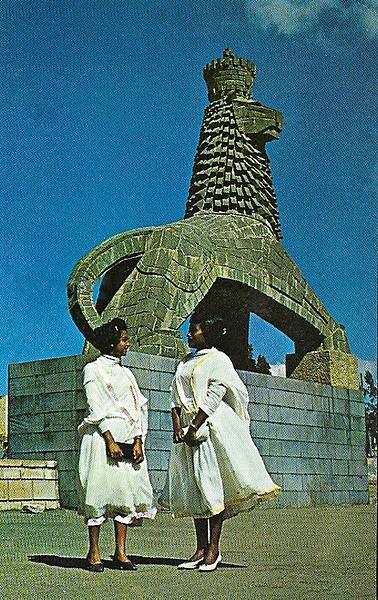
Two ladies in national dress in front of the Lion of Judah Monument in Addis Ababa.
Two ladies in national dress in front of the Lion of Judah Monument in Addis Ababa. • CIA World Factbook • 2020
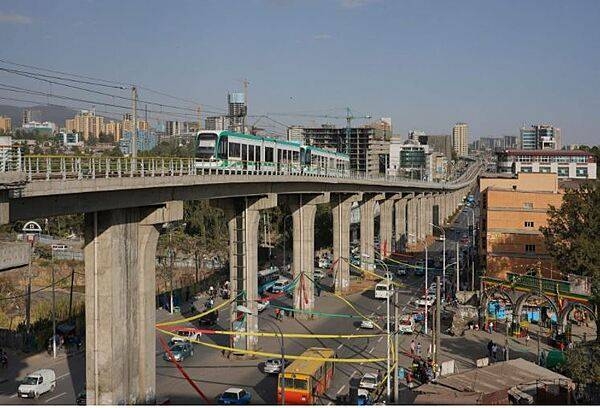
CIA World Factbook • 2020
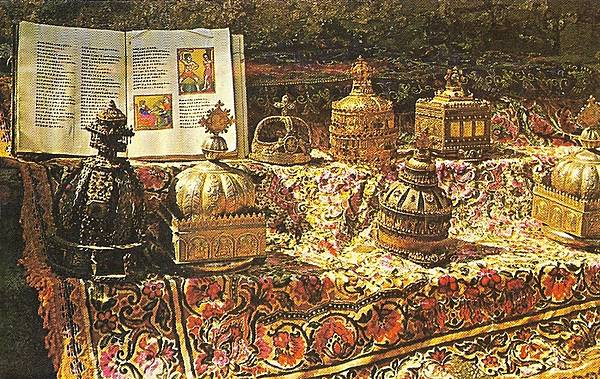
National treasures - reliquaries, crowns, and an ancient velum book - from the Church of Our Lady Mary of Zion in Axum. The church also claims to contain the Ark of the Covenant, but only a single guardian monk, appointed for life, may view and pray before the Ark.
National treasures - reliquaries, crowns, and an ancient velum book - from the Church of Our Lady Mary of Zion in Axum. The church also claims to contain the Ark of the Covenant, but only a single guardian monk, appointed for life, may view and pray before the Ark. • CIA World Factbook • 2020
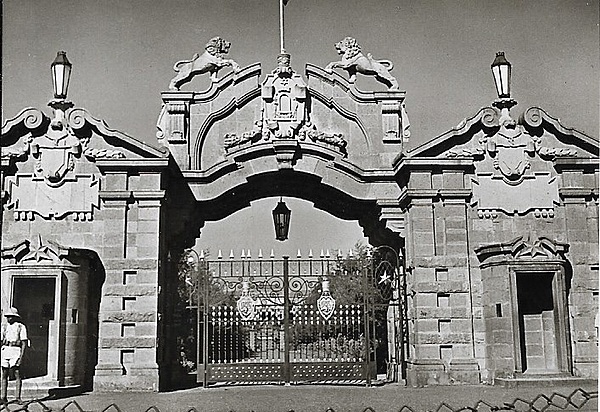
Main gate of the Imperial Palace, Addis Ababa.
Main gate of the Imperial Palace, Addis Ababa. • CIA World Factbook • 2020
Media source: CIA World Factbook (2020) — Public Domain