›››
Fiji — Media Gallery
8 items available (flags, maps, photos)
Photos
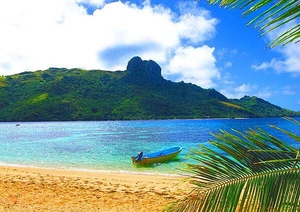
A beach on the island of Kuata, the smallest of the Yasawa Islands Group. Tourism is of growing importance to the island's economy; its deep lagoon is excellent for swimming and snorkeling.
A beach on the island of Kuata, the smallest of the Yasawa Islands Group. Tourism is of growing importance to the island's economy; its deep lagoon is excellent for swimming and snorkeling. • CIA World Factbook • 2020
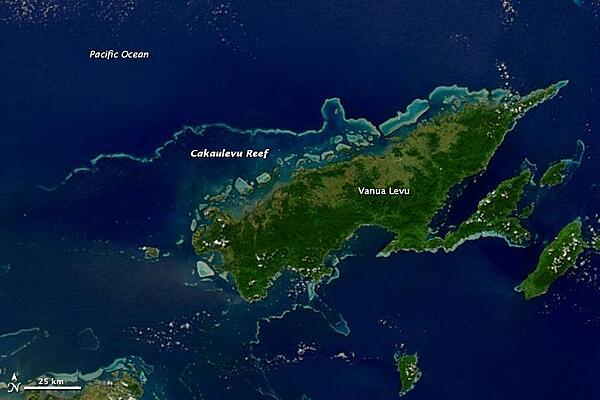
This satellite image shows Fiji's second-largest island, Vanua Levu, and the Cakaulevu Reef that shelters the island's northern shore. Also called the Great Sea Reef, Cakaulevu shines turquoise through clear, shallow waters. It is the third longest continuous barrier reef in the world, behind the Great Barrier Reef in Australia and the Mesoamerica Reef off Central America. When combined with the nearby Pascoe Reef, Cakaulevu Reef is about 200 km (120 mi) long. On its own, the Cakaulevu Reef covers 202,700 sq km (77,200 sq mi). The first systematic survey of the reef (in 2004) revealed a diverse marine population, including unique mangrove ecosystems and endemic fish. Twelve threatened species live within the reef: 10 fish species, the green turtle, and the spinner dolphin. All of this marine life has traditionally supported the native population, and currently some 70,000 people depend on the reef. After seeing fish populations decline in recent decades, local leaders created a series of marine protected areas in 2005 where fishing is prohibited. Where the ban has been enforced, fish populations have rebounded and spilled over into areas where fishing is permitted. Photo courtesy of NASA.
This satellite image shows Fiji's second-largest island, Vanua Levu, and the Cakaulevu Reef that shelters the island's northern shore. Also called the Great Sea Reef, Cakaulevu shines turquoise through clear, shallow waters. It is the third longest continuous barrier reef in the world, behind the Great Barrier Reef in Australia and the Mesoamerica Reef off Central America. When combined with the nearby Pascoe Reef, Cakaulevu Reef is about 200 km (120 mi) long. On its own, the Cakaulevu Reef covers 202,700 sq km (77,200 sq mi).
The first systematic survey of the reef (in 2004) revealed a diverse marine population, including unique mangrove ecosystems and endemic fish. Twelve threatened species live within the reef: 10 fish species, the green turtle, and the spinner dolphin. All of this marine life has traditionally supported the native population, and currently some 70,000 people depend on the reef. After seeing fish populations decline in recent decades, local leaders created a series of marine protected areas in 2005 where fishing is prohibited. Where the ban has been enforced, fish populations have rebounded and spilled over into areas where fishing is permitted. Photo courtesy of NASA. • CIA World Factbook • 2020
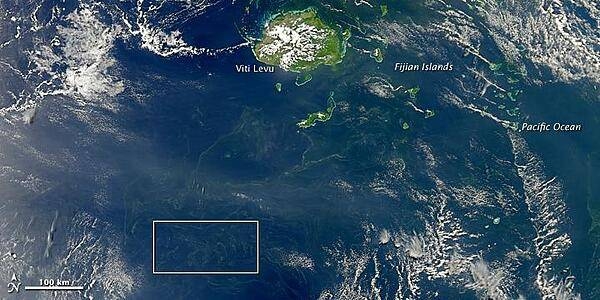
It is hard to believe, but some of the smallest organisms on our planet can be viewed from space. Diminutive bacteria and plankton (microscopic, floating plants) can merge into great chains and mats that can be detected by satellites hundreds of kilometers up. NASA's Aqua satellite captured this image of a plankton or bacterial bloom south of Fiji on 18 October 2010. Photo courtesy of NASA.
It is hard to believe, but some of the smallest organisms on our planet can be viewed from space. Diminutive bacteria and plankton (microscopic, floating plants) can merge into great chains and mats that can be detected by satellites hundreds of kilometers up. NASA's Aqua satellite captured this image of a plankton or bacterial bloom south of Fiji on 18 October 2010. Photo courtesy of NASA. • CIA World Factbook • 2020
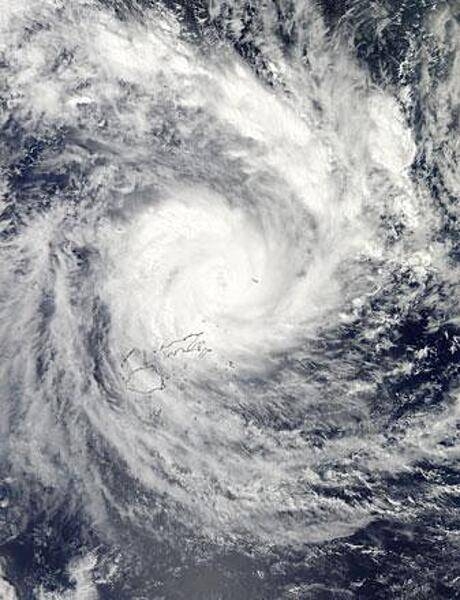
NASA's Aqua satellite passed over Tropical Cyclone Evan on 16 December 2012 and captured this true-color image of the intense storm over the island nation of Fiji. In this image, the storm contains a large, cloud-filled eye, which was estimated at about 17 km (11 mi) across. Heavy rain bands wrap in an apostrophe shape around the center, and reach over the two main islands of Fiji, Viti Levu (south) and Vanua Levu (north). Tropical Cyclone Evan was one of the strongest cyclones to hit Fiji and Samoa in recent memory. In the ten days between first formation on 9 December and dissipation on 19 December, the storm battered Fiji, Western Samoa, American Samoa, Tonga, and Wallis and Futuna. The estimated cost of the storm was $161 million US dollars, and 14 lives were reported lost. Photo courtesy of NASA.
NASA's Aqua satellite passed over Tropical Cyclone Evan on 16 December 2012 and captured this true-color image of the intense storm over the island nation of Fiji. In this image, the storm contains a large, cloud-filled eye, which was estimated at about 17 km (11 mi) across. Heavy rain bands wrap in an apostrophe shape around the center, and reach over the two main islands of Fiji, Viti Levu (south) and Vanua Levu (north). Tropical Cyclone Evan was one of the strongest cyclones to hit Fiji and Samoa in recent memory. In the ten days between first formation on 9 December and dissipation on 19 December, the storm battered Fiji, Western Samoa, American Samoa, Tonga, and Wallis and Futuna. The estimated cost of the storm was $161 million US dollars, and 14 lives were reported lost. Photo courtesy of NASA. • CIA World Factbook • 2020
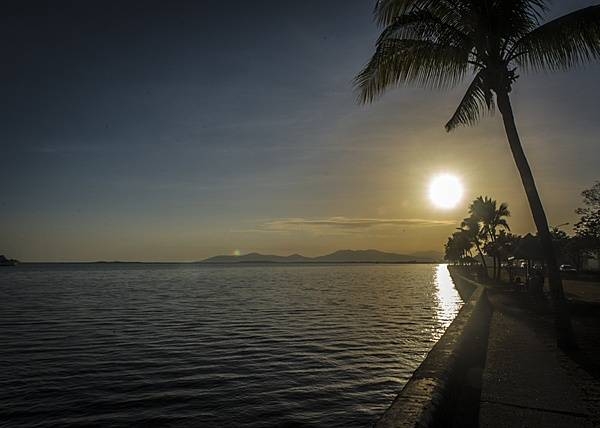
The sun rises over the horizon as waves lap the seawall in Lautoka, the second largest city in Fiji. Lautoka is on the west coast of the island of Viti Levu, in the Ba Province. Photo courtesy of the US Air Force/ Tech. Sgt. Benjamin Stratton.
The sun rises over the horizon as waves lap the seawall in Lautoka, the second largest city in Fiji. Lautoka is on the west coast of the island of Viti Levu, in the Ba Province. Photo courtesy of the US Air Force/ Tech. Sgt. Benjamin Stratton. • CIA World Factbook • 2020
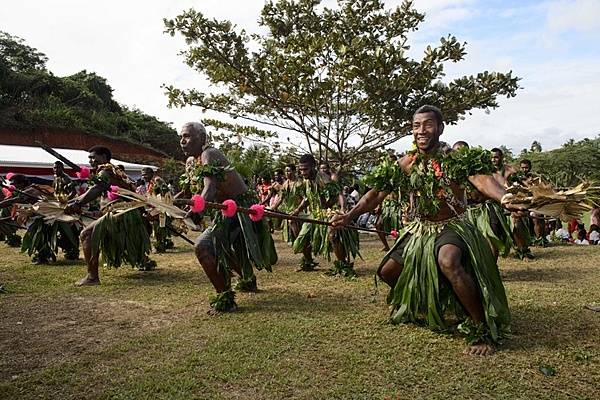
Fijians perform a traditional dance on Vanua Levu on 17 June 2015 for the crew of the hospital ship USNS Mercy (T-AH 19) as part of a ceremony during Pacific Partnership 2015. US and Fijian engineers worked together to build a new classroom at the Viani Primary School and celebrated with a ribbon cutting ceremony. Photo courtesy of the US Navy/ Chief Mass Communication Specialist Christopher E. Tucker.
Fijians perform a traditional dance on Vanua Levu on 17 June 2015 for the crew of the hospital ship USNS Mercy (T-AH 19) as part of a ceremony during Pacific Partnership 2015. US and Fijian engineers worked together to build a new classroom at the Viani Primary School and celebrated with a ribbon cutting ceremony. Photo courtesy of the US Navy/ Chief Mass Communication Specialist Christopher E. Tucker. • CIA World Factbook • 2020
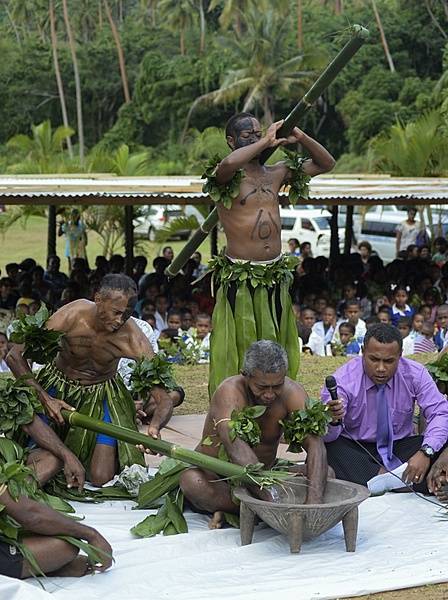
Fijian tribal elders on Vanua Levu perform a kava ceremony on 17 June 2015 for the crew of the hospital ship USNS Mercy (T-AH 19) during Pacific Partnership 2015. US and Fijian engineers worked together to build a new classroom at the Viani Primary School and celebrated with a ribbon cutting ceremony. Pacific Partnership is the largest annual multilateral humanitarian assistance and disaster relief preparedness mission conducted in the Indo-Asia-Pacific region. Photo courtesy of the US Navy/ Mass Communication Specialist 3rd Class Mayra A. Conde.
Fijian tribal elders on Vanua Levu perform a kava ceremony on 17 June 2015 for the crew of the hospital ship USNS Mercy (T-AH 19) during Pacific Partnership 2015. US and Fijian engineers worked together to build a new classroom at the Viani Primary School and celebrated with a ribbon cutting ceremony. Pacific Partnership is the largest annual multilateral humanitarian assistance and disaster relief preparedness mission conducted in the Indo-Asia-Pacific region. Photo courtesy of the US Navy/ Mass Communication Specialist 3rd Class Mayra A. Conde. • CIA World Factbook • 2020
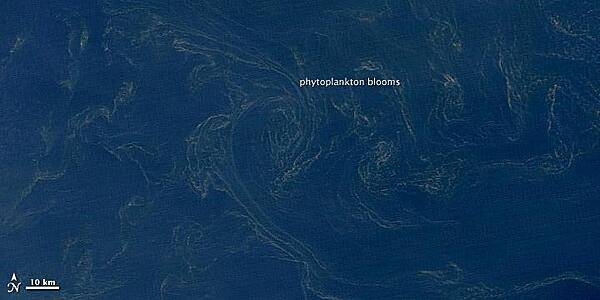
An enlargement of part of the previous image showing swirls of phytoplankton mats. Photo courtesy of NASA.
An enlargement of part of the previous image showing swirls of phytoplankton mats. Photo courtesy of NASA. • CIA World Factbook • 2020
Media source: CIA World Factbook (2020) — Public Domain