›››
Greece
Greece
Population
10.4M
Rank #93Source: World Bank
Capital
Athens
Source: REST Countries
Region
Europe
Europe & Central Asia
Source: REST Countries
GDP (Nominal)
$256.24B
Rank #53Source: World Bank
Land Area
132.0K km²
Rank #96Source: REST Countries
Life Expectancy
81.537 yrs
Source: World Bank
Historical Trends
Population Trend (5-Year)
Source: World Bank
GDP Trend (5-Year, Nominal USD)
Source: World Bank
Geography
Area: 131,990 km²
Landlocked: No
Independent: Yes
Climate: temperate; mild, wet winters; hot, dry summers
Terrain: mountainous with ranges extending into the sea as peninsulas or chains of islands
Elevation: mean elevation: 498 m lowest point: Mediterranean Sea 0 m highest point: Mount Olympus 2,917 note: Mount Olympus actually has 52 peaks but its highest point, Mytikas (meaning "nose"), rises to 2,917...
Natural Hazards: severe earthquakesvolcanism: Santorini (367 m) has been deemed a Decade Volcano by the International Association of Volcanology and Chemistry of the Earth's Interior, worthy of study due to its...
Environmental Issues: air pollution; air emissions from transport and electricity power stations; water pollution; degradation of coastal zones; loss of biodiversity in terrestrial and marine ecosystems; increasing...
Land Use: agricultural land: 63.4% (2011 est.) forest: 30.5% (2011 est.) other: 6.1% (2011 est.)
Geography Note: strategic location dominating the Aegean Sea and southern approach to Turkish Straits; a peninsular country, possessing an archipelago of about 2,000 islands
Natural Resources
lignitepetroleumiron orebauxiteleadzincnickelmagnesitemarblesalt
People & Society
Fertility Rate
1.32
Population
10.4M
Ethnic Groups
Greek (91.6%)Albanian (4.4%)other (4%)
Religions
Muslim (2%)other (3%)unspecified (1%)
Economy
GDP per Capita
$24,626.148
GDP per Capita PPP
44,327.21
(2024)
(2024)
GNI per Capita
22,730
(2024)
(2024)
Gini Index
33.4
(2023)
(2023)
Unemployment
10.02%
(2024)
(2024)
Inflation
2.741%
(2024)
(2024)
Public Debt
Not Available
Energy
Electricity Access
100%
(2023)
(2023)
Renewable Energy
21.5%
(2021)
(2021)
CO₂ Emissions
52.509 Mt
(2024)
(2024)
Energy Intensity
2.58 MJ/$
(2022)
(2022)
Renewable Electricity
40.564%
(2021)
(2021)
Environment
Forest Coverage
30.27% of land
(2023)
(2023)
Communications
Internet Users
86.27%
(2024)
(2024)
Mobile Penetration
110.792%
(2023)
(2023)
Broadband Subscribers
43.854%
(2023)
(2023)
Transportation
Air Transport Freight
16.023 M ton-km
(2023)
(2023)
Container Port Traffic
5,166,629 TEU
(2022)
(2022)
Airports
167,624
Rail Lines
2,339 km
Roads Total
117,899.1 km(©IRF)
Military
Military Forces
Hellenic Armed Forces: Hellenic Army (Ellinikos Stratos, ES; includes National Guard reserves), Hellenic Navy (Elliniko Polemiko Navtiko, EPN), Hellenic Air Force (Elliniki Polemiki Aeroporia, EPA;...
Personnel Strength
the Hellenic Armed Forces have approximately 141,000 active duty personnel (90,000 Army; 16,000 Navy; 25,000 Air Force; 10,000 joint service, support, staff); approximately 35,000 National Guard
Military Expenditure (USD)
$8.02B
Military Expenditure (% of GDP)
3.13%
Military Expenditure History
2.28% of GDP (2019 est.) 2.48% of GDP (2018) 2.34% of GDP (2017) 2.38% of GDP (2016) 2.3% of GDP (2015)
Deployments
est. 1,000 Cyprus; 110 Kosovo (NATO); 140 Lebanon (UNIFIL) (2020)
Equipment & Inventories
the inventory of the Hellenic Armed Forces consists mostly of a mix of imported weapons from Europe and the US, as well as a limited number of domestically produced systems, particularly naval...
Service Age & Obligation
19-45 years of age for compulsory military service; during wartime the law allows for recruitment beginning January of the year of inductee's 18th birthday, thus including 17 year olds; 18 years of...
Education
Pre-Primary Enrollment
93.28%
(2020)
(2020)
Primary Enrollment
102.02%
(2023)
(2023)
Secondary Enrollment
105.192%
(2023)
(2023)
Tertiary Enrollment
165.113%
(2023)
(2023)
Education Spending
3.375% of GDP
(2022)
(2022)
Pupil-Teacher Ratio
9.38:1
(2017)
(2017)
Health
Physicians per 1,000
6.576
(2022)
(2022)
Safe Water Access
100%
(2024)
(2024)
Safe Drinking Water
96.686%
(2024)
(2024)
Under-5 Mortality
3.7 per 1,000
(2023)
(2023)
Maternal Mortality (World Bank)
22.627 per 100,000
(2021)
(2021)
Hospital Beds per 1,000
77.255
(2021)
(2021)
UHC Coverage Index
77
(2023)
(2023)
Measles Immunization
95%
(2024)
(2024)
Social Indicators
Extreme Poverty Rate
0.6%
(2023)
(2023)
Food Insecurity
2.5%
(2023)
(2023)
Youth NEET Rate
22.418%
(2024)
(2024)
Governance
Women in Government
23%
(2024)
(2024)
Voice & Accountability
1.01
(Strong)
(2023)
(Strong)
(2023)
Political Stability
0.24
(Above Average)
(2023)
(Above Average)
(2023)
Government Effectiveness
0.15
(Above Average)
(2023)
(Above Average)
(2023)
Regulatory Quality
0.58
(Above Average)
(2023)
(Above Average)
(2023)
Rule of Law
0.21
(Above Average)
(2023)
(Above Average)
(2023)
Control of Corruption
0.10
(Above Average)
(2023)
(Above Average)
(2023)
Government
Government Type
parliamentary republic
Legal System
civil legal system based on Roman law
Executive Branch
chief of state: President Ekaterini SAKELLAROPOULOU (since 13 March 2020) head of government: Prime Minister Kyriakos MITSOTAKIS (since 8 July 2019) cabinet: Cabinet appointed by the president on the...
Legislative Branch
description: unicameral Hellenic Parliament or Vouli ton Ellinon (300 seats; 280 members in multi-seat constituencies and 12 members in a single nationwide constituency directly elected by open...
Judicial Branch
highest courts: Supreme Civil and Criminal Court or Areios Pagos (consists of 56 judges, including the court presidents); Council of State (supreme administrative court) (consists of the president, 7...
National Symbols
Flag Description
nine equal horizontal stripes of blue alternating with white; a blue square bearing a white cross appears in the upper hoist-side corner; the cross symbolizes Greek Orthodoxy, the established...
National Symbols
Greek cross (white cross on blue field, arms equal length); national colors: blue, white
National Anthem
name: "Ymnos eis tin Eleftherian" (Hymn to Liberty) lyrics/music: Dionysios SOLOMOS/Nikolaos MANTZAROS note: adopted 1864; the anthem is based on a 158-stanza poem by the same name, which was...
Safety
Homicide Rate
0.84 per 100,000
(2023)
(2023)
Travel Information
Language(s): Greek
Currency: EUR (€)
Timezone(s): UTC+02:00
Landlocked: No
Independent: Yes
Driving Side: Right
Calling Code: +30
Car Sign: GR
Week Starts: Monday
Photos
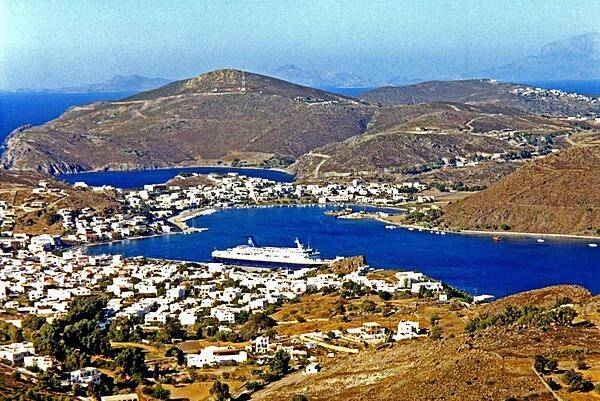
Harbor and ship on the island of Patmos, as seen from the shrine of St. John the Evangelist. According to tradition, it was here that the saint, living in exile from Ephesus, wrote the Biblical "Book of Revelations."
Harbor and ship on the island of Patmos, as seen from the shrine of St. John the Evangelist. According to tradition, it was here that the saint, living in exile from Ephesus, wrote the Biblical "Book of Revelations." • CIA World Factbook • 2020
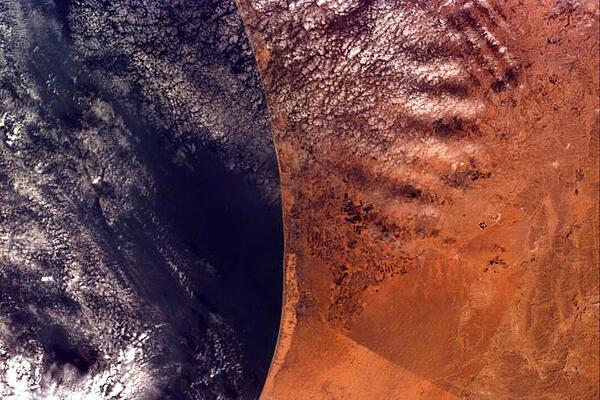
This image covers an area roughly 100x150 km; due to shuttle orientation, north is located at approximately eleven o'clock in this image. Shown are the Gaza Strip (roughly the center third of the coastal strip) and the Mediterranean Sea. The straight-line Egypt-Israel border is apparent in the lower center because of a difference in vegetation patterns, the Egyptian side (south) being less vegetated perhaps due to heavy use of the land for grazing. Photo courtesy of NASA.
This image covers an area roughly 100x150 km; due to shuttle orientation, north is located at approximately eleven o'clock in this image. Shown are the Gaza Strip (roughly the center third of the coastal strip) and the Mediterranean Sea. The straight-line Egypt-Israel border is apparent in the lower center because of a difference in vegetation patterns, the Egyptian side (south) being less vegetated perhaps due to heavy use of the land for grazing. Photo courtesy of NASA. • CIA World Factbook • 2020
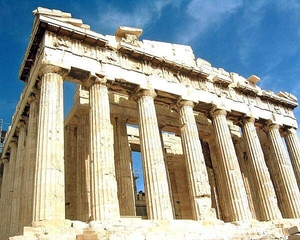
Close up of the front of the Parthenon - the temple to ancient Athens' patron deity, Athena.
Close up of the front of the Parthenon - the temple to ancient Athens' patron deity, Athena. • CIA World Factbook • 2020
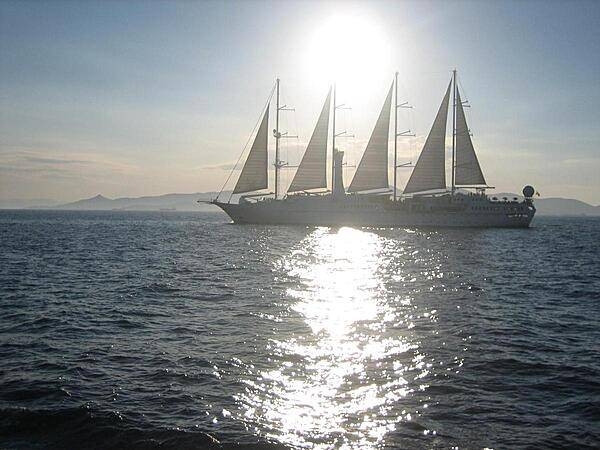
CIA World Factbook • 2020
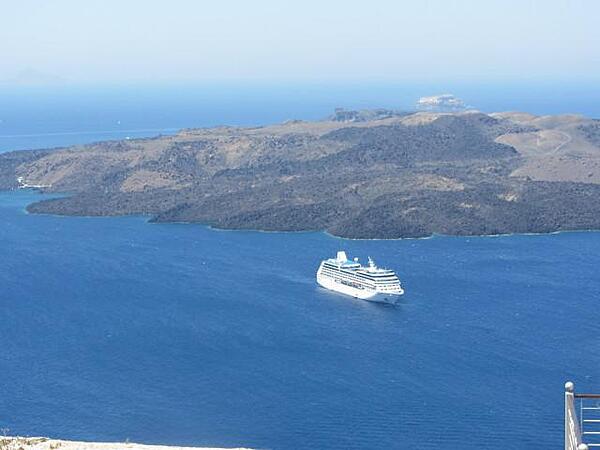
View of the 400 m (1300 ft)-deep volcanic caldera off the coast of Santorini/Thera Island. In the foreground is the island of Nea Kameni. In the background is the island of Therasia. Santorini, Nea Kameni, and Therasia were separated by a volcanic eruption termed the Minoan Eruption in about 1630 B.C.
View of the 400 m (1300 ft)-deep volcanic caldera off the coast of Santorini/Thera Island. In the foreground is the island of Nea Kameni. In the background is the island of Therasia. Santorini, Nea Kameni, and Therasia were separated by a volcanic eruption termed the Minoan Eruption in about 1630 B.C. • CIA World Factbook • 2020
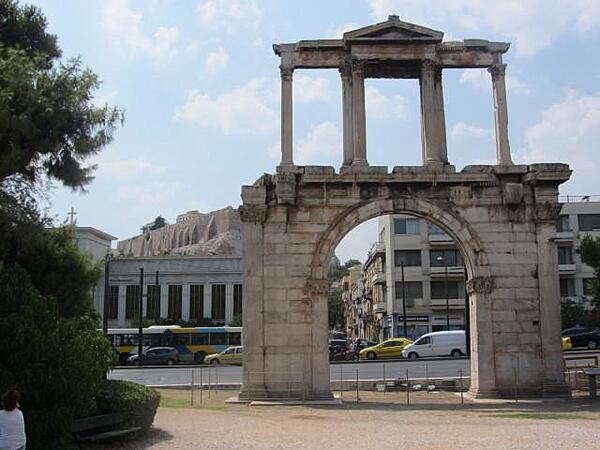
Hadrian's Arch in downtown Athens was built in A.D. 131 or 132 to honor the Roman Emperor Hadrian, possibly for restoring much of the city and completing the nearby Temple of Olympian Zeus. The Parthenon and Acropolis can be seen in the left background.
Hadrian's Arch in downtown Athens was built in A.D. 131 or 132 to honor the Roman Emperor Hadrian, possibly for restoring much of the city and completing the nearby Temple of Olympian Zeus. The Parthenon and Acropolis can be seen in the left background. • CIA World Factbook • 2020
78 photos available
View All Photos→Data sources: World Bank, UN Data • Updated daily •Learn about our data