›››
Hungary — Media Gallery
25 items available (flags, maps, photos)
Photos
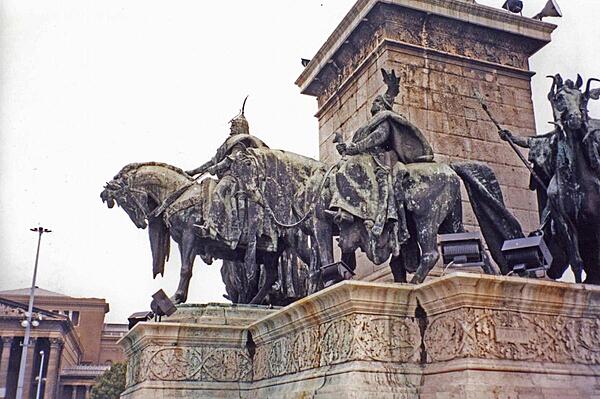
Some of the statues at Heroes' Square in Budapest.
Some of the statues at Heroes' Square in Budapest. • CIA World Factbook • 2020
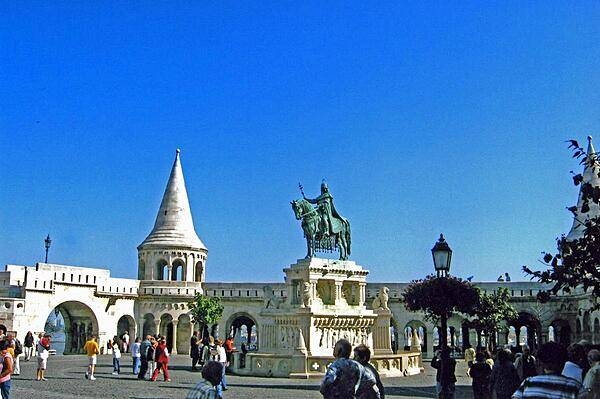
The statue of Stephen I, saint and king, in the Fisherman's Bastion terrace on the Buda side of Budapest.
The statue of Stephen I, saint and king, in the Fisherman's Bastion terrace on the Buda side of Budapest. • CIA World Factbook • 2020
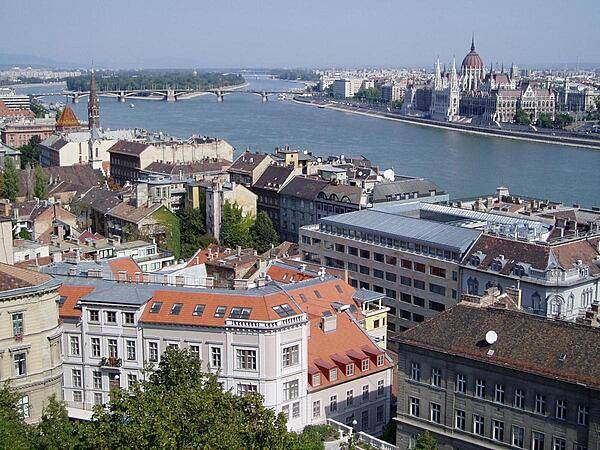
A view of the Danube River that splits Buda and Pest (which together are Budapest), as seen from Buda; the Parliament Building is visible in the distance.
A view of the Danube River that splits Buda and Pest (which together are Budapest), as seen from Buda; the Parliament Building is visible in the distance. • CIA World Factbook • 2020
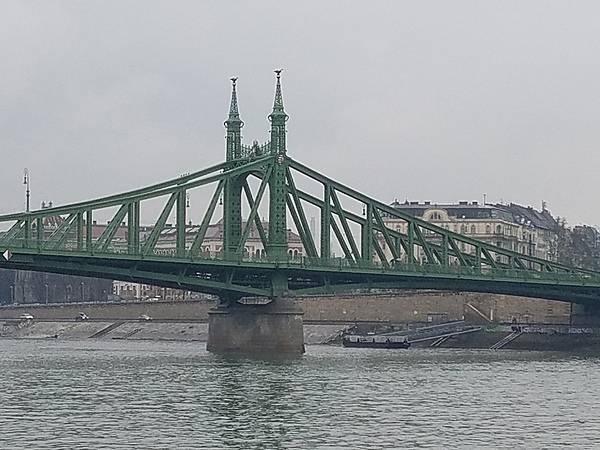
The Liberty Bridge (or Freedom Bridge) in Budapest is one of several bridges across the River Danube that connects the Buda and Pest halves. Built between 1894 and 1896 as part of Budapest's Millennium World Exhibition, the Art Nouveau bridge incorporates mythological turul bird sculptures into its spires and the country's coat of arms into its side.
The Liberty Bridge (or Freedom Bridge) in Budapest is one of several bridges across the River Danube that connects the Buda and Pest halves. Built between 1894 and 1896 as part of Budapest's Millennium World Exhibition, the Art Nouveau bridge incorporates mythological turul bird sculptures into its spires and the country's coat of arms into its side. • CIA World Factbook • 2020
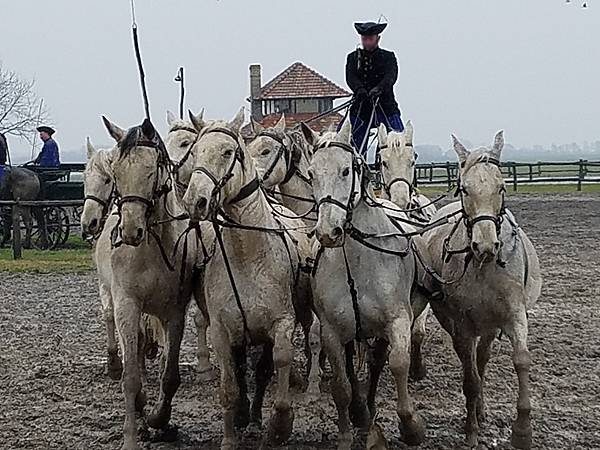
Outdoor show at the Bakodpuszta Equestrian Center near Kalocsa showing a rider controlling eight horses. The people of the Puszta region have long relied on the horse for transport, settlement, and defending their land.
Outdoor show at the Bakodpuszta Equestrian Center near Kalocsa showing a rider controlling eight horses. The people of the Puszta region have long relied on the horse for transport, settlement, and defending their land. • CIA World Factbook • 2020
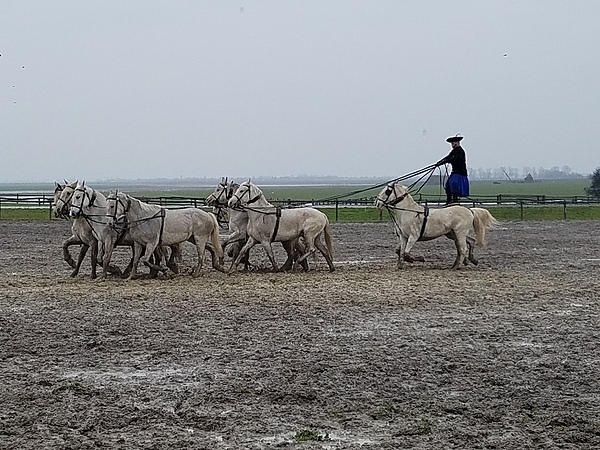
Outdoor show at the Bakodpuszta Equestrian Center near Kalocsa showing a rider controlling ten horses.
Outdoor show at the Bakodpuszta Equestrian Center near Kalocsa showing a rider controlling ten horses. • CIA World Factbook • 2020
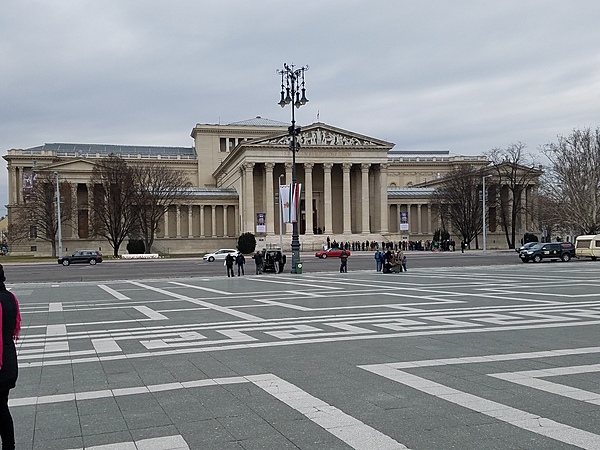
The Museum of Fine Arts in Budapest is situated to the left of the Millennium Monument.
The Museum of Fine Arts in Budapest is situated to the left of the Millennium Monument. • CIA World Factbook • 2020
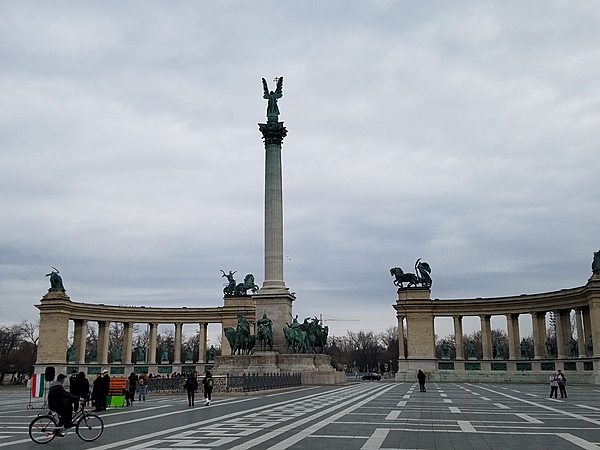
The Millennium Monument in Heroes Square in Budapest contains statues of many outstanding Hungarian statesmen.
The Millennium Monument in Heroes Square in Budapest contains statues of many outstanding Hungarian statesmen. • CIA World Factbook • 2020
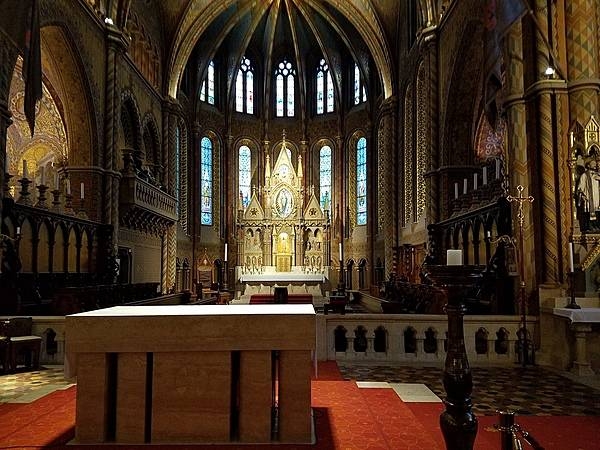
Part of the interior of the Church of the Assumption in Buda's Castle District.
Part of the interior of the Church of the Assumption in Buda's Castle District. • CIA World Factbook • 2020
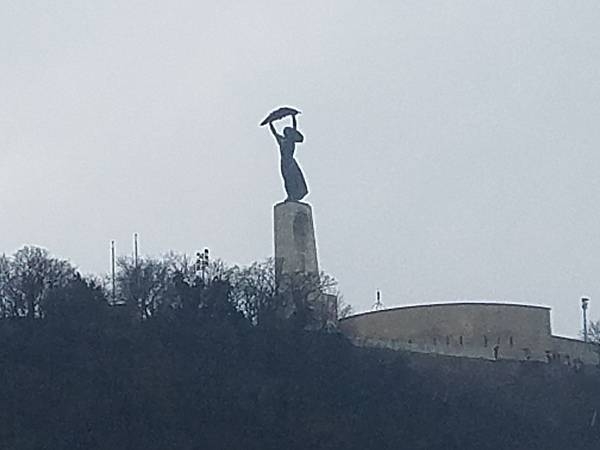
The Liberty Statue or Freedom Statue on Gellert Hill in Budapest commemorates those "who sacrificed their lives for the independence, freedom, and prosperity of Hungary." Originally erected in 1947 in remembrance of what was then referred to as the Soviet liberation of Hungary in World War II, the monument was rededicated in 1989 following the transition from communist rule to democracy.
The Liberty Statue or Freedom Statue on Gellert Hill in Budapest commemorates those "who sacrificed their lives for the independence, freedom, and prosperity of Hungary." Originally erected in 1947 in remembrance of what was then referred to as the Soviet liberation of Hungary in World War II, the monument was rededicated in 1989 following the transition from communist rule to democracy. • CIA World Factbook • 2020
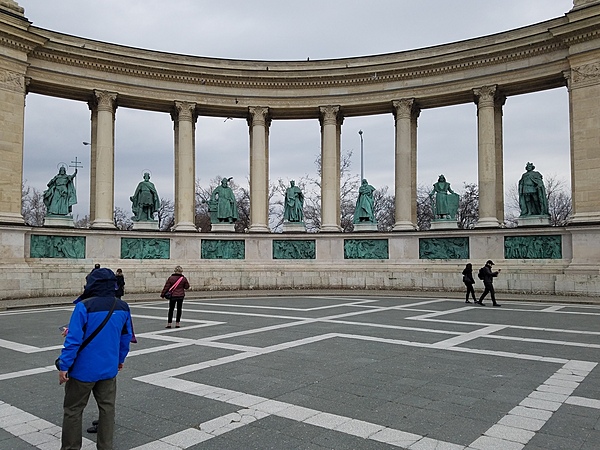
The statues of kings and military leaders in the left colonnade of the Millennium Monument in Budapest.
The statues of kings and military leaders in the left colonnade of the Millennium Monument in Budapest. • CIA World Factbook • 2020
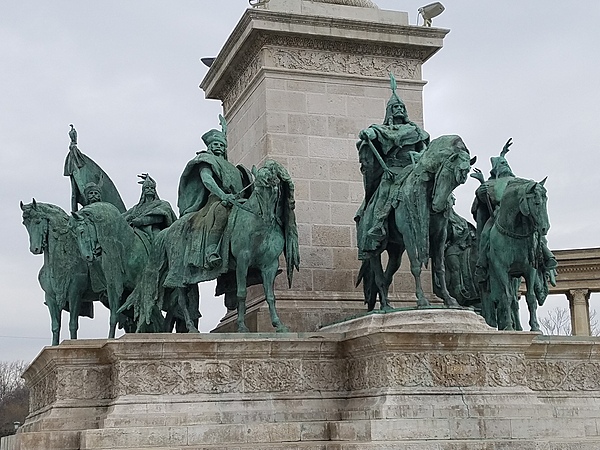
Statues of seven mounted figures at the base of the Millennium Monument column represent the Magyar chieftains who led the Hungarian people to their settlement in the Pannonian Plain of central Europe.
Statues of seven mounted figures at the base of the Millennium Monument column represent the Magyar chieftains who led the Hungarian people to their settlement in the Pannonian Plain of central Europe. • CIA World Factbook • 2020
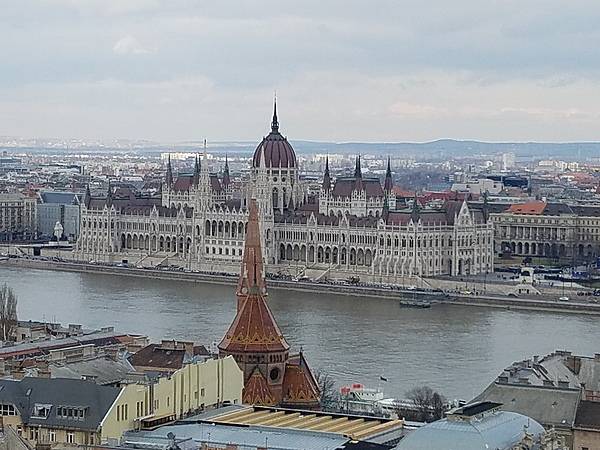
Closer view of the Parliament Building on the Pest side of the Danube River. Construction began in 1885 but was not completed until 1904.
Closer view of the Parliament Building on the Pest side of the Danube River. Construction began in 1885 but was not completed until 1904. • CIA World Factbook • 2020
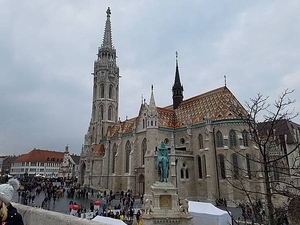
The Church of the Assumption - more commonly referred to as the Matthais Church - in front of the Fisherman's Bastion in Buda's Castle District.
The Church of the Assumption - more commonly referred to as the Matthais Church - in front of the Fisherman's Bastion in Buda's Castle District. • CIA World Factbook • 2020
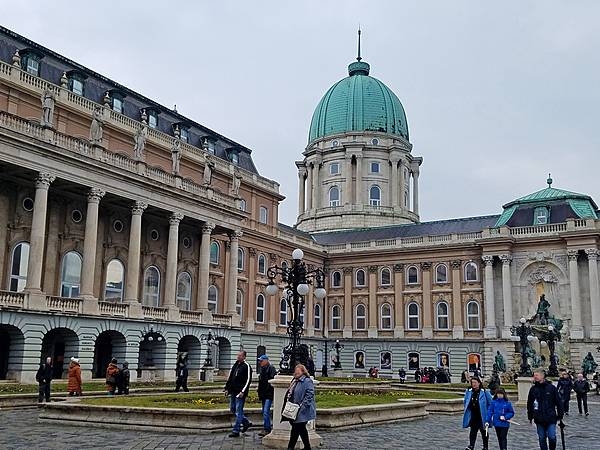
The Royal Castle (also referred to as the Royal Palace) on Castle Hill. Formerly the residence of Hungarian kings, the castle now houses the Hungarian National Gallery and the Budapest History Museum.
The Royal Castle (also referred to as the Royal Palace) on Castle Hill. Formerly the residence of Hungarian kings, the castle now houses the Hungarian National Gallery and the Budapest History Museum. • CIA World Factbook • 2020
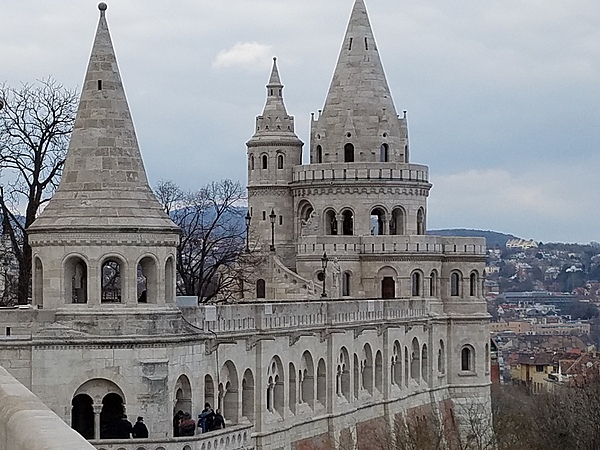
Close up of some of the architecture in Fisherman's Bastion on Castle Hill in Buda.
Close up of some of the architecture in Fisherman's Bastion on Castle Hill in Buda. • CIA World Factbook • 2020
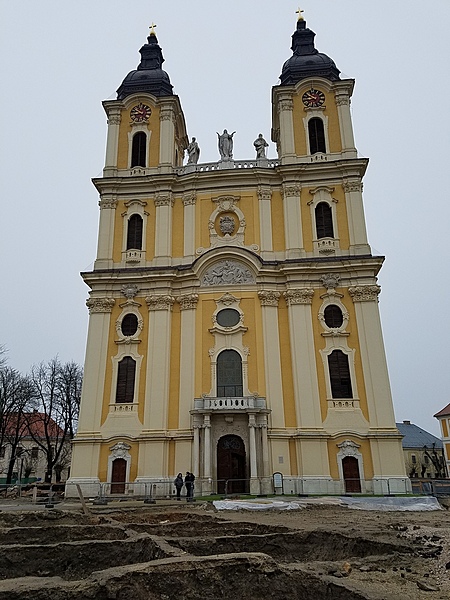
Assumption Cathedral in the town of Kalocsa was built between 1735 and 1754. The town (about 140 km (85 mi) south of Budapest) is one of the oldest in Hungary, dating back to about the year 1000.
Assumption Cathedral in the town of Kalocsa was built between 1735 and 1754. The town (about 140 km (85 mi) south of Budapest) is one of the oldest in Hungary, dating back to about the year 1000. • CIA World Factbook • 2020
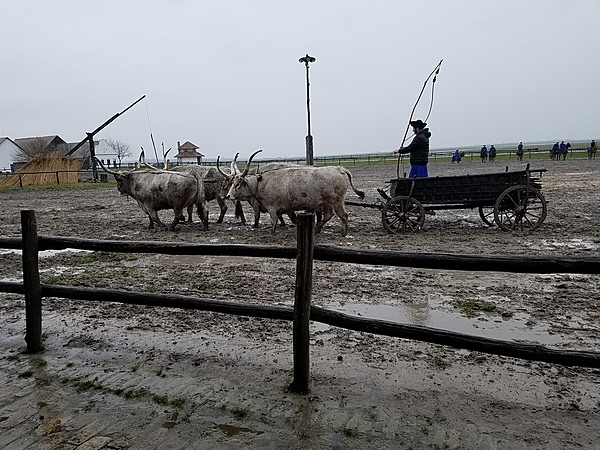
Outdoor show at the Bakodpuszta Equestrian Center near Kalocsa showing traditional Hungarian cattle.
Outdoor show at the Bakodpuszta Equestrian Center near Kalocsa showing traditional Hungarian cattle. • CIA World Factbook • 2020
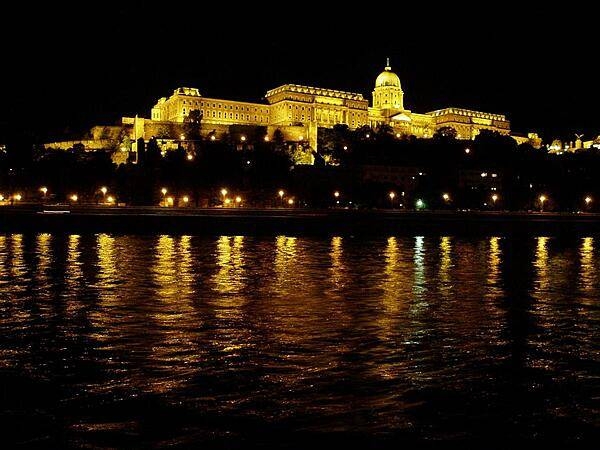
A night-time view of Buda's Royal Castle as seen from along the Danube in Pest.
A night-time view of Buda's Royal Castle as seen from along the Danube in Pest. • CIA World Factbook • 2020
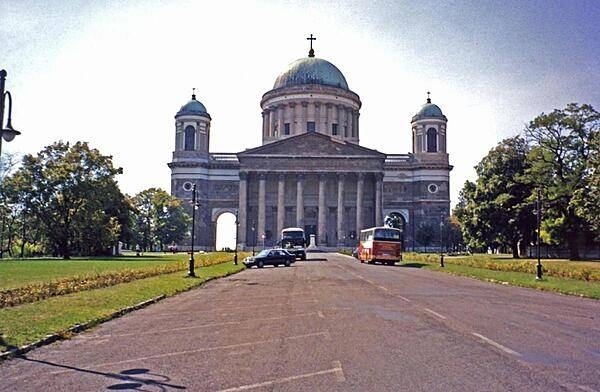
Esztergom Basilica is the largest church in Hungary.
Esztergom Basilica is the largest church in Hungary. • CIA World Factbook • 2020
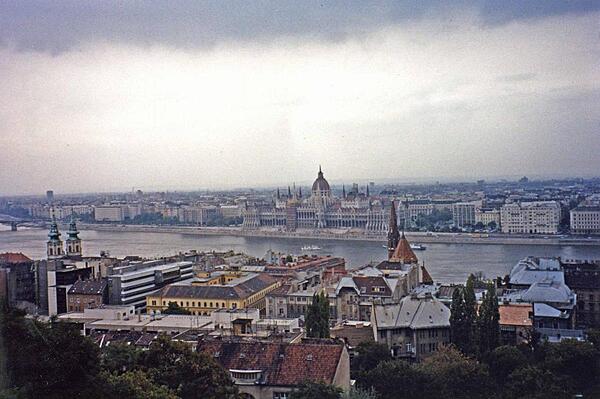
View of the Gothic Revival Hungarian Parliament Building on the Pest side of the Danube.
View of the Gothic Revival Hungarian Parliament Building on the Pest side of the Danube. • CIA World Factbook • 2020
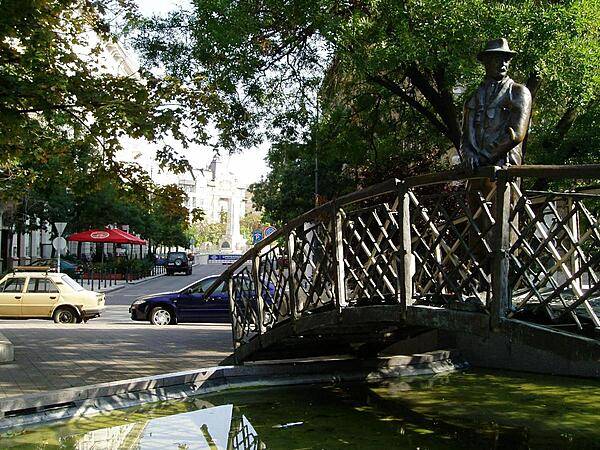
A monument in Budapest to Imre Nagy, leader during the failed 1956 revolution.
A monument in Budapest to Imre Nagy, leader during the failed 1956 revolution. • CIA World Factbook • 2020
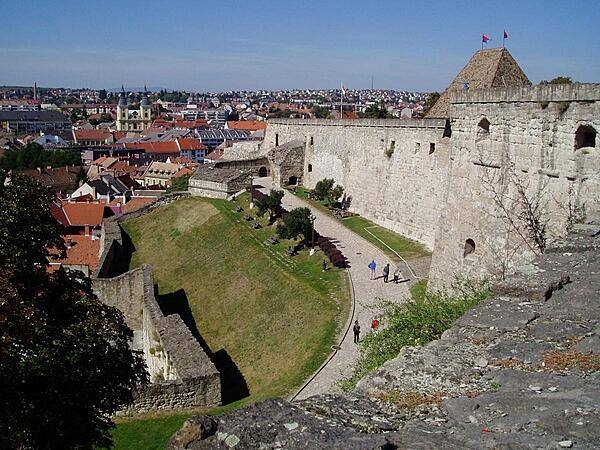
The walls of the fortress above the city of Eger.
The walls of the fortress above the city of Eger. • CIA World Factbook • 2020
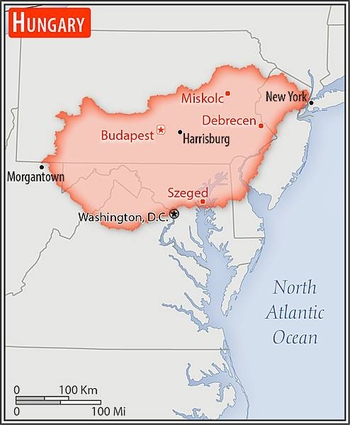
Area comparison map
Area comparison map • CIA World Factbook • 2020
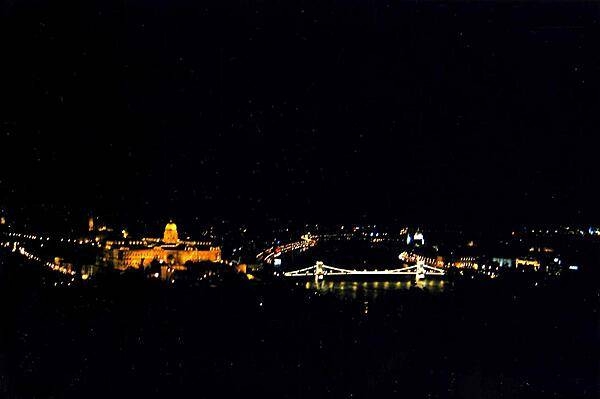
Budapest at night. The beautiful Szechenyi Chain Bridge links Buda on the left with Pest on the right.
Budapest at night. The beautiful Szechenyi Chain Bridge links Buda on the left with Pest on the right. • CIA World Factbook • 2020
Media source: CIA World Factbook (2020) — Public Domain