›››
Ireland
Ireland
Population
5.4M
Rank #120Source: World Bank
Capital
Dublin
Source: REST Countries
Region
Europe
Europe & Central Asia
Source: REST Countries
GDP (Nominal)
$609.16B
Rank #24Source: World Bank
Land Area
70.3K km²
Rank #119Source: REST Countries
Life Expectancy
82.861 yrs
Source: World Bank
Historical Trends
Population Trend (5-Year)
Source: World Bank
GDP Trend (5-Year, Nominal USD)
Source: World Bank
Geography
Area: 70,273 km²
Landlocked: No
Independent: Yes
Climate: temperate maritime; modified by North Atlantic Current; mild winters, cool summers; consistently humid; overcast about half the time
Terrain: mostly flat to rolling interior plain surrounded by rugged hills and low mountains; sea cliffs on west coast
Elevation: mean elevation: 118 m lowest point: Atlantic Ocean 0 m highest point: Carrauntoohil 1,041 m
Natural Hazards: rare extreme weather events
Environmental Issues: water pollution, especially of lakes, from agricultural runoff; acid rain kills plants, destroys soil fertility, and contributes to deforestation
Land Use: agricultural land: 66.1% (2011 est.) forest: 10.9% (2011 est.) other: 23% (2011 est.)
Geography Note: strategic location on major air and sea routes between North America and northern Europe; over 40% of the population resides within 100 km of Dublin
Natural Resources
natural gaspeatcopperleadzincsilverbaritegypsumlimestonedolomite
People & Society
Fertility Rate
1.50
Population
5.4M
Ethnic Groups
Irish (82.2%)Irish travelers (0.7%)other White (9.5%)Asian (2.1%)Black (1.4%)other (1.5%)unspecified (2.6%)
Religions
Roman Catholic (78.3%)Church of Ireland (2.7%)other Christian (1.6%)Orthodox (1.3%)Muslim (1.3%)other (2.4%)none (9.8%)unspecified (2.6%)
Economy
GDP per Capita
$112,894.953
GDP per Capita PPP
133,437.47
(2024)
(2024)
GNI per Capita
80,650
(2024)
(2024)
Gini Index
29
(2023)
(2023)
Unemployment
4.3%
(2024)
(2024)
Inflation
2.113%
(2024)
(2024)
Public Debt
Not Available
Energy
Electricity Access
100%
(2023)
(2023)
Renewable Energy
12.7%
(2021)
(2021)
CO₂ Emissions
32.569 Mt
(2024)
(2024)
Energy Intensity
0.97 MJ/$
(2022)
(2022)
Renewable Electricity
37.154%
(2021)
(2021)
Environment
Forest Coverage
11.526% of land
(2023)
(2023)
Communications
Internet Users
96.497%
(2023)
(2023)
Mobile Penetration
110.798%
(2023)
(2023)
Broadband Subscribers
31.891%
(2023)
(2023)
Transportation
Air Transport Freight
430.494 M ton-km
(2023)
(2023)
Container Port Traffic
1,154,803 TEU
(2022)
(2022)
Airports
1,108,607
Rail Lines
1,650 km
Roads Total
103,524 km(©IRF)
Military
Military Forces
Irish Defence Forces (Oglaigh na h-Eireannn): Army (includes Army Reserve), Naval Service (includes Naval Service Reserves), Air Corps
Personnel Strength
the Irish Defence Forces have approximately 8,700 active duty personnel (7,000 Army; 1,000 Navy; 700 Air Force)
Military Expenditure (USD)
$1.33B
Military Expenditure (% of GDP)
0.24%
Military Expenditure History
0.3% of GDP (2019) 0.3% of GDP (2018) 0.3% of GDP (2017) 0.3% of GDP (2016) 0.3% of GDP (2015)
Deployments
130 Golan Heights (UNDOF); 340 Lebanon (UNIFIL) (2020)
Equipment & Inventories
the Irish Defense Forces have a small inventory of imported weapons systems from a variety of European countries, as well as South Africa and the US; the UK is the leading supplier of military...
Service Age & Obligation
18-25 years of age for male and female voluntary military service recruits to the Defence Forces (18-27 years of age for the Naval Service); 18-26 for cadetship (officer) applicants; 12-year service...
Education
Pre-Primary Enrollment
95.354%
(2020)
(2020)
Primary Enrollment
99.62%
(2022)
(2022)
Secondary Enrollment
133.15%
(2022)
(2022)
Tertiary Enrollment
76.605%
(2022)
(2022)
Education Spending
2.905% of GDP
(2021)
(2021)
Pupil-Teacher Ratio
16.06:1
(2012)
(2012)
Health
Physicians per 1,000
3.875
(2023)
(2023)
Safe Water Access
97.098%
(2024)
(2024)
Safe Drinking Water
96.125%
(2024)
(2024)
Under-5 Mortality
3.8 per 1,000
(2023)
(2023)
Maternal Mortality (World Bank)
23.901 per 100,000
(2021)
(2021)
Hospital Beds per 1,000
79.866
(2021)
(2021)
UHC Coverage Index
82
(2023)
(2023)
Measles Immunization
92%
(2024)
(2024)
Social Indicators
Extreme Poverty Rate
0.1%
(2023)
(2023)
Food Insecurity
2.5%
(2023)
(2023)
Youth NEET Rate
10.609%
(2024)
(2024)
Governance
Women in Government
25.287%
(2024)
(2024)
Voice & Accountability
1.48
(Strong)
(2023)
(Strong)
(2023)
Political Stability
0.90
(Above Average)
(2023)
(Above Average)
(2023)
Government Effectiveness
1.59
(Strong)
(2023)
(Strong)
(2023)
Regulatory Quality
1.75
(Strong)
(2023)
(Strong)
(2023)
Rule of Law
1.63
(Strong)
(2023)
(Strong)
(2023)
Control of Corruption
1.57
(Strong)
(2023)
(Strong)
(2023)
Government
Government Type
parliamentary republic
Legal System
common law system based on the English model but substantially modified by customary law; judicial review of legislative acts by Supreme Court
Executive Branch
chief of state: President Michael D. HIGGINS (since 11 November 2011) head of government: Taoiseach (Prime Minister) Micheál MARTIN (since 27 June 2020); note - MARTIN will serve through December...
Legislative Branch
description: bicameral Parliament or Oireachtas consists of:Senate or Seanad Eireann (60 seats; 43 members indirectly elected from 5 vocational panels of nominees by an electoral college consisting...
Judicial Branch
highest courts: Supreme Court of Ireland (consists of the chief justice, 9 judges, 2 ex-officio members - the presidents of the High Court and Court of Appeal - and organized in 3-, 5-, or 7-judge...
International Organizations
National Symbols
Flag Description
three equal vertical bands of green (hoist side), white, and orange; officially the flag colors have no meaning, but a common interpretation is that the green represents the Irish nationalist...
National Symbols
harp, shamrock (trefoil); national colors: blue, green
National Anthem
name: "Amhran na bhFiann" (The Soldier's Song) lyrics/music: Peadar KEARNEY [English], Liam O RINN [Irish]/Patrick HEENEY and Peadar KEARNEY note: adopted 1926; instead of "Amhran na bhFiann," the...
Safety
Homicide Rate
0.654 per 100,000
(2023)
(2023)
Travel Information
Language(s): English, Irish
Currency: EUR (€)
Timezone(s): UTC
Landlocked: No
Independent: Yes
Driving Side: Left
Calling Code: +353
Car Sign: IRL
Week Starts: Monday
Photos
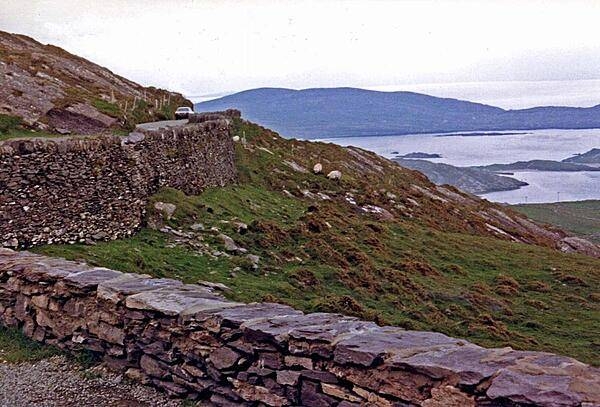
View along the "Ring of Kerry" drive, Iveragh Peninsula, County Kerry. The Ring is a 179 km (111 mi) tourist trail in southwestern Ireland that starts and ends in Killarney. Because the narrow roads make it difficult for tour busses to pass, all tour coaches travel in a counter clockwise direction. There is also a shorter bike/foot path.
View along the "Ring of Kerry" drive, Iveragh Peninsula, County Kerry. The Ring is a 179 km (111 mi) tourist trail in southwestern Ireland that starts and ends in Killarney. Because the narrow roads make it difficult for tour busses to pass, all tour coaches travel in a counter clockwise direction. There is also a shorter bike/foot path. • CIA World Factbook • 2020
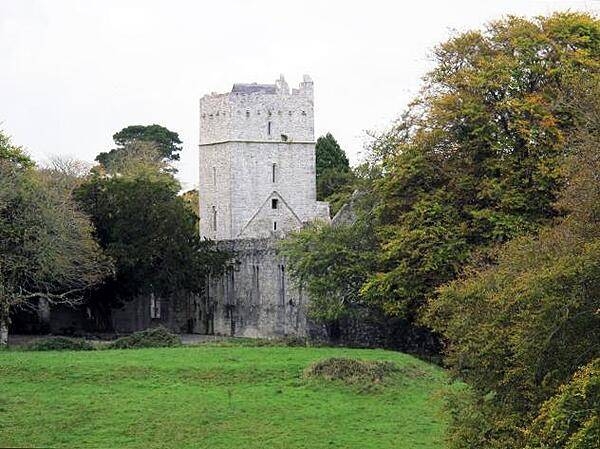
Muckross Abbey was built in 1448 as a Franciscan Friary; its monks were driven out by Oliver Cromwell's army in 1652. The Abbey is close to Muckross House near Killarney in County Kerry.
Muckross Abbey was built in 1448 as a Franciscan Friary; its monks were driven out by Oliver Cromwell's army in 1652. The Abbey is close to Muckross House near Killarney in County Kerry. • CIA World Factbook • 2020
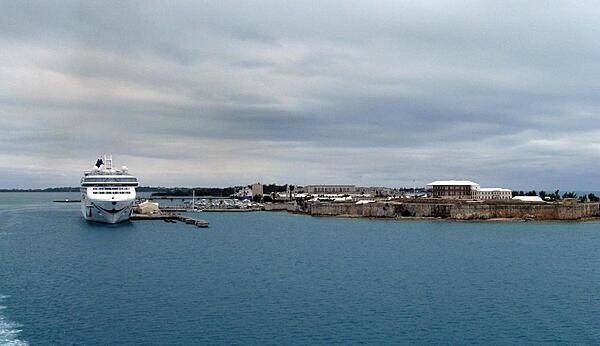
Cruise ship at King's Wharf on North Ireland Island near the Royal Navy Dockyard.
Cruise ship at King's Wharf on North Ireland Island near the Royal Navy Dockyard. • CIA World Factbook • 2020
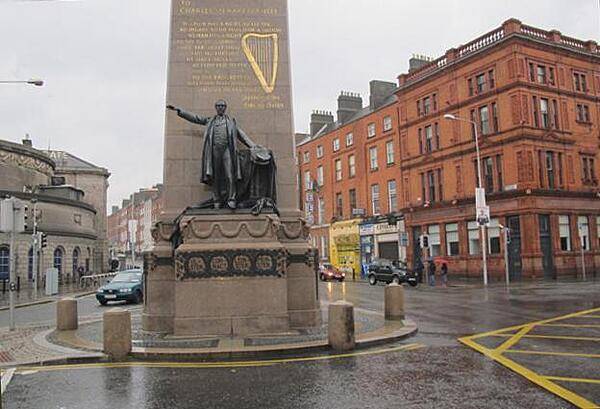
A statue of Charles Stewart Parnell in upper O'Connell Street near Parnell Square. Parnell was a 19th-century member of Parliament and a champion of home rule for Ireland (he is often referred to as "the uncrowned King of Ireland").
A statue of Charles Stewart Parnell in upper O'Connell Street near Parnell Square. Parnell was a 19th-century member of Parliament and a champion of home rule for Ireland (he is often referred to as "the uncrowned King of Ireland"). • CIA World Factbook • 2020
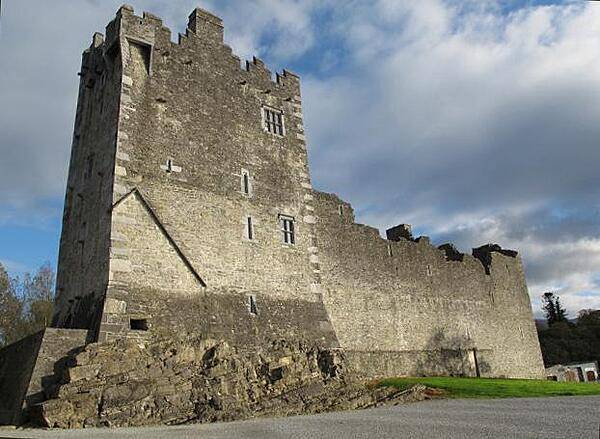
Ross Castle, near Killarney, County Kerry, is a fully restored 14th-century stronghold; it was last place in the province of Munster to fall to Oliver Cromwell's forces in 1652.
Ross Castle, near Killarney, County Kerry, is a fully restored 14th-century stronghold; it was last place in the province of Munster to fall to Oliver Cromwell's forces in 1652. • CIA World Factbook • 2020
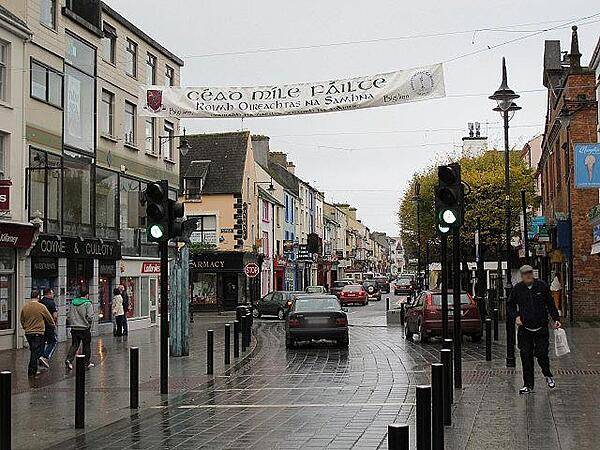
Street view of Killarney, County Kerry. Killarney is one of the principal towns in the country and a center of tourism for the region. The sign over the street reads "A Hundred Thousand Welcomes" (Cead Mille Failte).
Street view of Killarney, County Kerry. Killarney is one of the principal towns in the country and a center of tourism for the region. The sign over the street reads "A Hundred Thousand Welcomes" (Cead Mille Failte). • CIA World Factbook • 2020
49 photos available
View All Photos→Data sources: World Bank, UN Data • Updated daily •Learn about our data