›››
Israel
Israel
Population
10.0M
Rank #95Source: World Bank
Capital
Source: REST Countries
Region
Africa
Middle East, North Africa, Afghanistan & Pakistan
Source: REST Countries
GDP (Nominal)
$540.38B
Rank #28Source: World Bank
Land Area
21.9K km²
Rank #149Source: REST Countries
Life Expectancy
83.195 yrs
Source: World Bank
Historical Trends
Population Trend (5-Year)
Source: World Bank
GDP Trend (5-Year, Nominal USD)
Source: World Bank
Geography
Area: 21,937 km²
Landlocked: No
Independent: Yes
Climate: temperate; hot and dry in southern and eastern desert areas
Terrain: Negev desert in the south; low coastal plain; central mountains; Jordan Rift Valley
Elevation: mean elevation: 508 m note - does not include elevation data from the Golan Heights lowest point: Dead Sea -431 m highest point: Mitspe Shlagim 2,224 m; note - this is the highest named point, the...
Natural Hazards: sandstorms may occur during spring and summer; droughts; periodic earthquakes
Environmental Issues: limited arable land and restricted natural freshwater resources; desertification; air pollution from industrial and vehicle emissions; groundwater pollution from industrial and domestic waste,...
Land Use: agricultural land: 23.8% (2011 est.) forest: 7.1% (2011 est.) other: 69.1% (2011 est.)
Geography Note: note 1: Lake Tiberias (Sea of Galilee) is an important freshwater source; the Dead Sea is the second saltiest body of water in the world (after Lake Assal in Djibouti)note 2: the Malham Cave in Mount...
Natural Resources
timberpotashcopper orenatural gasphosphate rockmagnesium bromideclayssand
People & Society
Fertility Rate
2.85
Population
10.0M
Ethnic Groups
Jewish 74.4% (of which Israel-born (76.9%)Europe/America/Oceania-born (15.9%)Africa-born (4.6%)Asia-born (2.6%)Arab (20.9%)other (4.7%)
Religions
Jewish (74.3%)Muslim (17.8%)Christian (1.9%)Druze (1.6%)other (4.4%)
Economy
GDP per Capita
$54,176.684
GDP per Capita PPP
57,235.776
(2024)
(2024)
GNI per Capita
52,910
(2024)
(2024)
Gini Index
37.9
(2021)
(2021)
Unemployment
3.595%
(2024)
(2024)
Inflation
3.075%
(2024)
(2024)
Public Debt
Not Available
Energy
Electricity Access
100%
(2023)
(2023)
Renewable Energy
6.2%
(2021)
(2021)
CO₂ Emissions
57.665 Mt
(2024)
(2024)
Energy Intensity
2.3 MJ/$
(2022)
(2022)
Renewable Electricity
7.631%
(2021)
(2021)
Environment
Forest Coverage
6.47% of land
(2023)
(2023)
Communications
Internet Users
88.182%
(2024)
(2024)
Mobile Penetration
153.337%
(2023)
(2023)
Broadband Subscribers
29.436%
(2023)
(2023)
Transportation
Air Transport Freight
609.656 M ton-km
(2023)
(2023)
Container Port Traffic
2,951,000 TEU
(2022)
(2022)
Airports
48,607
Rail Lines
1,720 km
Roads Total
21,158 km(©IRF)
Military
Military Forces
Israel Defense Forces (IDF): Ground Forces, Israel Naval Force (IN, includes commandos), Israel Air Force (IAF, includes air defense); Ministry of Public Security: Border Police note: the Border...
Personnel Strength
the Israel Defense Forces (IDF) have approximately 173,000 active personnel (130,000 Ground Forces; 9,500 Naval; 34,000 Air Force)
Military Expenditure (USD)
$46.51B
Military Expenditure (% of GDP)
8.78%
Military Expenditure History
5% of GDP (2019) 5% of GDP (2018) 5.5% of GDP (2017) 5.5% of GDP (2016) 5.5% of GDP (2015)
Equipment & Inventories
the majority of the IDF's inventory is comprised of weapons that are domestically-produced or imported from Europe and the US; since 2010, Germany and the US are the leading suppliers of weapons to...
Service Age & Obligation
18 years of age for compulsory (Jews, Druze) military service; 17 years of age for voluntary (Christians, Muslims, Circassians) military service; both sexes are obligated to military service;...
Education
Pre-Primary Enrollment
111.23%
(2020)
(2020)
Primary Enrollment
96.485%
(2023)
(2023)
Secondary Enrollment
96.466%
(2023)
(2023)
Tertiary Enrollment
55.835%
(2023)
(2023)
Education Spending
5.935% of GDP
(2022)
(2022)
Pupil-Teacher Ratio
12.071:1
(2016)
(2016)
Health
Physicians per 1,000
3.797
(2023)
(2023)
Safe Water Access
100%
(2024)
(2024)
Safe Drinking Water
99.462%
(2024)
(2024)
Under-5 Mortality
3.4 per 1,000
(2023)
(2023)
Maternal Mortality (World Bank)
24.062 per 100,000
(2021)
(2021)
Hospital Beds per 1,000
82.387
(2021)
(2021)
UHC Coverage Index
85
(2023)
(2023)
Measles Immunization
98%
(2024)
(2024)
Social Indicators
Extreme Poverty Rate
0.7%
(2021)
(2021)
Food Insecurity
2.5%
(2023)
(2023)
Youth NEET Rate
4.561%
(2024)
(2024)
Governance
Women in Government
25%
(2024)
(2024)
Voice & Accountability
0.64
(Above Average)
(2023)
(Above Average)
(2023)
Political Stability
-1.47
(Weak)
(2023)
(Weak)
(2023)
Government Effectiveness
1.15
(Strong)
(2023)
(Strong)
(2023)
Regulatory Quality
1.12
(Strong)
(2023)
(Strong)
(2023)
Rule of Law
0.78
(Above Average)
(2023)
(Above Average)
(2023)
Control of Corruption
0.83
(Above Average)
(2023)
(Above Average)
(2023)
Government
Government Type
parliamentary democracy
Legal System
mixed legal system of English common law, British Mandate regulations, and Jewish, Christian, and Muslim religious laws
Executive Branch
chief of state: President Reuben RIVLIN (since 27 July 2014) head of government: Prime Minister Binyamin NETANYAHU (since 31 March 2009) cabinet: Cabinet selected by prime minister and approved by...
Legislative Branch
description: unicameral Knesset (120 seats; members directly elected in a single nationwide constituency by closed-list proportional representation vote, with a 3.25% threshold to gain...
Judicial Branch
highest courts: Supreme Court (consists of the president, deputy president, 13 justices, and 2 registrars) and normally sits in panels of 3 justices; in special cases, the panel is expanded with an...
International Organizations
National Symbols
Flag Description
white with a blue hexagram (six-pointed linear star) known as the Magen David (Star of David or Shield of David) centered between two equal horizontal blue bands near the top and bottom edges of the...
National Symbols
Star of David (Magen David), menorah (seven-branched lampstand); national colors: blue, white
National Anthem
name: "Hatikvah" (The Hope) lyrics/music: Naftali Herz IMBER/traditional, arranged by Samuel COHEN note: adopted 2004, unofficial since 1948; used as the anthem of the Zionist movement since 1897;...
Safety
Homicide Rate
1.626 per 100,000
(2022)
(2022)
Travel Information
Language(s): Arabic, Hebrew
Currency: ILS (₪)
Timezone(s): UTC+02:00
Landlocked: No
Independent: Yes
Driving Side: Right
Calling Code: +972
Car Sign: IL
Week Starts: Sunday
Photos
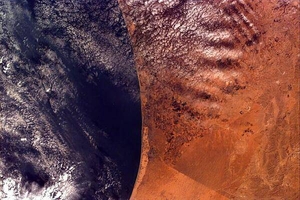
This image covers an area roughly 100x150 km; due to shuttle orientation, north is located at approximately eleven o'clock in this image. Shown are the Gaza Strip (roughly the center third of the coastal strip) and the Mediterranean Sea. The straight-line Egypt-Israel border is apparent in the lower center because of a difference in vegetation patterns, the Egyptian side (south) being less vegetated perhaps due to heavy use of the land for grazing. Photo courtesy of NASA.
This image covers an area roughly 100x150 km; due to shuttle orientation, north is located at approximately eleven o'clock in this image. Shown are the Gaza Strip (roughly the center third of the coastal strip) and the Mediterranean Sea. The straight-line Egypt-Israel border is apparent in the lower center because of a difference in vegetation patterns, the Egyptian side (south) being less vegetated perhaps due to heavy use of the land for grazing. Photo courtesy of NASA. • CIA World Factbook • 2020
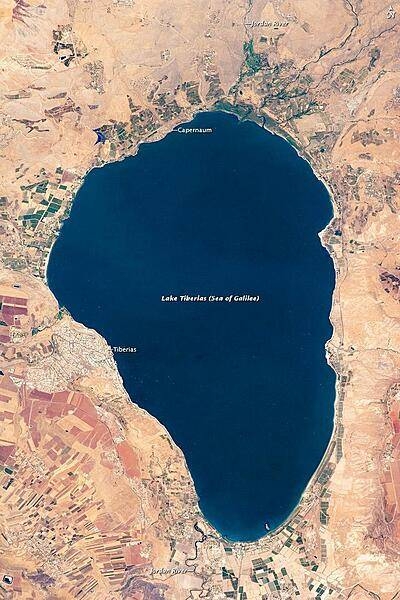
Israel's largest freshwater lake, Lake Tiberias, is also known as the Sea of Galilee. The lake measures just over 21 km (13 mi) north-south, and it is only 43 m (141 ft) deep. The lake is fed partly by underground springs related to the Jordan sector of the Great Rift Valley, but most of its water comes from the Jordan River, which enters from the north. The river's winding course can be seen draining the south end of the lake at image bottom. Angular green and brown field patterns clothe most hillsides in this arid landscape. Bright roof tops are the hallmark of several villages in the area. Much of the area to the east of the lake is part of the Israeli-occupied Golan Heights. Image courtesy of NASA.
Israel's largest freshwater lake, Lake Tiberias, is also known as the Sea of Galilee. The lake measures just over 21 km (13 mi) north-south, and it is only 43 m (141 ft) deep. The lake is fed partly by underground springs related to the Jordan sector of the Great Rift Valley, but most of its water comes from the Jordan River, which enters from the north. The river's winding course can be seen draining the south end of the lake at image bottom. Angular green and brown field patterns clothe most hillsides in this arid landscape. Bright roof tops are the hallmark of several villages in the area. Much of the area to the east of the lake is part of the Israeli-occupied Golan Heights. Image courtesy of NASA. • CIA World Factbook • 2020
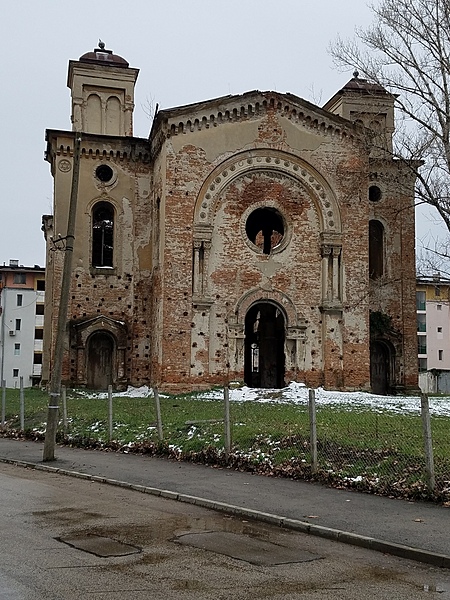
Vidin Synagogue, completed in 1894, was the second largest synagogue in Bulgaria. Most of its congregation emigrated to Israel following World War II. Seized by the state in 1950, the synagogue is now in ruins, but there are plans to restore it as a museum.
Vidin Synagogue, completed in 1894, was the second largest synagogue in Bulgaria. Most of its congregation emigrated to Israel following World War II. Seized by the state in 1950, the synagogue is now in ruins, but there are plans to restore it as a museum. • CIA World Factbook • 2020
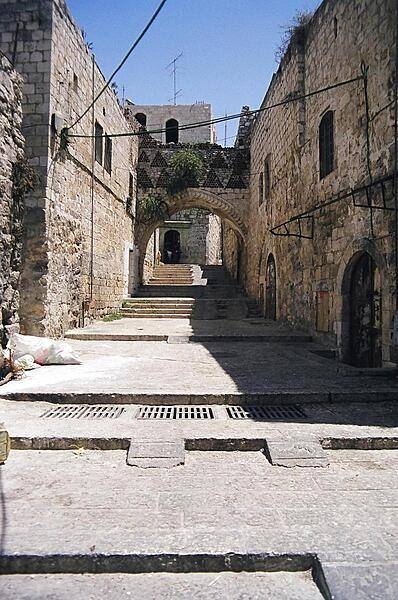
A scene from the Old City in Israeli-occupied East Jerusalem.
A scene from the Old City in Israeli-occupied East Jerusalem. • CIA World Factbook • 2020
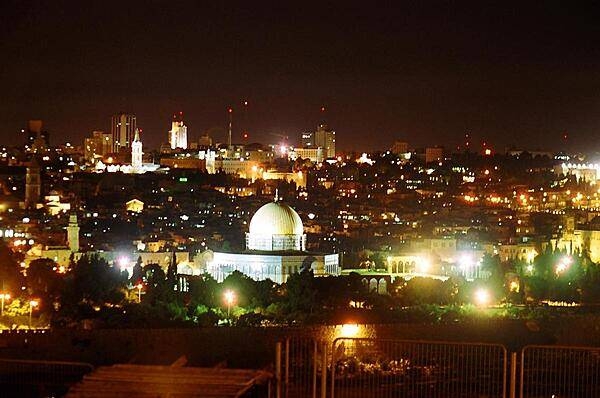
A nighttime view of Jerusalem and Israeli-occupied East Jerusalem, taken from the Mount of Olives.
A nighttime view of Jerusalem and Israeli-occupied East Jerusalem, taken from the Mount of Olives. • CIA World Factbook • 2020
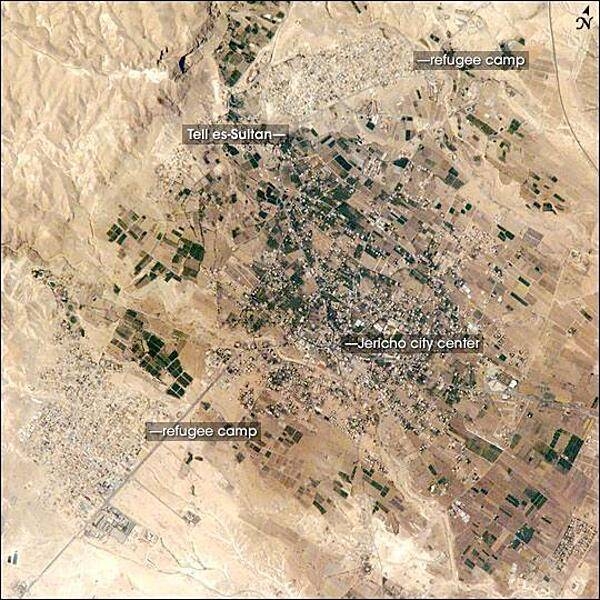
Commonly known as "the oldest city in the world," Jericho is an important historical, cultural, and political center located northwest of the Dead Sea. The city is perhaps best known from the Biblical story of a great victory over its Canaanite citizens by the Israelite leader Joshua. In the story, the walls of the heavily fortified city were destroyed with divine assistance (ca. 1400 B.C.). The site of ancient Jericho, known today as Tell es-Sultan, has been the focus of several archaeological excavations to investigate the Biblical story. The original settlement was built on a hill, or "tell." The results of these excavations suggest that the walls of Tell es-Sultan have been built and rebuilt many times, due mainly to collapse caused by earthquakes, which are common in the region. One of these events may be the basis for the story of Joshua. Modern-day Jericho is a popular tourist destination due to its pleasant climate, historical sites, and religious significance. This photograph shows the city center and the original settlement mound of Tell es-Sultan. Total distance across the image is approximately 8 km (5 mi). Two large refugee camps are located to the northwest and south of the city center. The high building density of the refugee camps contrasts sharply with the more open city center and irrigated fields (green polygonal patches) of Jericho, and illustrates one of the physical consequences of the ongoing Israeli-Palestinian conflict in the region. Photo courtesy of NASA.
Commonly known as "the oldest city in the world," Jericho is an important historical, cultural, and political center located northwest of the Dead Sea. The city is perhaps best known from the Biblical story of a great victory over its Canaanite citizens by the Israelite leader Joshua. In the story, the walls of the heavily fortified city were destroyed with divine assistance (ca. 1400 B.C.). The site of ancient Jericho, known today as Tell es-Sultan, has been the focus of several archaeological excavations to investigate the Biblical story. The original settlement was built on a hill, or "tell." The results of these excavations suggest that the walls of Tell es-Sultan have been built and rebuilt many times, due mainly to collapse caused by earthquakes, which are common in the region. One of these events may be the basis for the story of Joshua. Modern-day Jericho is a popular tourist destination due to its pleasant climate, historical sites, and religious significance. This photograph shows the city center and the original settlement mound of Tell es-Sultan. Total distance across the image is approximately 8 km (5 mi). Two large refugee camps are located to the northwest and south of the city center. The high building density of the refugee camps contrasts sharply with the more open city center and irrigated fields (green polygonal patches) of Jericho, and illustrates one of the physical consequences of the ongoing Israeli-Palestinian conflict in the region. Photo courtesy of NASA. • CIA World Factbook • 2020
14 photos available
View All Photos→Data sources: World Bank, UN Data • Updated daily •Learn about our data