›››
Romania — Media Gallery
18 items available (flags, maps, photos)
Photos
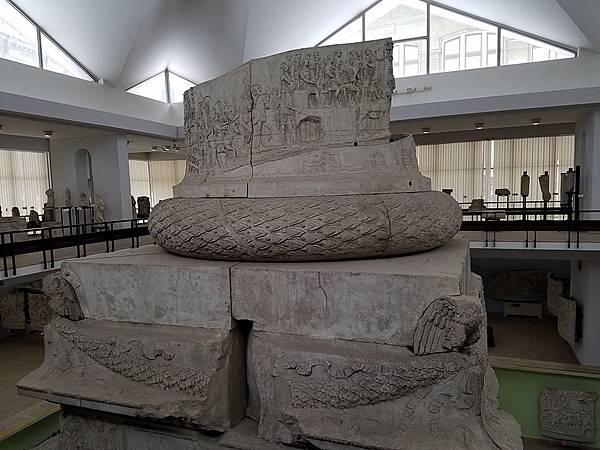
Cast of part of the base of Trajan's Column (the original stands in Rome) at the National Museum of Romanian History in Bucharest. The bas reliefs on Trajan's Column - which is about 30 m (98 ft) in height, 35 m (115 ft) including its large pedestal - depict the second century A.D. Roman conquest of Dacia, the area that today is Romania and Moldova.
Cast of part of the base of Trajan's Column (the original stands in Rome) at the National Museum of Romanian History in Bucharest. The bas reliefs on Trajan's Column - which is about 30 m (98 ft) in height, 35 m (115 ft) including its large pedestal - depict the second century A.D. Roman conquest of Dacia, the area that today is Romania and Moldova. • CIA World Factbook • 2020
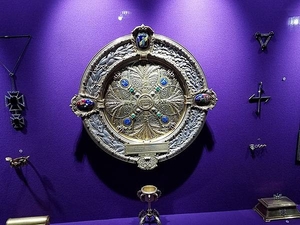
Royal paraphernalia on display at the National Museum of Romanian History in Bucharest.
Royal paraphernalia on display at the National Museum of Romanian History in Bucharest. • CIA World Factbook • 2020
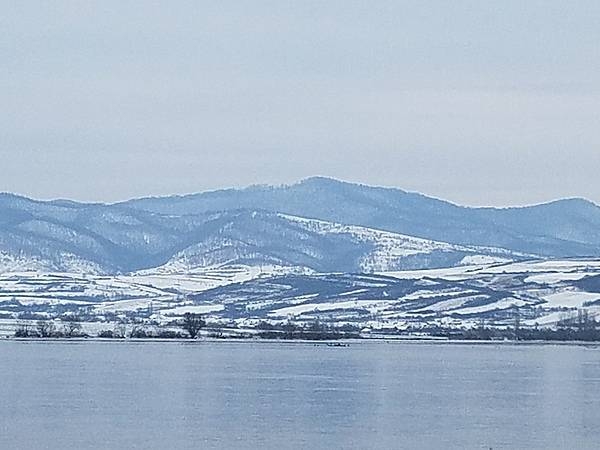
Romanian countryside from the Danube River near the Iron Gates.
Romanian countryside from the Danube River near the Iron Gates. • CIA World Factbook • 2020
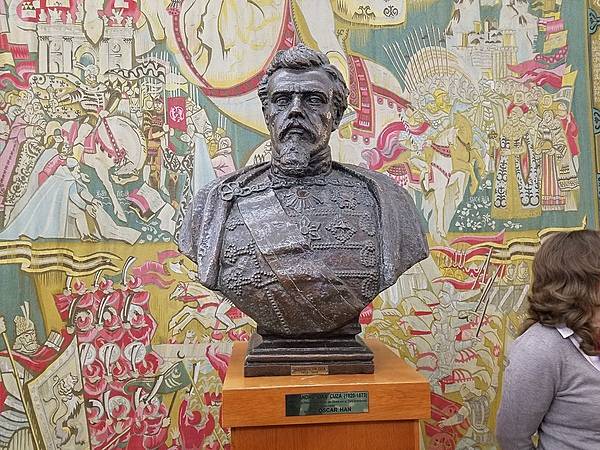
Bust of Alexandru Ioan CUZA (1820-73) in the Palace of the People. CUZA was Prince of Moldavia and Prince of Wallachia (1859-62), and later Domnitor (Ruler; 1862-66) of the Romanian Principalities.
Bust of Alexandru Ioan CUZA (1820-73) in the Palace of the People. CUZA was Prince of Moldavia and Prince of Wallachia (1859-62), and later Domnitor (Ruler; 1862-66) of the Romanian Principalities. • CIA World Factbook • 2020
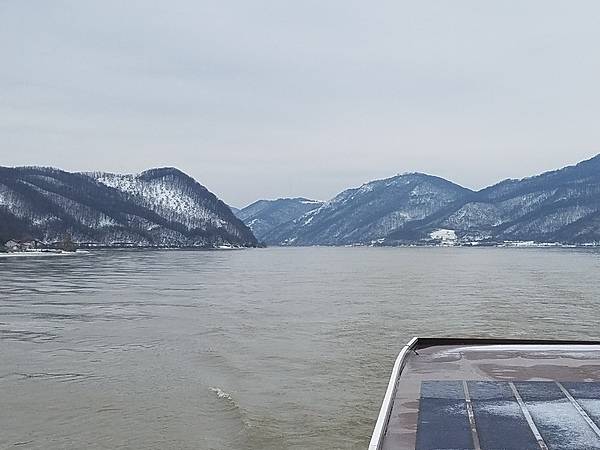
On the Danube River approaching the Iron Gates.
On the Danube River approaching the Iron Gates. • CIA World Factbook • 2020
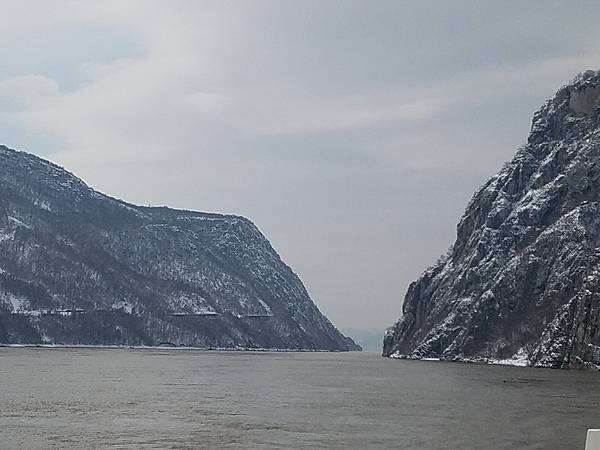
The Iron Gates is a gorge on the Danube River; it forms part of the boundary between Serbia and Romania. In the broad sense, it encompasses a route of 134 km (83 mi); in the narrow sense, it only includes the last barriers on this route - two hydroelectric dams and two power stations just beyond the city of Orsova.
The Iron Gates is a gorge on the Danube River; it forms part of the boundary between Serbia and Romania. In the broad sense, it encompasses a route of 134 km (83 mi); in the narrow sense, it only includes the last barriers on this route - two hydroelectric dams and two power stations just beyond the city of Orsova. • CIA World Factbook • 2020
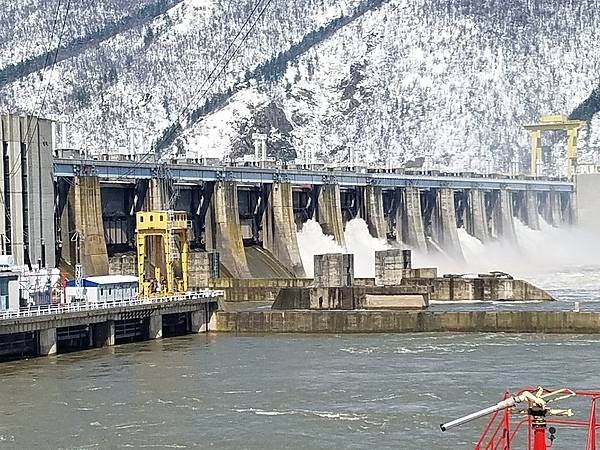
Iron Gate hydroelectric plant on the Danube River.
Iron Gate hydroelectric plant on the Danube River. • CIA World Factbook • 2020
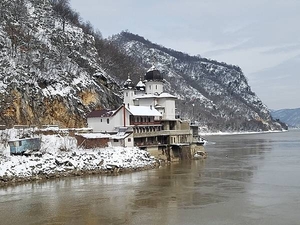
The Mraconia Monastery on the Danube River was completed in 1993 on the ruins of ancient monasteries.
The Mraconia Monastery on the Danube River was completed in 1993 on the ruins of ancient monasteries. • CIA World Factbook • 2020
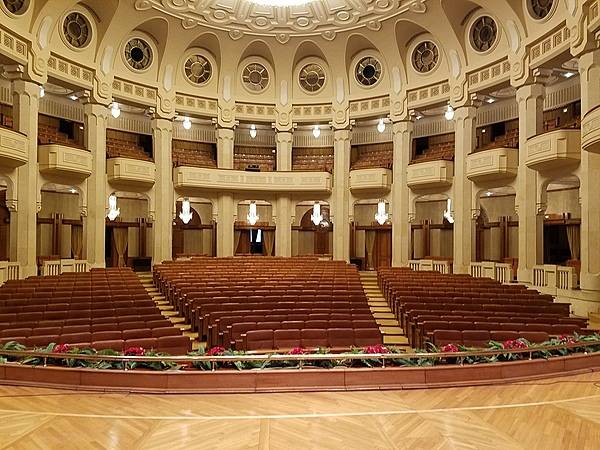
Auditorium in the Palace of the People in Bucharest.
Auditorium in the Palace of the People in Bucharest. • CIA World Factbook • 2020
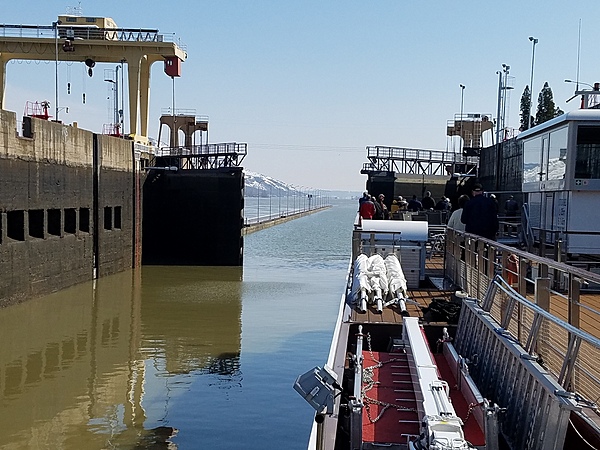
Locks on the Danube River near the Iron Gates.
Locks on the Danube River near the Iron Gates. • CIA World Factbook • 2020
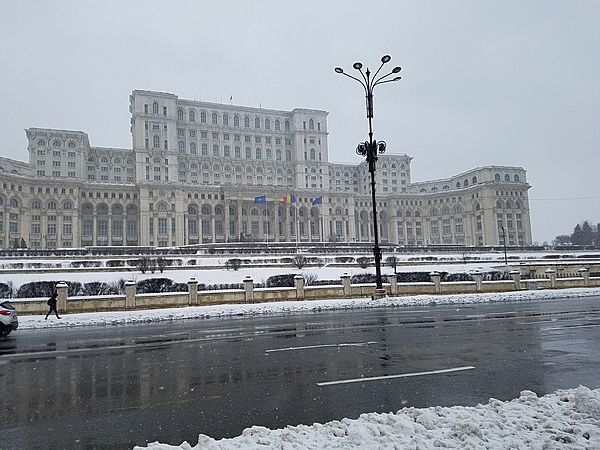
Exterior of the Palace of the People in Bucharest. The building was constructed between 1984 and 1997 on orders of Nicolae Ceausescu, the dictator of communist Romania. The structure is the world's third-largest building by floor area (after the Pentagon in Washington, DC and the Long'ao Building in China) with 1,100 rooms; it consists of 12 floors above ground and 8 floors below. The edifice hosts the two houses of Romania's Parliament (the Senate and the Chamber of Deputies), three museums, and an international conference center. Nonetheless, about two-thirds of the building remains unoccupied.
Exterior of the Palace of the People in Bucharest. The building was constructed between 1984 and 1997 on orders of Nicolae Ceausescu, the dictator of communist Romania. The structure is the world's third-largest building by floor area (after the Pentagon in Washington, DC and the Long'ao Building in China) with 1,100 rooms; it consists of 12 floors above ground and 8 floors below. The edifice hosts the two houses of Romania's Parliament (the Senate and the Chamber of Deputies), three museums, and an international conference center. Nonetheless, about two-thirds of the building remains unoccupied. • CIA World Factbook • 2020
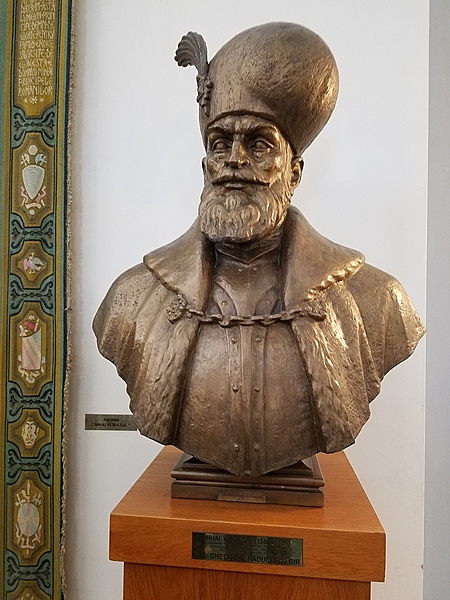
Bust of Mihai Viteazul (1558-1601), also known as Michael the Brave, in the Palace of the People. Mihai was a successful military leader, defeating the Turks on many occasions. He was Prince of Wallachia (1593–1601), and briefly Prince of Moldavia (1600) and de facto ruler of Transylvania (1599–1600). Considered one of Romania's greatest national heroes, his short-lived unification of the three principalities is seen as a precursor to the complete unification of Romania that did not occur until the 20th century.
Bust of Mihai Viteazul (1558-1601), also known as Michael the Brave, in the Palace of the People. Mihai was a successful military leader, defeating the Turks on many occasions. He was Prince of Wallachia (1593–1601), and briefly Prince of Moldavia (1600) and de facto ruler of Transylvania (1599–1600). Considered one of Romania's greatest national heroes, his short-lived unification of the three principalities is seen as a precursor to the complete unification of Romania that did not occur until the 20th century. • CIA World Factbook • 2020
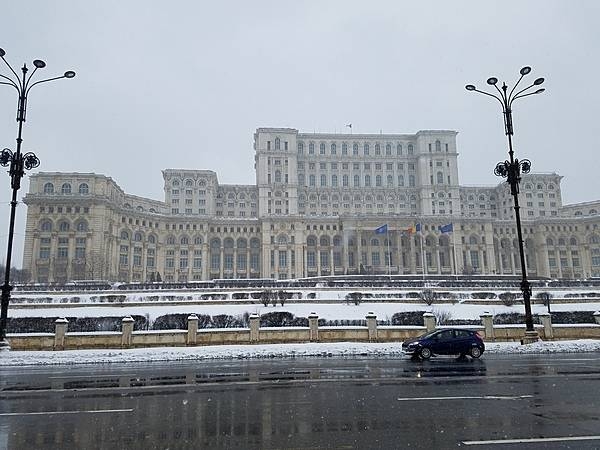
Exterior of the Palace of the People in Bucharest. The building was constructed between 1984 and 1997 on orders of Nicolae Ceausescu, the dictator of communist Romania. The structure is the world's third-largest building by floor area (after the Pentagon in Washington, DC and the Long'ao Building in China) with 1,100 rooms; it consists of 12 floors above ground and 8 floors below. The edifice hosts the two houses of Romania's Parliament (the Senate and the Chamber of Deputies), three museums, and an international conference center. Nonetheless, about two-thirds of the building remains unoccupied.
Exterior of the Palace of the People in Bucharest. The building was constructed between 1984 and 1997 on orders of Nicolae Ceausescu, the dictator of communist Romania. The structure is the world's third-largest building by floor area (after the Pentagon in Washington, DC and the Long'ao Building in China) with 1,100 rooms; it consists of 12 floors above ground and 8 floors below. The edifice hosts the two houses of Romania's Parliament (the Senate and the Chamber of Deputies), three museums, and an international conference center. Nonetheless, about two-thirds of the building remains unoccupied. • CIA World Factbook • 2020
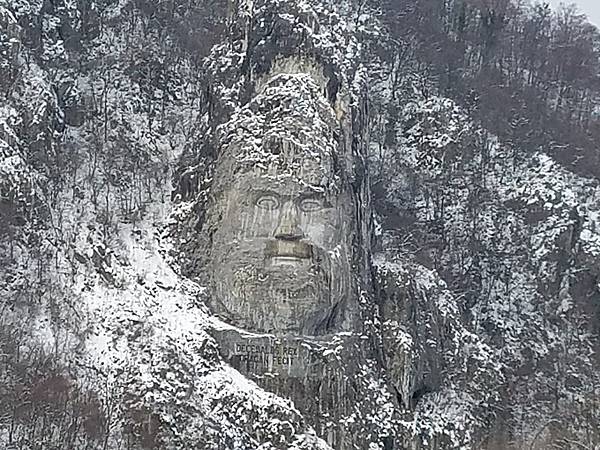
Rock carving, on the Romanian side of the Danube River, depicting the Dacian King Decebalus (r. A.D. 87-106), who fought the Romans in the early 2nd century but was ultimately defeated. He is considered a Romanian national hero. The carving, made between 1994 and 2004, is 42.9 m (141 ft) tall and 31.6 m (104 ft) wide and is the tallest rock relief in Europe.
Rock carving, on the Romanian side of the Danube River, depicting the Dacian King Decebalus (r. A.D. 87-106), who fought the Romans in the early 2nd century but was ultimately defeated. He is considered a Romanian national hero. The carving, made between 1994 and 2004, is 42.9 m (141 ft) tall and 31.6 m (104 ft) wide and is the tallest rock relief in Europe. • CIA World Factbook • 2020
Mural in the inner court of Peles Castle.
Mural in the inner court of Peles Castle. • CIA World Factbook • 2020
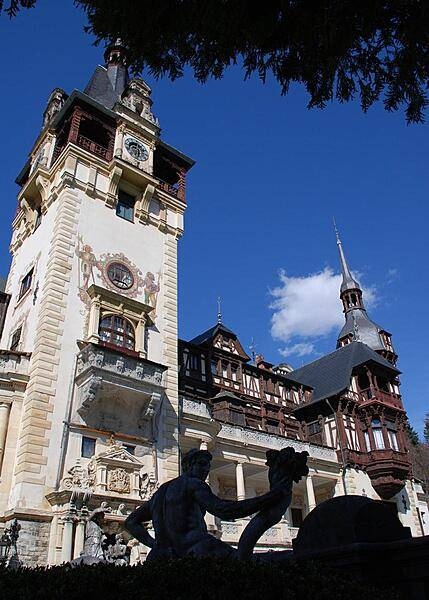
The Neo-Rennaisance Peles Castle near Sinaia was built between 1873 and 1914 as a residence for King Carol I.
The Neo-Rennaisance Peles Castle near Sinaia was built between 1873 and 1914 as a residence for King Carol I. • CIA World Factbook • 2020
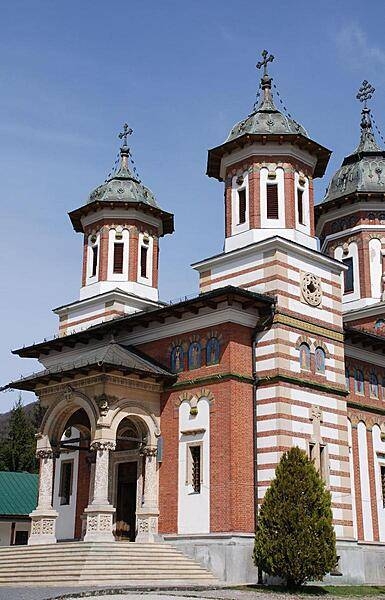
The entrance to the Great Church of the Sinaia Monastery. First built between 1842 and 1846, the church was partially rebuilt between 1897 and 1903.
The entrance to the Great Church of the Sinaia Monastery. First built between 1842 and 1846, the church was partially rebuilt between 1897 and 1903. • CIA World Factbook • 2020
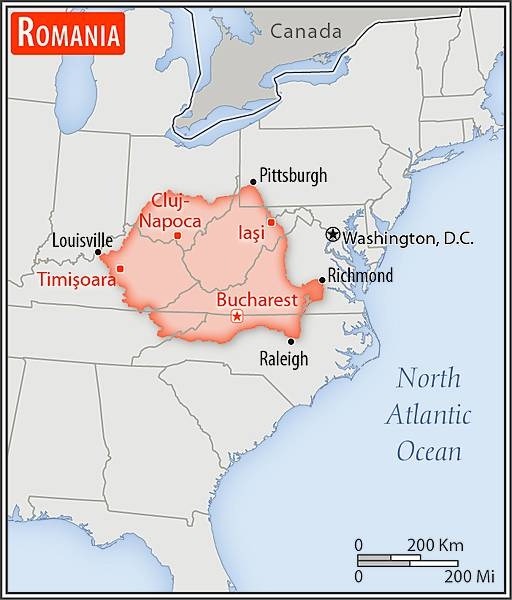
Area comparison map
Area comparison map • CIA World Factbook • 2020
Media source: CIA World Factbook (2020) — Public Domain